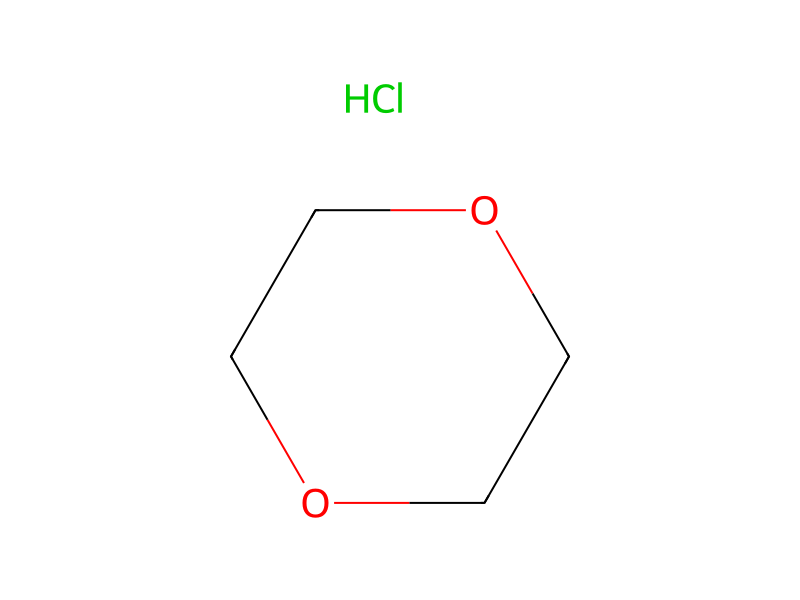
1,4-Dioxane hydrochloride → 2-amino-5-((E)-2-(4-methylphenyl)ethenyl]indan hydrochloride
Reaction equation

C(OC([NH:8][CH:9]1[CH2:17][C:16]2[C:11](=[CH:12][CH:13]=[C:14](/[CH:18]=[CH:19]/[C:20]3[CH:25]=[CH:24][C:23]([CH3:26])=[CH:22][CH:21]=3)[CH:15]=2)[CH2:10]1)=O)(C)(C)C.[ClH:27].O1CCOCC1>C(O)(=O)C>[ClH:27].[NH2:8][CH:9]1[CH2:17][C:16]2[C:11](=[CH:12][CH:13]=[C:14](/[CH:18]=[CH:19]/[C:20]3[CH:21]=[CH:22][C:23]([CH3:26])=[CH:24][CH:25]=3)[CH:15]=2)[CH2:10]1Participants
4



Procedure
Using 2-(tert-butoxycarbonylamino)-5-[(E)-2-(4-methylphenyl)ethenyl]indan (20 mg, 0.060 mmol) synthesized in Preparation Example 2, 4N hydrochloric acid-dioxane (2.0 ml) and acetic acid (6.0 ml), a similar procedure to Example 24 was carried out to obtain 2-amino-5-[(E)-2-(4-methylphenyl)ethenyl]indan hydrochloride (16 mg, 0.06 mmol) having the following physical properties:
Sources & evidence
- ORD record
- ord-d2497058e0664f74a8173ce962937995
- Source dataset
- uspto-grants-2004_05
- Patent number
- US06734180B1
Reaction notes
Loading…