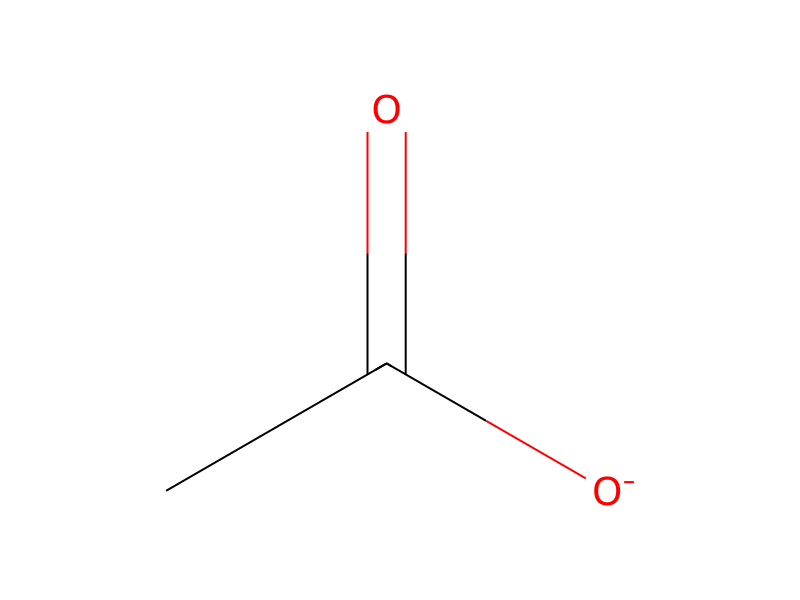
Acetic Anhydride → Acetate
Reaction equation

[OH:1][CH2:2][C:3]1[N:4]([CH2:10][C:11]2[CH:16]=[CH:15][CH:14]=[CH:13][CH:12]=2)[C:5]([CH2:8][OH:9])=[CH:6][N:7]=1.C(N(CC)CC)C.[C:24]([O:27]C(=O)C)(=[O:26])[CH3:25]>ClCCl>[CH3:25][C:24]([O-:27])=[O:26].[C:24]([O:1][CH2:2][C:3]1[N:4]([CH2:10][C:11]2[CH:16]=[CH:15][CH:14]=[CH:13][CH:12]=2)[C:5]([CH2:8][OH:9])=[CH:6][N:7]=1)(=[O:26])[CH3:25]Participants





Procedure
To a solution of 2,5-bis-(hydroxymethyl)-N-benzylimidazole (436 mg, 2.0 mmol) in dichloromethane (10 mL) was added triethylamine (0.35 mL, 2.0 mmol) and acetic anhydride (0.19 mL, 2.0 mmol). The mixture was then stirred overnight (16 h) at room temperature. The reaction was then washed with aqueous ammonium chloride and the layers separated. The aqueous layer was extracted twice with dichloromethane. The combined organic fractions were then dried over anhydrous sodium sulfate and concentrated. Purification by chromatography on silica gel (5% methanol in dichloromethane) gave the monoacetate, 2-acetoxymethyl-5-hydroxymethyl-N-benzylimidazole, as a white powder (300 mg, 58%). 1H NMR (CDCl3) δ1.83 (s, 3H), 4.49 (s, 2H), 5.06 (s, 2H), 5.33 (s, 2H), 6.97 (m, 2H), 7.28 (m, 3H).
Workup
- washThe reaction was then washed with aqueous ammonium chloride
- customthe layers separated
- extractionThe aqueous layer was extracted twice with dichloromethane
- dry with materialThe combined organic fractions were then dried over anhydrous sodium sulfate
- concentrationconcentrated
- customPurification by chromatography on silica gel (5% methanol in dichloromethane)
Sources & evidence
- ORD record
- ord-d036b614956b40ab84b838337067eaa8
- Source dataset
- uspto-grants-2004_05
- Patent number
- US06734191B2
Reaction notes
Loading…