Bromide ion → Tetrabromobisphenol A
Reaction equation

[Br:1][C:2]1[C:7]([OH:8])=[C:6]([Br:9])[C:5](Br)=[C:4]([C:11]([C:14]2[CH:19]=[CH:18][C:17]([OH:20])=[CH:16][CH:15]=2)([CH3:13])[CH3:12])[C:3]=1Br.OC1C=CC(C(C2C=CC(O)=CC=2)(C)C)=CC=1.[Br-:39].[Br-:40].[Na+].Br([O-])(=O)=O.[Na+].Cl>C(Cl)Cl.O.S([O-])(OCCCCCCCCCCCC)(=O)=O.[Na+]>[CH3:13][C:11]([C:14]1[CH:15]=[C:16]([Br:39])[C:17]([OH:20])=[C:18]([Br:40])[CH:19]=1)([C:4]1[CH:5]=[C:6]([Br:9])[C:7]([OH:8])=[C:2]([Br:1])[CH:3]=1)[CH3:12]Participants
Reactant 6




Product 1

Reagents, catalysts & solvents 3

Conditions
- Temperature
- 10 °C
Procedure
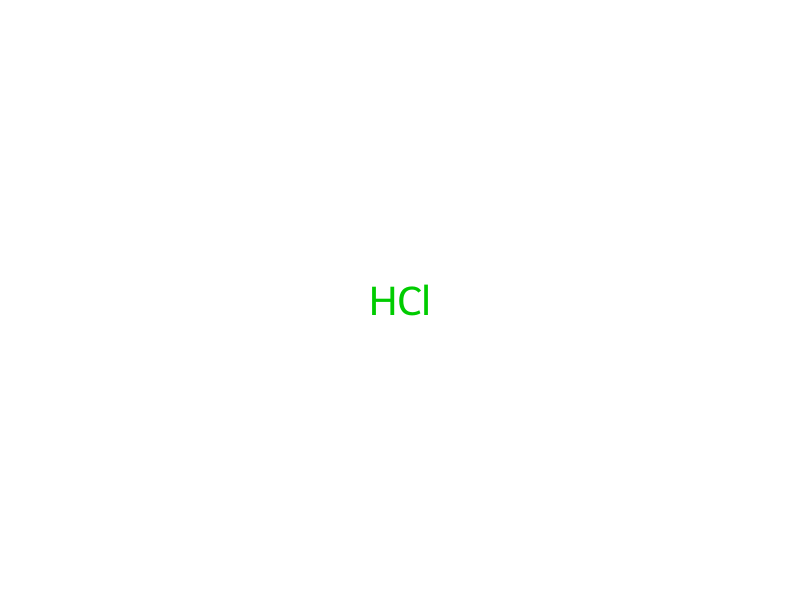
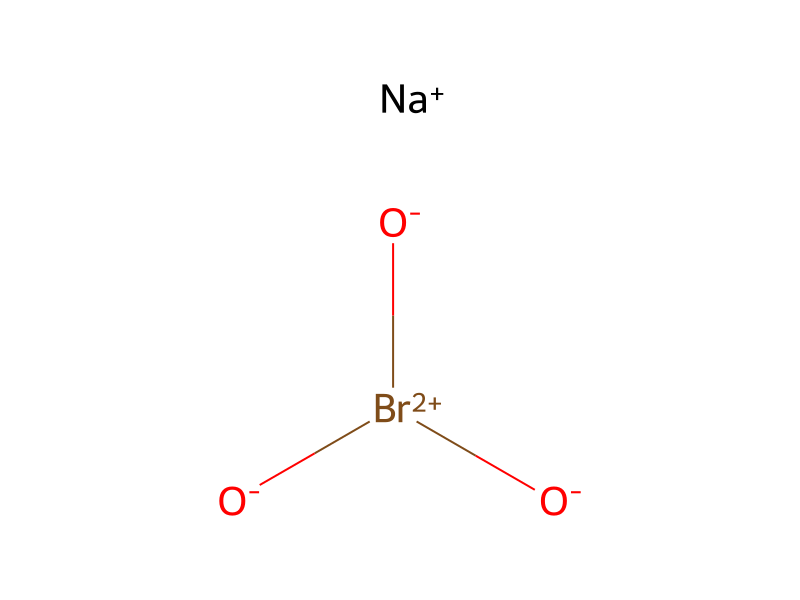
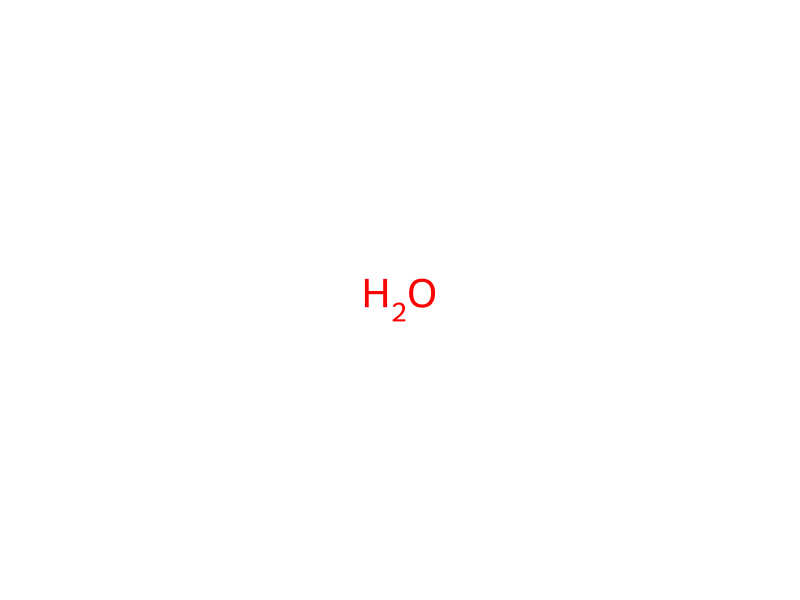
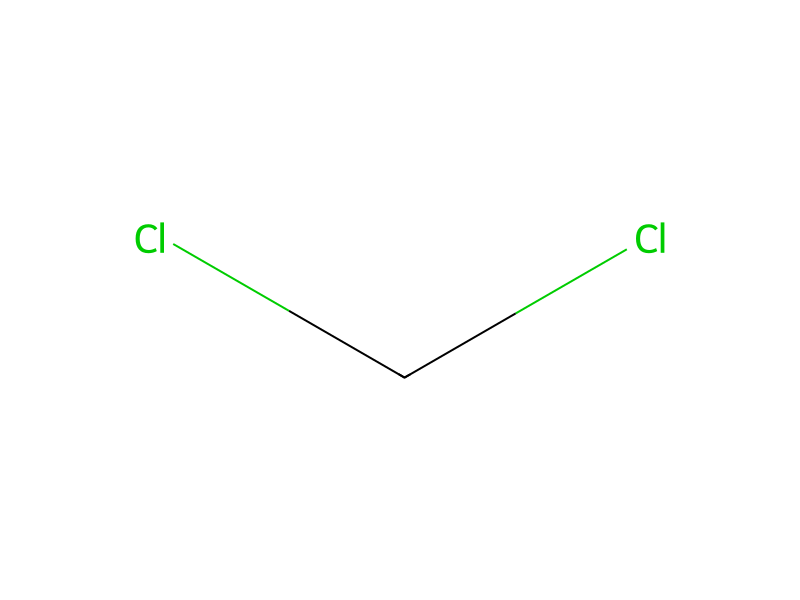
Ramachandraiah, P. K. Ghosh, A. S. Mehta, R. P. Pandya, A. D. Jethva, S. S. Vaghela, S. N. Misra (pending U.S. pat. appln. Ser. No. 09/767,667 [2001]) have prepared tetrabromobisphenol-A from bisphenol-A using 2:1 molar ratio of bromide and bromate salts as brominating agent. To 0.50 kg (2.19 moles) of bisphenol-A in 1.50 liters of methylene chloride, a solution of 0.63 kg (6.14 moles) of sodium bromide, 0.44 kg (2.93 moles) of sodium bromate and 1 g of sodium lauryl sulfate in 2.5 liters of water was added. The flask was cooled to 10° C. by placing it in a cold water bath. To it, 0.90 liters (10.8 moles) of 12 N hydrochloric acid was added over 3 h under stirring. The contents were stirred for another 0.5 h and the separated solid product was filtered, washed twice with deionized water and dried in oven at 100° C. to give a yield of 0.85 kg of TBBPA. The organic layer was recycled in subsequent batches. The isolated yield of TBBPA (m.p. 178-180° C.) over three batches was 85.4%. Although the method has several advantages in that the brominating reagent is easy to handle, no catalyst is required, the bromine atom efficiency for the aromatic substitution reaction studied is as high as 95-100%, the main drawback of this method is that alkali bromide and bromate salts are individually much costlier than liquid bromine. Moreover the 4:2 stoichiometry of bromide:bromate is suitable for substitution reactions but not for addition of bromine across double bonds.
Workup
- stirringThe contents were stirred for another 0.5 h
- filtrationthe separated solid product was filtered
- washwashed twice with deionized water
- customdried in oven at 100° C.
Sources & evidence
- ORD record
- ord-3d9ed992a8c8463da085ea7dd200d5fb
- Source dataset
- uspto-grants-2004_05
- Patent number
- US06740253B2
Reaction notes
Loading…