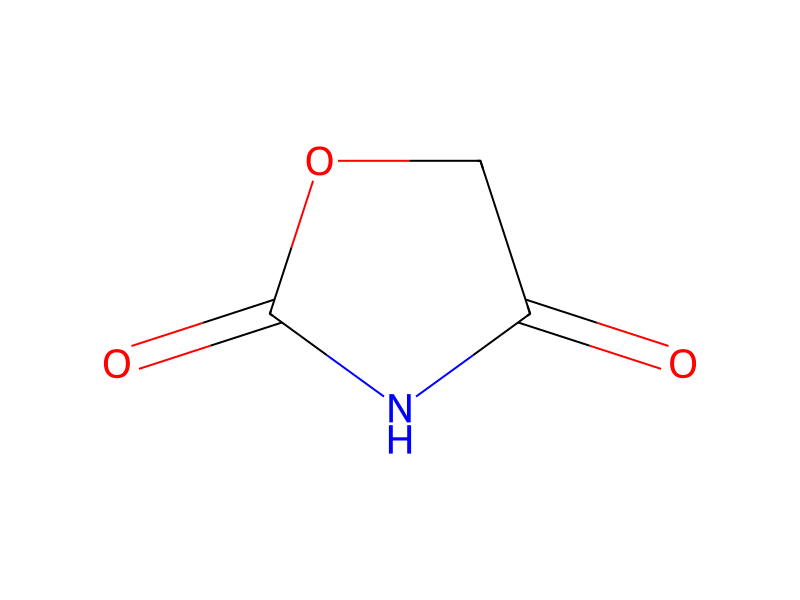
2,4-Oxazolidinedione → HCID 9888581, compound
Reaction equation

[F:1][C:2]1[CH:3]=[C:4]([CH:9]=[CH:10][C:11]=1[O:12][CH2:13][C:14]1[N:15]=[C:16]([C:20]2[CH:25]=[CH:24][CH:23]=[CH:22][CH:21]=2)[O:17][C:18]=1[CH3:19])[CH:5]=[CH:6][CH:7]=O.[O:26]1[CH2:30][C:29](=[O:31])[NH:28][C:27]1=[O:32]>>[F:1][C:2]1[CH:3]=[C:4]([CH2:5][CH2:6][CH2:7][CH:30]2[O:26][C:27](=[O:32])[NH:28][C:29]2=[O:31])[CH:9]=[CH:10][C:11]=1[O:12][CH2:13][C:14]1[N:15]=[C:16]([C:20]2[CH:25]=[CH:24][CH:23]=[CH:22][CH:21]=2)[O:17][C:18]=1[CH3:19]Participants
3


Procedure
In substantially the same manner as in Working Example 11, 3-fluoro-4-(5-methyl-2-phenyl-4-oxazolyl methoxy)cinnamaldehyde was condensed with 2,4-oxazolidinedione. The condensate was subjected to catalytic reduction to yield 5-[3-[3-fluoro-4-(5-methyl-2-phenyl-4-oxazolylmethoxy)phenyl]propyl]-2,4-oxazolidinedione, which was recrystallized from dichloromethane-methanol to give colorless prisms, m.p.180-181° C.
Sources & evidence
- ORD record
- ord-2d018faea9114338af4dae25a37cb3bb
- Source dataset
- uspto-grants-1999_08
- Patent number
- US05932601
Reaction notes
Loading…