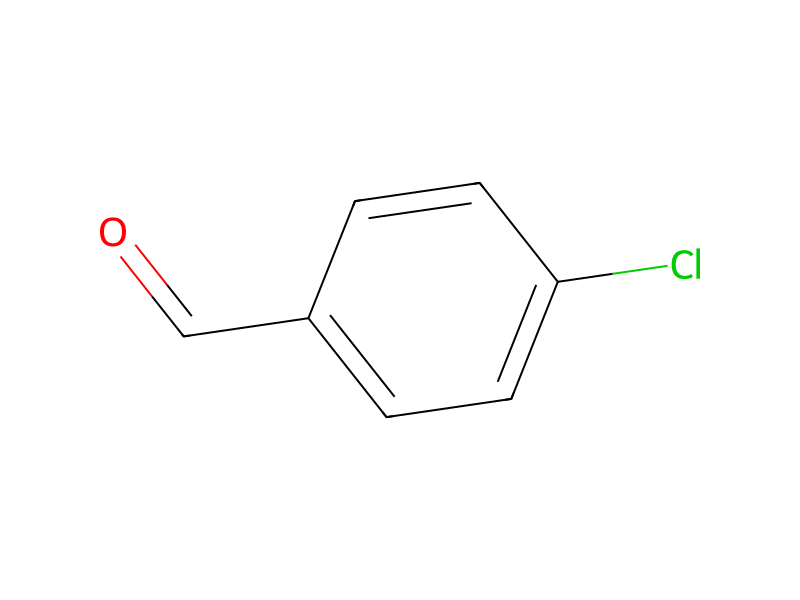
4-Chlorobenzaldehyde → HCID 53722686, compound
Reaction equation

[OH-].[K+].[CH:3]([CH:6]1[CH2:10][CH2:9][CH2:8][C:7]1=[O:11])([CH3:5])[CH3:4].[Cl:12][C:13]1[CH:20]=[CH:19][C:16]([CH:17]=O)=[CH:15][CH:14]=1>O>[CH:3]([CH:6]1[CH2:10][CH2:9][C:8](=[CH:17][C:16]2[CH:19]=[CH:20][C:13]([Cl:12])=[CH:14][CH:15]=2)[C:7]1=[O:11])([CH3:5])[CH3:4]Participants
5
Reactant 3


Product 1

Reagents, catalysts & solvents 1

Conditions
- Temperature
- 120 °C
Procedure
A solution of 1.1 g of 85% strength aqueous potassium hydroxide solution and 100 ml of water was charged to a 0.31 stainless-steel autoclave, and then 25.2 g of 2-isopropylcyclopentanone and 28.1 g of 4-chlorobenzaldehyde were added, and the mixture was heated to 120° C. under the intrinsic pressure and subsequently stirred at this temperature (intrinsic pressure 1 bar) for 5 hours. After cooling to room temperature, the suspension was filtered with suction and the product was washed to neutrality with water and then dried in a vacuum oven at 55° C. In this way 46.8 g of 2-isopropyl-5-(4-chlorobenzylidene)-cyclopentanone (98.7% pure) were obtained. This corresponds to a yield of 93% of theory.
Workup
- temperatureAfter cooling to room temperature
- filtrationthe suspension was filtered with suction
- washthe product was washed
- customdried in a vacuum oven at 55° C
Sources & evidence
- ORD record
- ord-95a42d949e5a43019c2ce2b272a026ae
- Source dataset
- uspto-grants-1998_04
- Patent number
- US05741937
Reaction notes
Loading…