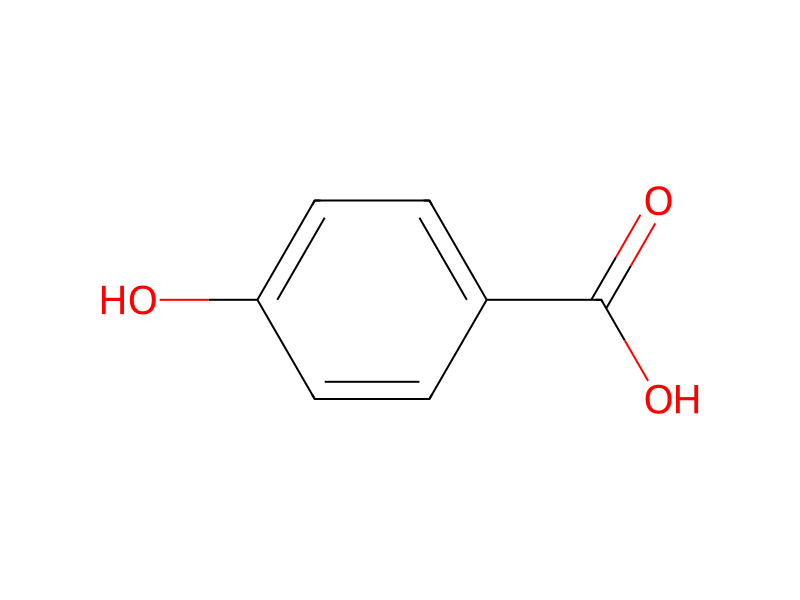
4-Hydroxybenzoic Acid → HCID 54092897, compound
Reaction equation

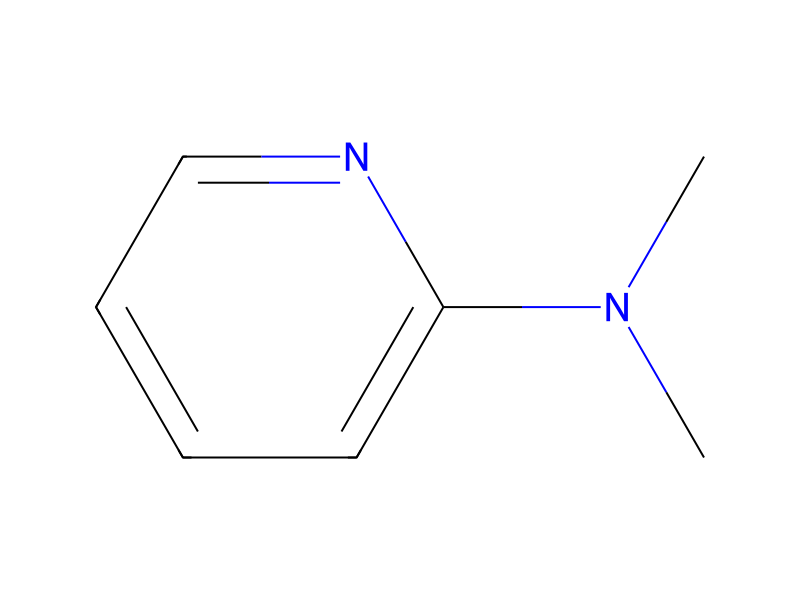
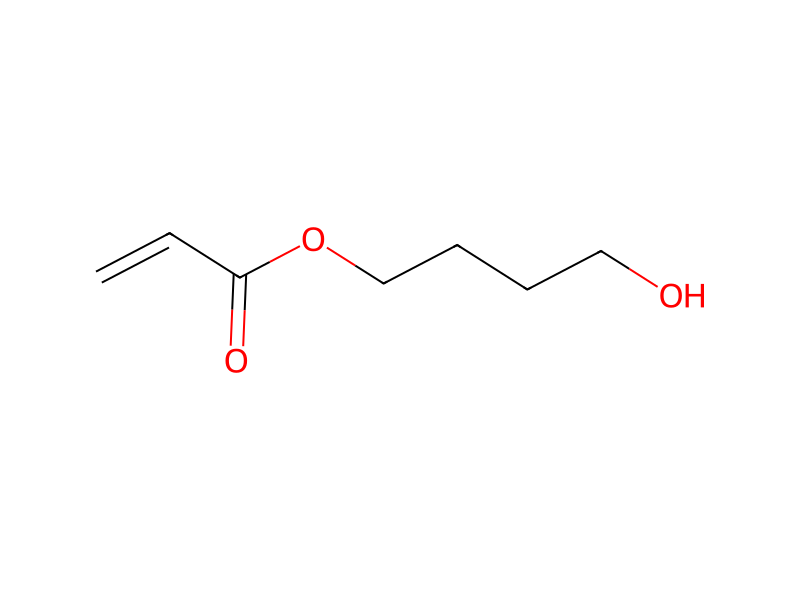
[OH:1][C:2]1[CH:10]=[CH:9][C:5]([C:6]([OH:8])=[O:7])=[CH:4][CH:3]=1.[C:11]([O:15][CH2:16][CH2:17][CH2:18][CH2:19]O)(=[O:14])[CH:12]=[CH2:13].C1(N=C=NC2CCCCC2)CCCCC1.CN(C1C=CC=CN=1)C>ClCCl>[C:11]([O:15][CH2:16][CH2:17][CH2:18][CH2:19][O:7][C:6](=[O:8])[C:5]1[CH:9]=[CH:10][C:2]([OH:1])=[CH:3][CH:4]=1)(=[O:14])[CH:12]=[CH2:13]Participants
6



Procedure
2000 g of dichloromethane, 40.0 g of 4-hydroxybenzoic acid, 39. 6 g of 4-hydroxybutyl acrylate and 0.05 g of methoquinone were charged into a separable flask of the same type as used in Reference Example 1, and then a liquid mixture consisting of 54.0 g of N,N'-dicyclohexylcarbodiimide, 5.9 g of dimethylaminopyridine and 60 g of dichloromethane was dropwise added thereto at room temperature over 4 hours, while replacing the flask inside gas with a nitrogen gas. After the same treatment as in Reference Example 1, 3.8 g of p-hydroxybenzoyloxybutyl acrylate of the following chemical formula was obtained (yield: 5%): ##STR11##
Workup
- additionwas dropwise added
Sources & evidence
- ORD record
- ord-cc59f31cb109467c81d3503fe8b6c06d
- Source dataset
- uspto-grants-1998_04
- Patent number
- US05744562
Reaction notes
Loading…