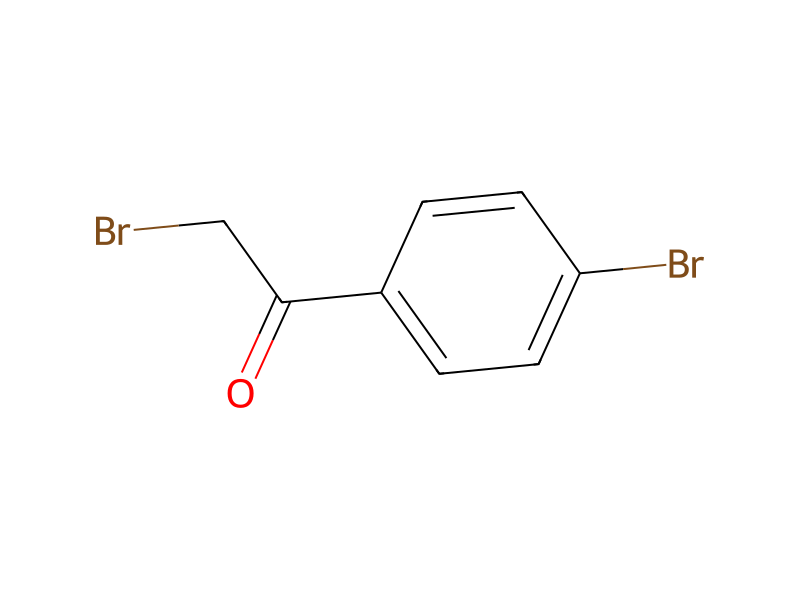
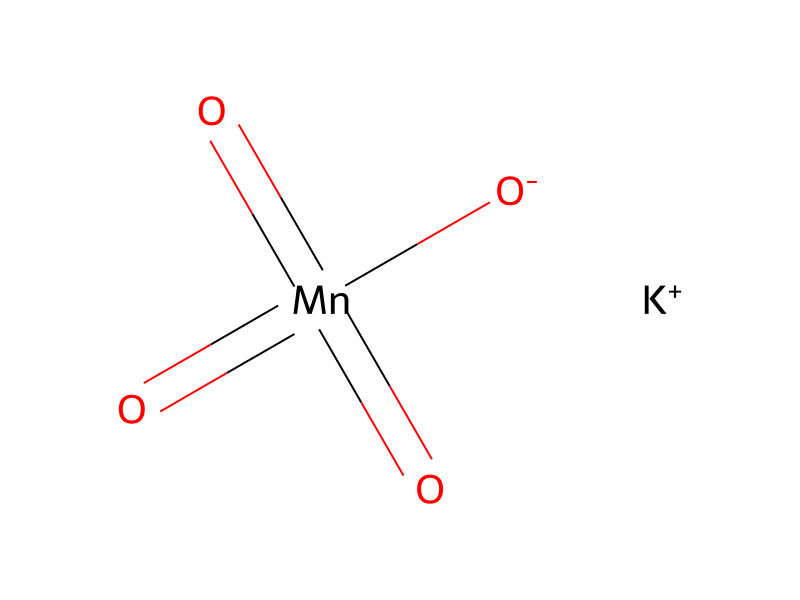
4-Bromophenacyl bromide → 2,4-Dibromobenzoic acid
Reaction equation

[Br:1][C:2]1[CH:10]=[C:9](F)[CH:8]=[CH:7][C:3]=1[C:4]([OH:6])=[O:5].[Br:12]C1C=CC=C(F)C=1.C1C(C(CBr)=O)=CC=C(F)C=1.C1C(C(CBr)=O)=CC=C(Br)C=1.[Mn]([O-])(=O)(=O)=O.[K+]>>[Br:1][C:2]1[CH:10]=[C:9]([Br:12])[CH:8]=[CH:7][C:3]=1[C:4]([OH:6])=[O:5]Participants
6




Procedure
Some of the compounds of the general formula II are known and may be prepared by known methods. For example, 2-bromo-4-fluorobenzoic acid may be obtained from 1-bromo-3-fluorobenzene by acetylation and oxidation of the 2-bromo-4-fluoroacetophenone which is produced (Recl. Trav. Chim. Pays-Bas, 83 p. 1142, 1146 (1964)). The oxidation of 2,4-dibromoacetophenone using potassium permanganate to give 2,4-dibromobenzoic acid is described in J. Karnatak Univ. 1 p. 36 (1956). According to J. Chem. Soc. 85, 1267 ff. (1904), 5-chloro-2-bromobenzoic acid may be obtained by nitric acid oxidation of 5-chloro-2-bromotoluene.
Workup
- custommay be prepared
- customis produced (Recl. Trav. Chim. Pays-Bas, 83 p. 1142, 1146 (1964))
Sources & evidence
- ORD record
- ord-59daf23e31604584b56f795e87da781f
- Source dataset
- uspto-grants-1998_04
- Patent number
- US05744638
Reaction notes
Loading…