Acetic Acid → p-Hydroxystyrene p-tert-butoxystyrene
Reaction equation

C([O:4][C:5]1[CH:12]=[CH:11][C:8]([CH:9]=[CH2:10])=[CH:7][CH:6]=1)(=O)C.[C:13]([O:17][C:18]1[CH:25]=[CH:24][C:21]([CH:22]=[CH2:23])=[CH:20][CH:19]=1)([CH3:16])([CH3:15])[CH3:14].[OH-].C[N+](C)(C)C.C(O)(=O)C>C(O)(C)C>[OH:4][C:5]1[CH:12]=[CH:11][C:8]([CH:9]=[CH2:10])=[CH:7][CH:6]=1.[C:13]([O:17][C:18]1[CH:19]=[CH:20][C:21]([CH:22]=[CH2:23])=[CH:24][CH:25]=1)([CH3:16])([CH3:14])[CH3:15]Participants
5
Reactant 3

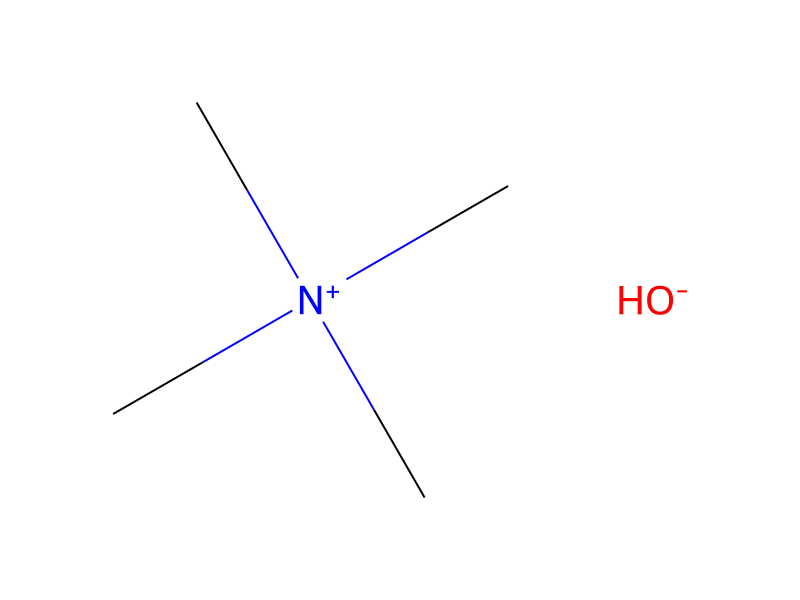

Product 1

Reagents, catalysts & solvents 1

Procedure
A mixture of 46.3 g of poly(p-acetyloxystyrene/p-tert-butoxystyrene) obtained according to (1) above and 100 ml of a 16% aqueous solution of tetramethylammonium hydroxide was refluxed with stirring in 300 ml of isopropanol for 4 hours. The reaction solution was neutralized with acetic acid and concentrated under reduced pressure, and the residue was dissolved in 150 ml of acetone and poured into 5,000 ml of water to cause crystallization. Precipitated crystals were filtered out, washed with water and dried in vacuo to give 33.8 g of poly(p-hydroxystyrene/p-tert-butoxystyrene). P-hydroxystyrene unit/p-tert-butoxystyrene unit molar ratio in the polymer≈3:1 (1HNMR). Mw≈8,540; Mw/Mn=1.30 (GPC with polystyrene calibration).
Workup
- customobtained
- temperaturewas refluxed
- concentrationconcentrated under reduced pressure
- dissolutionthe residue was dissolved in 150 ml of acetone
- additionpoured into 5,000 ml of water
- customcrystallization
- customPrecipitated crystals
- filtrationwere filtered out
- washwashed with water
- customdried in vacuo
Sources & evidence
- ORD record
- ord-7a2e5da259204190be7fc49dc0104e2a
- Source dataset
- uspto-grants-1999_11
- Patent number
- US05976759
Reaction notes
Loading…