Benzenesulfonyl chloride → Nizax
Reaktionsgleichung

O[CH2:2][C:3]1[S:4][CH:5]=[C:6]([CH2:8][S:9][CH2:10][CH2:11][NH:12][C:13]([NH:18][CH3:19])=[CH:14][N+:15]([O-:17])=[O:16])[N:7]=1.[CH2:20]([N:22](CC)[CH2:23]C)C.C1(S(Cl)(=O)=O)C=CC=CC=1>CN(C)C1C=CN=CC=1.C(Cl)Cl>[CH3:19][NH:18]/[C:13](/[NH:12][CH2:11][CH2:10][S:9][CH2:8][C:6]1[N:7]=[C:3]([CH2:2][N:22]([CH3:23])[CH3:20])[S:4][CH:5]=1)=[CH:14]\[N+:15]([O-:17])=[O:16]Komponenten
Edukt 3

Produkt 1

Reagenzien, Katalysatoren, Lösungsmittel 2
Reaktionsbedingungen
- Temperatur
- -20 °C
Versuchsvorschrift
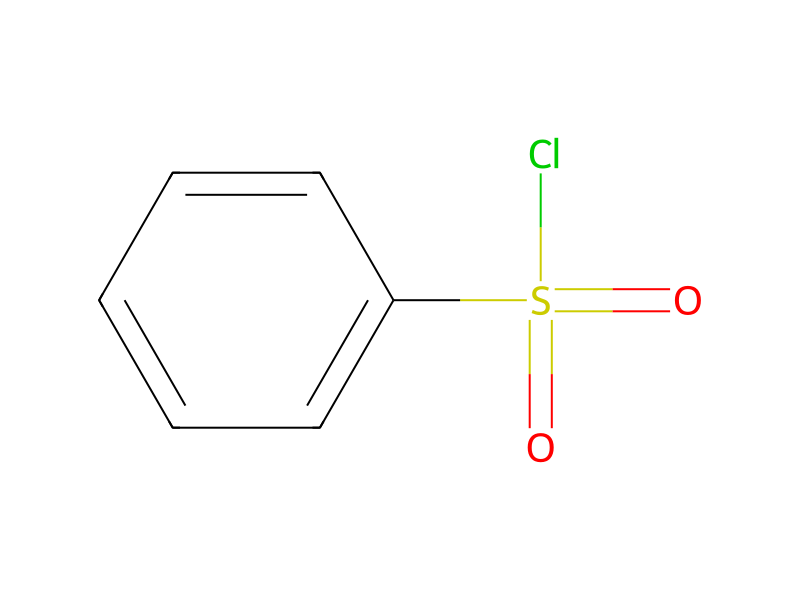
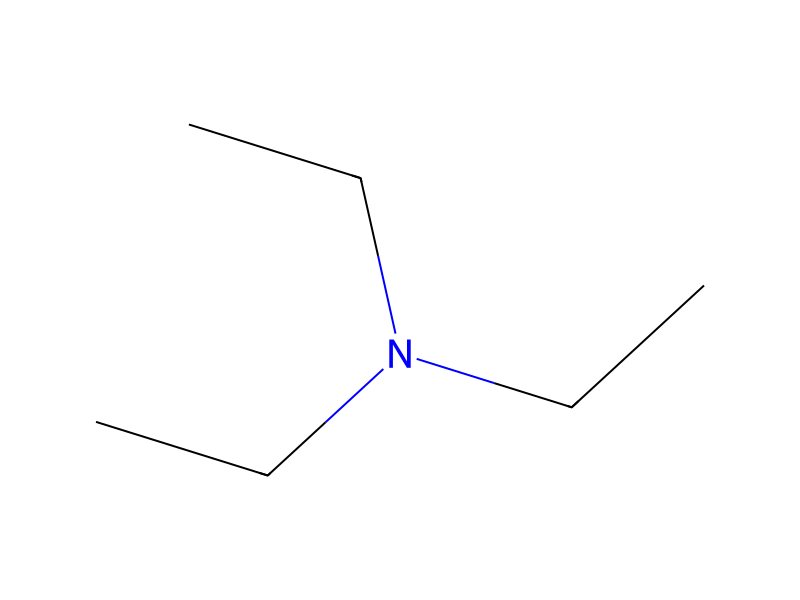
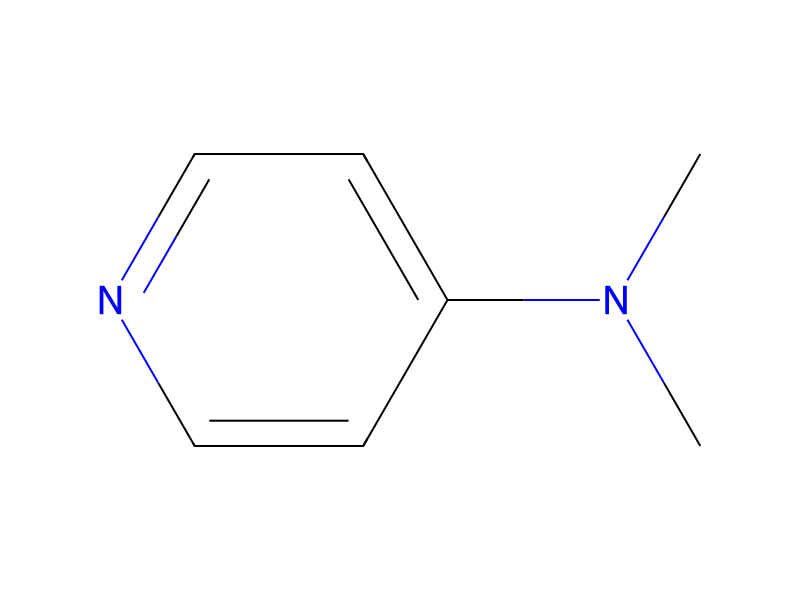
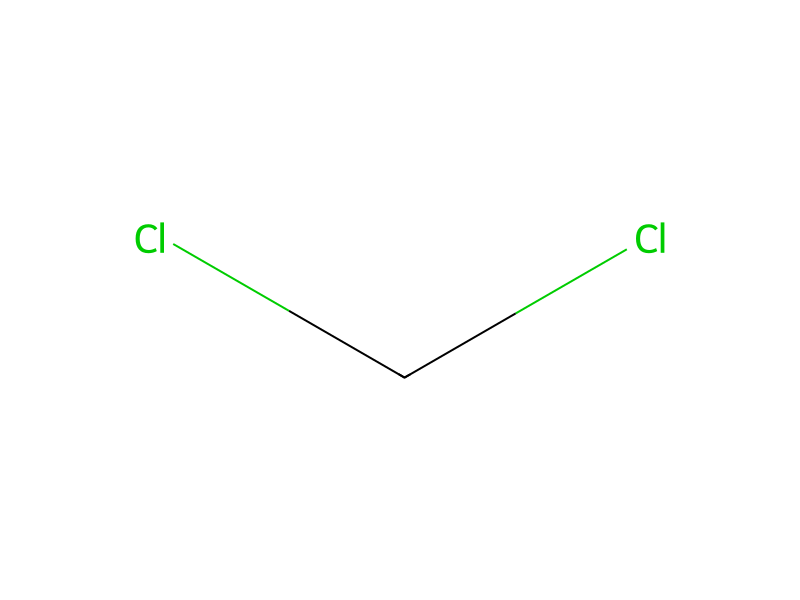
In a 100 ml three-necked round bottomed flask, filled with a nitrogen atmosphere, equipped with a thermometer, stir bar and dropping funnel and installed in a temperature controlled cooling bath was placed 2.0 g of N-[2-[[[2-(hydroxymethyl)-4-thiazolyl]methyl]thio]ethyl]-N'-methyl-2-nitro-1,1-ethenediamine, prepared according to the process described in U.S. Pat. No. 5,541,335. Into the same flask was added 120 ml of methylene chloride, 2.0 g of triethylamine, and 0.04 g of 4-dimethylaminopyridine. The contents were cooled to -20° C. internal. To this mixture was added dropwise from the pressure-equalized dropping funnel 1.3 g of benzenesulfonyl chloride in 18.0 ml of methylene chloride so as to maintain the internal temperature of the reaction mixture at or below -20° C. When the starting material was almost entirely consumed (2-3.5 hours), as determined by thin layer chromatography on silica gel eluting with 8/2 v/v EtOAc/MeOH, approximately 7.0 ml of dimethylamine was condensed into the reaction mixture. The temperature was held at or near -20° C. When the intermediate had disappeared, as indicated by TLC, the volatile components of the mixture were removed under vacuum and the residue dissolved in 15 ml methylene chloride and 8.0 ml water. The pH of the aqueous phase was adjusted to pH 4.5 by addition of 3N HCl. This acidification aids dissolution. The lower organic layer was separated and the aqueous phase was washed twice with 8.0 ml portions of methylene chloride. The aqueous phase containing the product was retained and adjusted to pH 10.5 using saturated potassium carbonate solution. The separated crude product was extracted with three 15 ml portions of methylene chloride, which were combined and evaporated. To remove trace amounts of methylene chloride, the product was twice evaporated to dryness from a slurry in isopropanol. The residue was then dissolved hot in 20.0 ml of isopropanol and allowed to crystallize. The solid was cooled to 0-5° C. for 16 hours and then filtered and washed with cold isopropanol. The solid was dried at 40° C. under vacuum, to give 1.1 g (50.3%) of nizatidine.
Aufarbeitung
- additionIn a 100 ml three-necked round bottomed flask, filled with a nitrogen atmosphere
- customequipped with a thermometer
- temperaturecontrolled cooling bath
- customprepared
- additionTo this mixture was added dropwise from the
- temperatureto maintain the internal temperature of the reaction mixture at or below -20° C
- customWhen the starting material was almost entirely consumed (2-3.5 hours)
- customcondensed into the reaction mixture
- customnear -20° C
- customthe volatile components of the mixture were removed under vacuum
- dissolutionthe residue dissolved in 15 ml methylene chloride
- additionThe pH of the aqueous phase was adjusted to pH 4.5 by addition of 3N HCl
- dissolutiondissolution
- customThe lower organic layer was separated
- washthe aqueous phase was washed twice with 8.0 ml portions of methylene chloride
- additionThe aqueous phase containing the product
- customThe separated crude product
- extractionwas extracted with three 15 ml portions of methylene chloride, which
- customevaporated
- customTo remove trace amounts of methylene chloride
- customthe product was twice evaporated to dryness from a slurry in isopropanol
- dissolutionThe residue was then dissolved hot in 20.0 ml of isopropanol
- customto crystallize
- temperatureThe solid was cooled to 0-5° C. for 16 hours
- filtrationfiltered
- washwashed with cold isopropanol
- customThe solid was dried at 40° C. under vacuum
Quellen und Nachweise
- ORD-Eintrag
- ord-4e6eec34dfae49b891776cf186d7dcc3
- Quelldatensatz
- uspto-grants-1999_11
- Patentnummer
- US05981757
Notizen zur Reaktion
Wird geladen…