Stannous Chloride → [3-(2-Pyridin-3-yl-1,3-thiazol-4-yl)phenyl]amine
Reaction equation

Br.[N+:2]([C:5]1[CH:6]=[C:7]([C:11]2[N:12]=[C:13]([C:16]3[CH:17]=[N:18][CH:19]=[CH:20][CH:21]=3)[S:14][CH:15]=2)[CH:8]=[CH:9][CH:10]=1)([O-])=O.[Sn](Cl)Cl>C(O)C.Cl>[NH2:2][C:5]1[CH:6]=[C:7]([C:11]2[N:12]=[C:13]([C:16]3[CH:17]=[N:18][CH:19]=[CH:20][CH:21]=3)[S:14][CH:15]=2)[CH:8]=[CH:9][CH:10]=1Participants
5
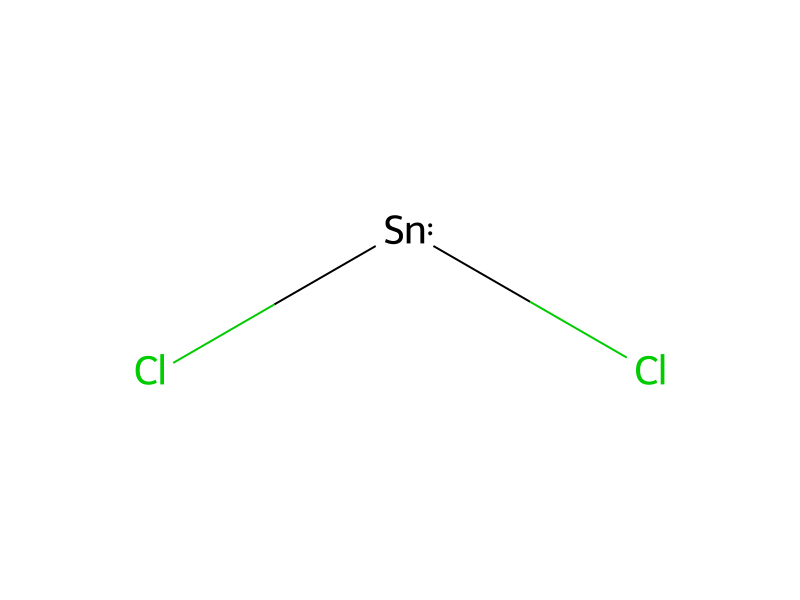




Conditions
- Temperature
- 50 °C
Procedure
A suspension of 4-(3-nitrophenyl)-2-(3-pyridyl)-thiazole hydrobromide (3.6 g, 10 mmol) in ethanol (150 ml) was treated with a solution of tin (II) chloride (3.7 g, 30 mmol) in concentrated hydrochloric acid (12 ml). The mixture was heated at 50° C. for 16 h. A further portion of tin (II) chloride (2.9 g, 15 mmol) was added and the mixture heated at 50° C. for a further 4 hours before being evaporated to dryness. The residue was partitioned between ethyl acetate and 1M aqueous sodium hydroxide. The ethyl acetate extract was dried (Na2SO4) and filtered through a plug of silica. Evaporation afforded the title compound as a yellow solid (2.15 g, 85%).
Workup
- temperaturethe mixture heated at 50° C. for a further 4 hours
- custombefore being evaporated to dryness
- customThe residue was partitioned between ethyl acetate and 1M aqueous sodium hydroxide
- extractionThe ethyl acetate extract
- dry with materialwas dried (Na2SO4)
- filtrationfiltered through a plug of silica
- customEvaporation
Sources & evidence
- ORD record
- ord-ad2e0f5a7e0b4c5087972fab513aa121
- Source dataset
- uspto-grants-1999_11
- Patent number
- US05990133
Reaction notes
Loading…