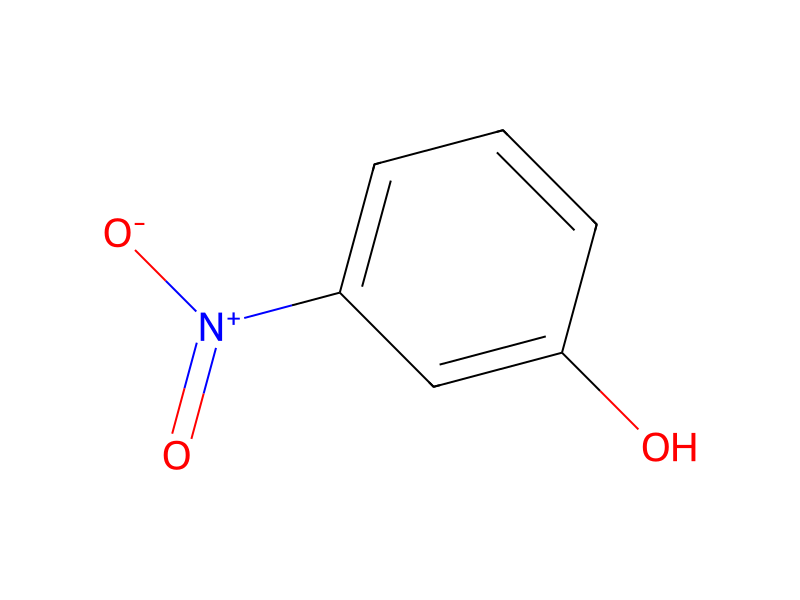
3-Nitrophenol → 1,3-Bis(3-nitrophenoxy)-5-trifluoromethylbenzene
Reaction equation

[N+]([C:4]1[CH:5]=[C:6]([C:13]([F:16])([F:15])[F:14])[CH:7]=[C:8]([N+]([O-])=O)[CH:9]=1)([O-])=O.[N+:17]([C:20]1[CH:21]=[C:22]([OH:26])[CH:23]=[CH:24][CH:25]=1)([O-:19])=[O:18]>>[N+:17]([C:20]1[CH:21]=[C:22]([CH:23]=[CH:24][CH:25]=1)[O:26][C:8]1[CH:7]=[C:6]([C:13]([F:14])([F:15])[F:16])[CH:5]=[C:4]([O:26][C:22]2[CH:23]=[CH:24][CH:25]=[C:20]([N+:17]([O-:19])=[O:18])[CH:21]=2)[CH:9]=1)([O-:19])=[O:18]Participants
3


Procedure
In an example of the process (i), 3,5-dinitrobenzotrifluoride is condensed with m-nitrophenol in the presence of a base, in an aprotic solvent, to give 1,3-bis(3-nitrophenoxy)-5-trifluoromethylbenzene, which is then reduced to 1,3-bis(3-aminophenoxy)-5-trifluoromethylbenzene, in a high yield.
Sources & evidence
- ORD record
- ord-ee4172a1995349b9b5d718dd7832b325
- Source dataset
- uspto-grants-1999_11
- Patent number
- US05990261
Reaction notes
Loading…