Phthalic Anhydride → HCID 10956766, compound
Reaction equation

[C:1]1(=[O:11])[O:6][C:4](=[O:5])[C:3]2=[CH:7][CH:8]=[CH:9][CH:10]=[C:2]12.[CH3:12][C:13]([CH3:21])([CH:16]([OH:20])[CH:17]([CH3:19])[CH3:18])[CH2:14]O>C1(C)C(C)=CC=CC=1>[CH:17]([CH:16]1[C:13]([CH3:21])([CH3:14])[CH2:12][O:6][C:1](=[O:11])[C:2]2[CH:10]=[CH:9][CH:8]=[CH:7][C:3]=2[C:4](=[O:5])[O:20]1)([CH3:19])[CH3:18]Participants
4
Reactant 2
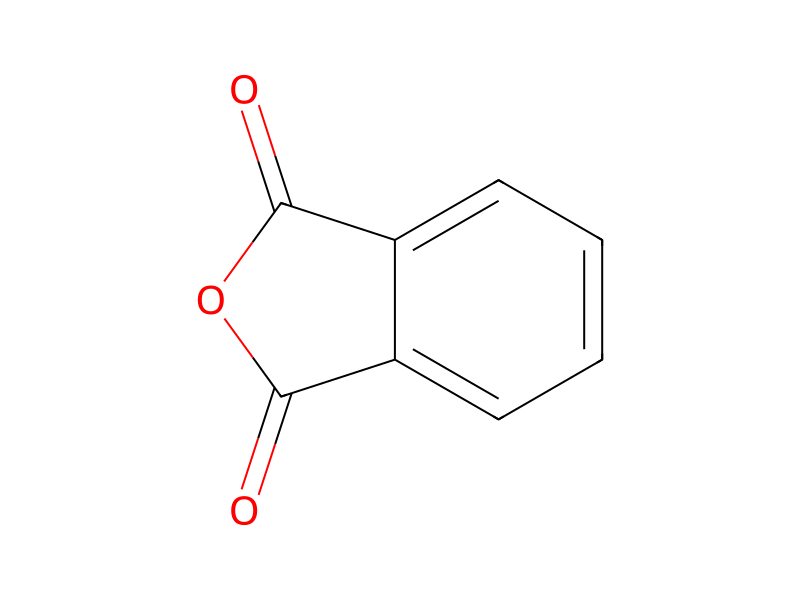

Product 1

Reagents, catalysts & solvents 1

Procedure
Following the procedure of Examples 1 or 2,7-Isopropyl-8,8-dimethyl-8,9-dihydro-7H-6,10-dioxabenzocyclononene-5,11-dione was prepared from a solution of 14.81 g (0.1 mole) of phthalic anhydride and 16.30 g (0.11 mole) of 2,2,4-trimethyl-1,3-pentanediol (TMPD) in 75 mL of xylene. The catalyst was 49.4 mg of FASCAT® 4100 catalyst. Xylene was removed on a rotary evaporator and the residue distilled to give 11.09 g of distillate, b0.5 130-160° C. which was found by vapor phase chromatography (vpc) to consist of 84% of 7-Isopropyl-8,8-dimethyl-8,9-dihydro-7H-6,10-dioxabenzocyclononene-5,11-dione (40% yield). The residue from this distillation weighed 17.65 g.
Workup
- customXylene was removed on a rotary evaporator
- distillationthe residue distilled
- customto give 11.09 g of distillate, b0.5 130-160° C. which
Sources & evidence
- ORD record
- ord-a1b9e7944a80437fa48ba75504f0b0b9
- Source dataset
- uspto-grants-1999_11
- Patent number
- US05990321
Reaction notes
Loading…