Acetoacetic Acid → Perillyl acetate
Reaction equation

[CH3:1][C:2]1([CH3:11])[CH:7]2[CH2:8][CH:3]1[CH2:4][CH2:5][C:6]12[O:10][CH2:9]1.CC([C@@H]1CC=[C:18]([CH2:21][OH:22])CC1)=C.C([O-])(=O)C.CC(CC(O)=O)=O>C(O)(=O)C.O>[CH3:11][C:2]([CH:3]1[CH2:4][CH:5]=[C:6]([CH2:9][O:10][C:21]([CH3:18])=[O:22])[CH2:7][CH2:8]1)=[CH2:1]Participants
Reactant 4
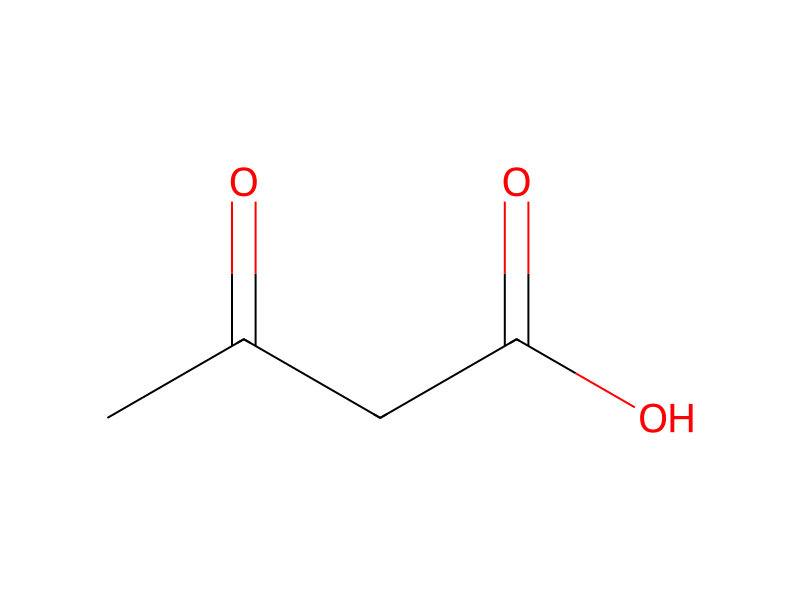
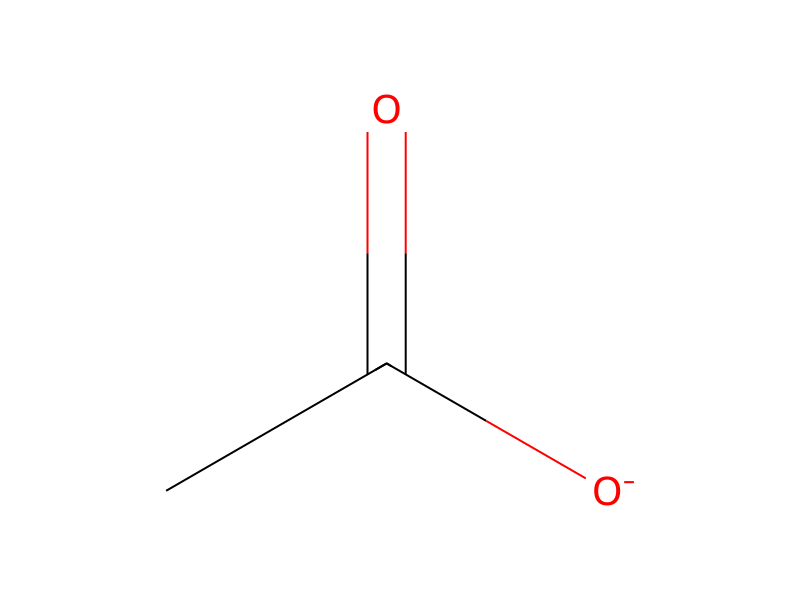
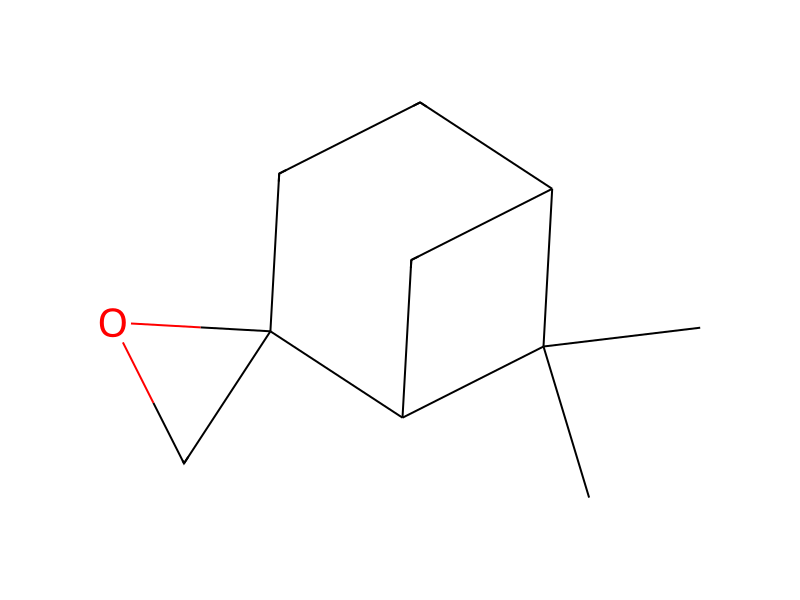

Product 1

Reagents, catalysts & solvents 2
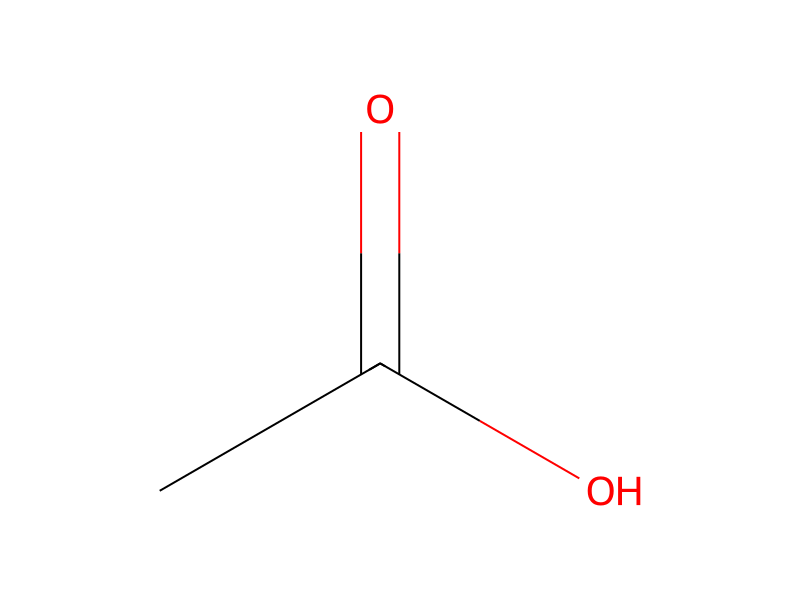
Conditions
- Temperature
- 0 °C
Procedure
A five-Liter reactor, equipped with an efficient water-cooled condenser, a thermometer and a mechanical stirrer, was charged with 1000 grams of beta pinene oxide. The reaction vessel was cooled to 0° C. using an ice bath. Glacial acetic acid (540 ml) was then added in a single portion. Within minutes the internal temperature of the reaction mixture increased to roughly 150° C. TLC analysis indicated that all the epoxide was converted into either perillyl alcohol directly in an estimated yield of greater than 40% or acetate G in a yield of greater than 40% or an undetermined amount of diacetate (based on integration of NMR spectra). This 1600 grams of material was used directly in the next reaction without further characterization or purification. Of the 1600 grams of crude reaction mixture obtained, one-half was placed into the one-liter distillation flask and the other half was placed into the liter-dropping funnel. The reaction apparatus was placed under vacuum at 1.5 mm Hg and the distillation flask was then heated to 110° C. and then gradually increased to 150° C. Under these conditions the acetic acid present in the crude mixture was removed first and collected in the traps. Alternatively before hand, the crude reaction mixture was fractionally distilled under vacuum so that all the volatiles that had a boiling point less than 85° C. were removed. The resulting residue was then placed into the distillation pot shown in FIG. 1. Once all the volatiles were removed in a twelve hour period, passage of the vapors of acetate (B) at 150° C. and 1.5 mm Hg through the hot quartz tube at 600° C. resulted in the elimination of acetic acid and formation of acetates (B) and (G). A low evaporation rate of 20 grams per hour was used. After thirty-six hours, 1600 ml of distillate was collected. TLC and NMR analysis indicated the distillate consisted of acetic acid, perillyl alcohol and a small amount of perillyl acetate. The high temperatures cause the loss of the C(7) acetate to directly afford perillyl alcohol. The combined distillate was distilled using an efficient five-foot silver jacketed vigreaux column to provide 700 ml of acetic acid, 405 grams of perillyl alcohol in a yield of 36%, 58 grams of alcohol (H) in a yield of 5% and more than 400 grams of an unknown polymer. It was observed that rapid evaporation rates lead to incomplete pyrolysis and the isolation of unreacted (G) in the distillate. More importantly, heating (G) at temperatures greater than 50° C. above its boiling point (to achieve a higher evaporation rate) lead to the formation of a thick viscous oil that did not undergo pyrolysis and hence decreased the efficiency of the overall transformation. In general, a tube furnace oven temperature greater than 500° C. but less than 700° C. was adequate. Analytical runs in 10-gram scales indicated the optimum temperatures were between 550° C. and 600° C. Slow distillation rates allowed the conversion to occur in one pass. However, pyrolyzed material which contained unreacted acetate (E) was resubmitted for a second pyrolysis without decomposition of the perillyl alcohol previously produced.
Workup
- temperaturecooled condenser
- temperatureWithin minutes the internal temperature of the reaction mixture increased to roughly 150° C
- customOf the 1600 grams of crude reaction mixture
- customobtained
- distillationone-half was placed into the one-liter distillation flask
- temperaturethe distillation flask was then heated to 110° C.
- temperaturegradually increased to 150° C
- customUnder these conditions the acetic acid present in the crude mixture was removed first
- customcollected in the traps
- customAlternatively before hand, the crude reaction mixture
- distillationwas fractionally distilled under vacuum so that all the volatiles that
- customwere removed
- distillationThe resulting residue was then placed into the distillation
- customOnce all the volatiles were removed in a twelve hour period
Sources & evidence
- ORD record
- ord-ad22d07f572f46a18bbbfa21d7dd599a
- Source dataset
- uspto-grants-1999_11
- Patent number
- US05994598
Reaction notes
Loading…