Triethylamine → 1-(3,4-Dichlorophenyl)-1-phenoxycarbonyloxy-3-methylurea
Reaction equation

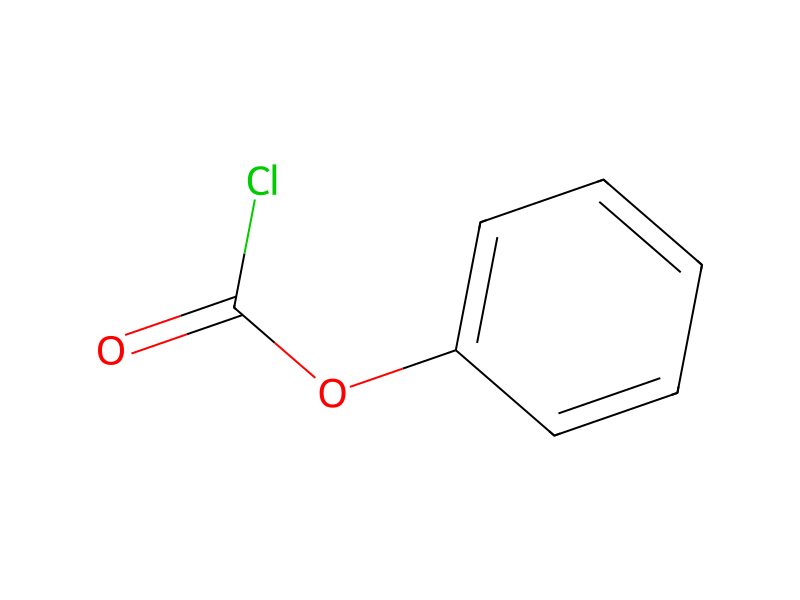
[Cl:1][C:2]1[CH:3]=[C:4]([N:9]([OH:14])[C:10]([NH:12][CH3:13])=[O:11])[CH:5]=[CH:6][C:7]=1[Cl:8].C(N(CC)CC)C.Cl[C:23]([O:25][C:26]1[CH:31]=[CH:30][CH:29]=[CH:28][CH:27]=1)=[O:24]>C(OCC)C>[Cl:1][C:2]1[CH:3]=[C:4]([N:9]([O:14][C:23]([O:25][C:26]2[CH:31]=[CH:30][CH:29]=[CH:28][CH:27]=2)=[O:24])[C:10]([NH:12][CH3:13])=[O:11])[CH:5]=[CH:6][C:7]=1[Cl:8]Participants
5




Procedure
A solution of 1-(3,4-dichlorophenyl)-1-hydroxy-3-methylurea (6 grams; 0.025 mol) in diethyl ether (200 ml), and triethylamine (4 ml) were charged into a glass reaction flask equipped with a mechanical stirrer. Phenyl chloroformate (4.2 grams; 0.027 mol) was added thereto. The reaction mixture was stirred, at room temperature, for a period of about one-half hour resulting in the formation of a precipitate. The precipitate was recovered by filtration, was washed with water, dried, and was recrystallized from a methylene chloride-pentane mixture to yield 1-(3,4-dichlorophenyl)-1-phenoxycarbonyloxy-3-methylurea melting at 93°C with decomposition and having the following elemental analysis as calculated for C15H12Cl2N2O4 :
Workup
- customequipped with a mechanical stirrer
- customresulting in the formation of a precipitate
- filtrationThe precipitate was recovered by filtration
- washwas washed with water
- customdried
- customwas recrystallized from a methylene chloride-pentane mixture
Sources & evidence
- ORD record
- ord-6613350084394748ae63f3fb0dbd3bf9
- Source dataset
- uspto-grants-1976_04
- Patent number
- US03948967
Reaction notes
Loading…