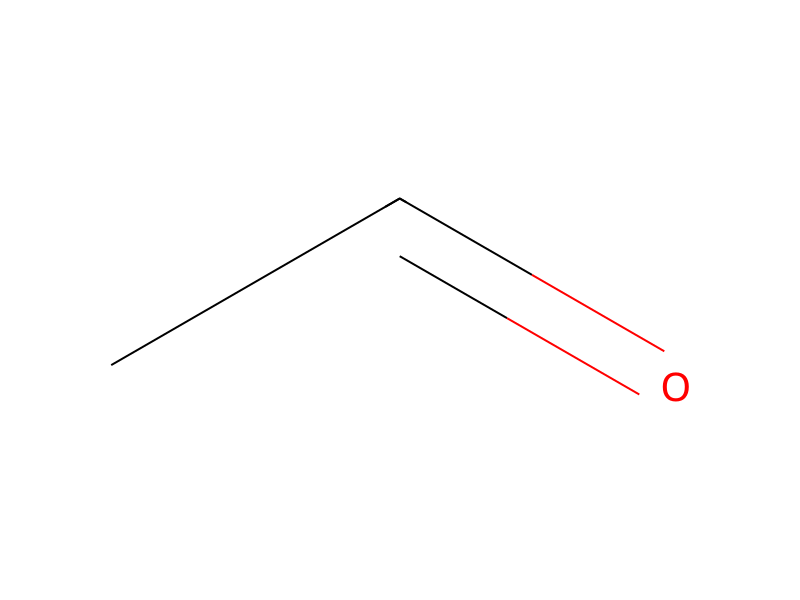
Acetaldehyde → 9-Benzoyl-8-bromo-1,2,3,4-tetrahydrocarbazole-3-carboxylic acid
Reaction equation

[C:1]([N:9]([C:13]1[CH:18]=[CH:17][CH:16]=[CH:15][C:14]=1[Br:19])N=CC)(=[O:8])[C:2]1[CH:7]=[CH:6][CH:5]=[CH:4][CH:3]=1.BrC1C=CC=CC=1NN=CC.[CH2:31]1[CH:37]([C:38]([OH:40])=[O:39])[CH2:36][CH2:35][C:33](=O)[CH2:32]1.C(=O)C.Cl>O.C(O)(=O)C>[C:1]([N:9]1[C:33]2[CH2:32][CH2:31][CH:37]([C:38]([OH:40])=[O:39])[CH2:36][C:35]=2[C:18]2[C:13]1=[C:14]([Br:19])[CH:15]=[CH:16][CH:17]=2)(=[O:8])[C:2]1[CH:3]=[CH:4][CH:5]=[CH:6][CH:7]=1Participants
8
Reactant 5



Product 1

Reagents, catalysts & solvents 2


Procedure
A solution of acetaldehyde 1-benzoyl-1-(2-bromophenyl)hydrazone, prepared from 11 g. of acetaldehyde 2-bromophenyl hydrazone (see below), and 9.16 g. of cyclohexanone-4-carboxylic acid in 25 ml. glacial acetic acid was heated on a hot plate until evolution of acetaldehyde was no longer detected (about two hours), 25 ml. glacial acetic acid saturated with hydrogen chloride was added and heating was continued for 30 minutes. The mixture was cooled and cautiously diluted with water, and the resulting solid was collected by filtration and washed with water to give 2.24 g. of the title compound; m.p. 196°-198°C. (chloroform-heptane).
Workup
- custom(about two hours), 25 ml
- temperatureheating
- temperatureThe mixture was cooled
- filtrationthe resulting solid was collected by filtration
- washwashed with water
- customto give 2.24 g
Sources & evidence
- ORD record
- ord-f6ccce52625749f6b08db8e5fc5078c1
- Source dataset
- uspto-grants-1976_04
- Patent number
- US03948939
Reaction notes
Loading…