Peracetic Acid → 4-tert-Butylcatechol
Reaction equation

[C:1]([C:5]1[CH:10]=[CH:9][C:8]([OH:11])=[CH:7][CH:6]=1)([CH3:4])([CH3:3])[CH3:2].C(OO)(=[O:14])C.C(C1C=CC=CC=1O)CCC>C(OCC)(=O)C>[C:1]([C:5]1[CH:10]=[C:9]([OH:14])[C:8](=[CH:7][CH:6]=1)[OH:11])([CH3:4])([CH3:2])[CH3:3]Participants
5
Reactant 3

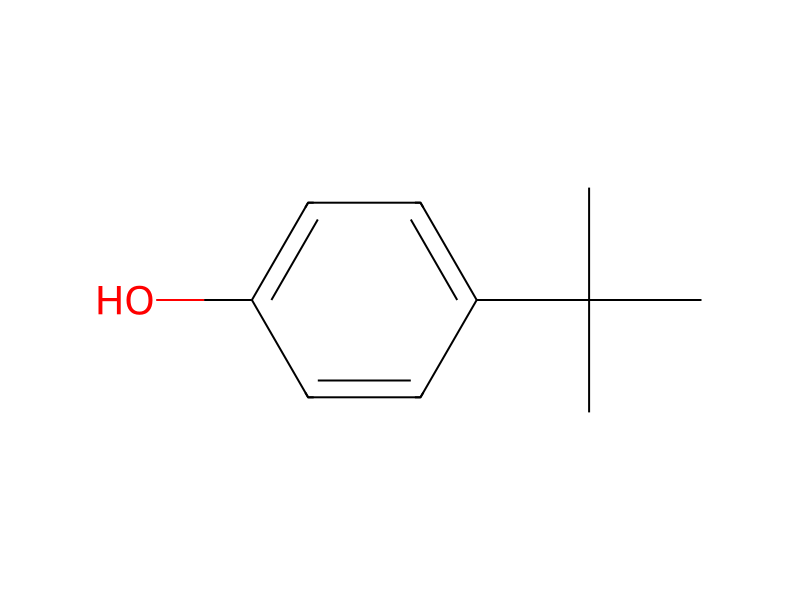

Product 1

Reagents, catalysts & solvents 1

Procedure
After the manner of the procedure of Comparative Example 1, the reaction was carried out by using 20 ml of ethyl acetate as a solvent for para-tert.-butyl phenol and 0.5% by weight of Na5R'5 (P3O10)2 (R' = 2-ethylhexyl, tradename "Victor Wet 35B") as a peracetic acid stabilizer based on the amount of butyl phenol used. Consequently, the conversion of parta-tert.-butyl phenol was 7.2%, 4-tert.-butyl pyrocatechol was formed in a yield of 77% based on the converted butyl phenol and the conversion of peracetic acid was 98.5%.
Sources & evidence
- ORD record
- ord-bf182fe8ef5b432ba40e76f8afc652a5
- Source dataset
- uspto-grants-1976_04
- Patent number
- US03950437
Reaction notes
Loading…