Hydrogen Peroxide → 8-Hydroxyquinoline N-oxide
Reaction equation

[OH:1]C1C=CC=C2C=1C=CC(=O)N2.OC1C=CC=C2C=1C=CC=N2.[OH-].[Na+].[OH-].[K+].[OH:28][C:29]1[CH:30]=[CH:31][CH:32]=[C:33]2[C:38]=1[NH:37][C:36](=O)[CH:35]=[CH:34]2.OC1C=CC=C2C=1N=CC=C2.OO>C(O)(=O)C>[OH:28][C:29]1[CH:30]=[CH:31][CH:32]=[C:33]2[C:38]=1[N+:37]([O-:1])=[CH:36][CH:35]=[CH:34]2Participants
Reactant 7

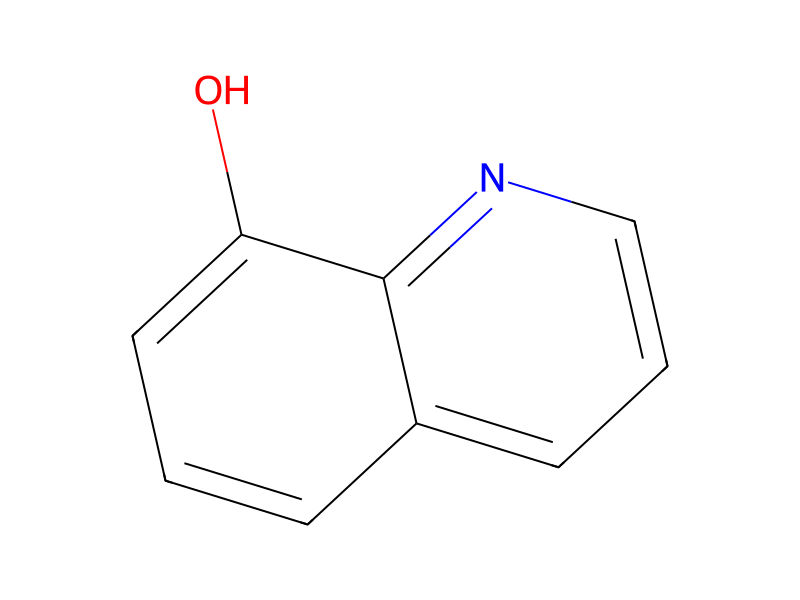




Product 1

Reagents, catalysts & solvents 1

Procedure
The 5-, 6-, 7- and 8-hydroxycarbostyrils used for the preparation of the starting material used in the present invention are described in Berichte, Vol. 20, page 2172, 1887; Journal of Organic Chemistry, Vol. 36, pp 3490-3493, 1971 and ibid, Vol. 33, pp 1089-1092, 1968. Briefly, 5-hydroxycarbostyril can be prepared by fusing 5-hydroxyquinoline with a caustic alkali such as sodium hydroxide or potassium hydroxide, and 8-hydroxycarbostyril can be prepared by reacting 8-hydroxyquinoline with hydrogen peroxide in glacial acetic acid to produce 8-hydroxyquinoline 1-oxide which is then refluxed in acetic anhydride to obtain acetoxycarbostyril and hydrolyzing the resulting acetoxycarbostyril with concentrated hydrochloric acid to give the desired 8-hydroxycarbostyril. The 6- and 7-hydroxycarbostyrils can be prepared in a similar manner to those described above.
Workup
- customcan be prepared
Sources & evidence
- ORD record
- ord-6cf9bf21235749c597467b0e530bb61f
- Source dataset
- uspto-grants-1976_04
- Patent number
- US03953456
Reaction notes
Loading…