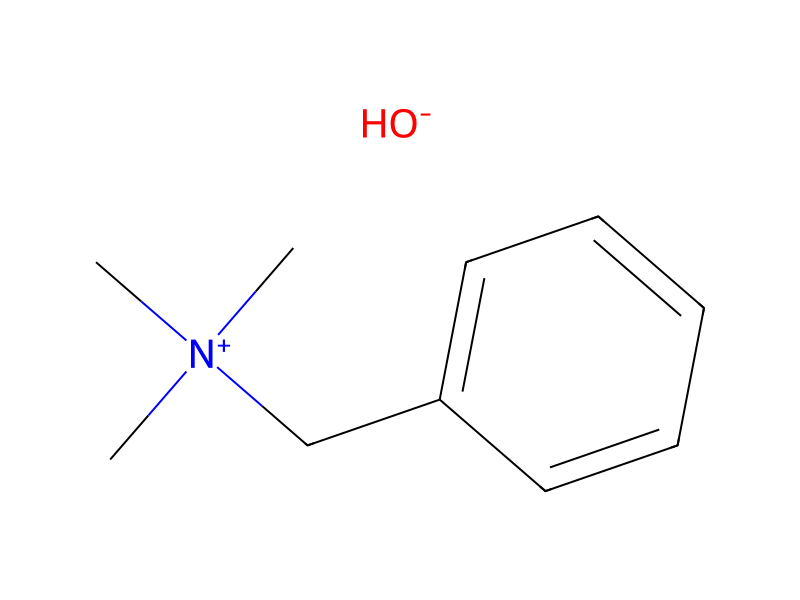
Benzyltrimethylammonium hydroxide → HCID 54073604, compound
Reaction equation

[CH3:1][C:2]([C:4]1[C:5]([OH:11])=[CH:6][CH:7]=[CH:8][C:9]=1[OH:10])=[O:3].C(C1C=CC([CH:20]([O:24]C(C2C=CC(C#N)=CC=2)C2OC2)[CH:21]2[O:23][CH2:22]2)=CC=1)#N.[OH-].[CH2:38]([N+:45](C)(C)C)[C:39]1[CH:44]=[CH:43][CH:42]=[CH:41][CH:40]=1>>[C:2]([C:4]1[C:9]([OH:10])=[CH:8][CH:7]=[CH:6][C:5]=1[O:11][CH2:22][CH:21]([OH:23])[CH2:20][O:24][C:42]1[CH:43]=[CH:44][C:39]([C:38]#[N:45])=[CH:40][CH:41]=1)(=[O:3])[CH3:1]Participants
4


Procedure
A solution of 2,6-dihydroxyacetophenone (15.2 g), p-cyanophenylglycidyl ether (17.5 g) and benzyltrimethylammonium hydroxide (10 drops of a 40% solution) was heated under reflux for 2 days. The solvent was then removed by evaporation under reduced pressure to give 1-(2-acetyl-3-hydroxyphenoxy)-2-hydroxy-3-p-cyanophenoxypropane, 28.4 g, as a beige solid. A portion was recrystallized from ethanol affording cream prisms m.p. 157°-158°.
Workup
- temperatureunder reflux for 2 days
- customThe solvent was then removed by evaporation under reduced pressure
Sources & evidence
- ORD record
- ord-c9d7b25e9774485f8d5fe59a08daf68c
- Source dataset
- uspto-grants-1976_04
- Patent number
- US03953604
Reaction notes
Loading…