Water → 2-(Pivaloylamino)pyridine
Reaction equation

[C:1](Cl)(=[O:6])[C:2]([CH3:5])([CH3:4])[CH3:3].[NH2:8][C:9]1[CH:14]=[CH:13][CH:12]=[CH:11][N:10]=1.C(N(CC)CC)C.O>C(Cl)Cl>[C:1]([NH:8][C:9]1[CH:14]=[CH:13][CH:12]=[CH:11][N:10]=1)(=[O:6])[C:2]([CH3:5])([CH3:4])[CH3:3]Participants
6
Reactant 4


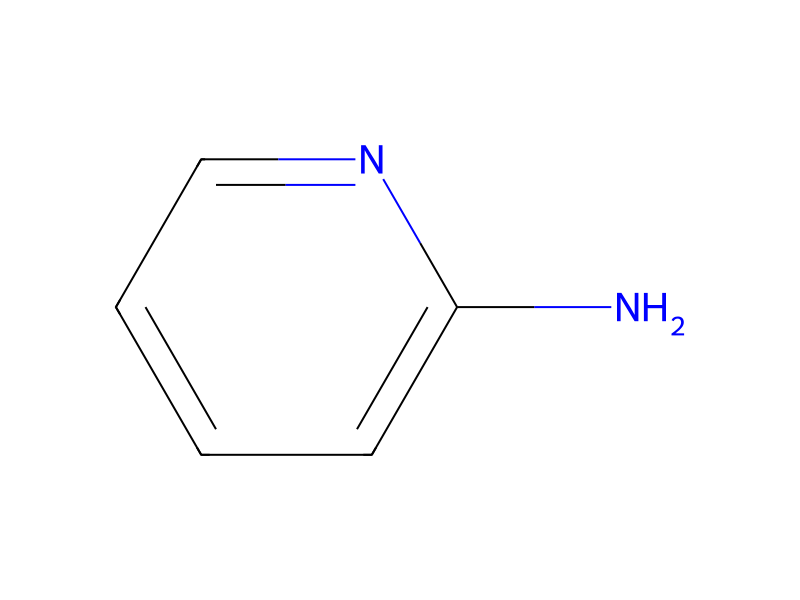

Product 1

Reagents, catalysts & solvents 1

Procedure
A solution of pivaloyl chloride (96 g) in methylene chloride (200 ml) is added dropwise to a cooled mixture of 2-aminopyridine (50 g) and triethylamine (108 g) in methylene chloride (650 ml). The reaction mixture is stirred overnight at RT and poured into water which is basified and the organic layer separated and concentrated in vacuo. Hexane is added to the oil which results in the precipitation of a crystalline solid which is filtered and the solid taken up in aqueous acid. The desired pyridine compound is recrystallized as a white crystalline solid.
Workup
- customthe organic layer separated
- concentrationconcentrated in vacuo
- additionHexane is added to the oil which
- customresults in the precipitation of a crystalline solid which
- filtrationis filtered
- customThe desired pyridine compound is recrystallized as a white crystalline solid
Sources & evidence
- ORD record
- ord-a14f5d9232904da497ebb41834507055
- Source dataset
- uspto-grants-1989_09
- Patent number
- US04866074
Reaction notes
Loading…