Pyridine → 3-Chloroacetyl-5-(benzyloxy)indole
Reaction equation

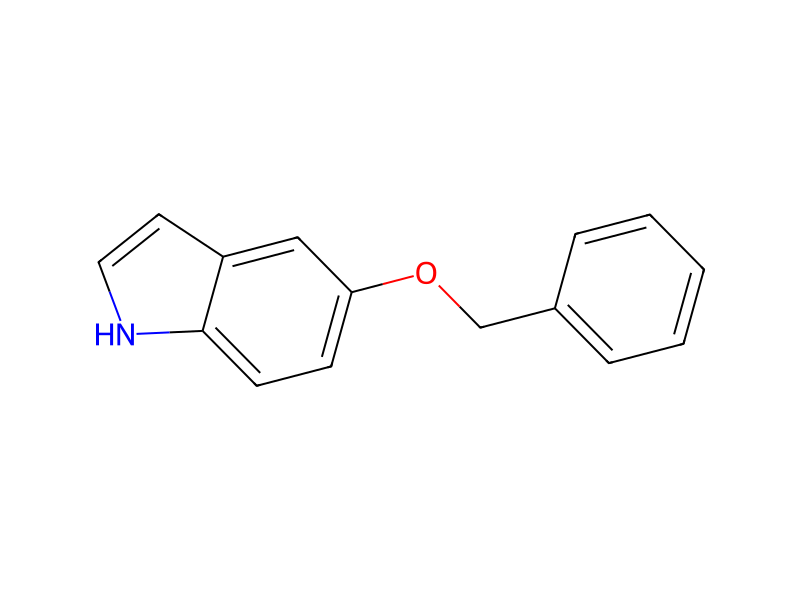
[CH2:1]([O:8][C:9]1[CH:10]=[C:11]2[C:15](=[CH:16][CH:17]=1)[NH:14][CH:13]=[CH:12]2)[C:2]1[CH:7]=[CH:6][CH:5]=[CH:4][CH:3]=1.N1C=CC=CC=1.[Cl:24][CH2:25][C:26](Cl)=[O:27].C(OCC)C.O>O1CCOCC1>[Cl:24][CH2:25][C:26]([C:12]1[C:11]2[C:15](=[CH:16][CH:17]=[C:9]([O:8][CH2:1][C:2]3[CH:3]=[CH:4][CH:5]=[CH:6][CH:7]=3)[CH:10]=2)[NH:14][CH:13]=1)=[O:27]Participants
6
Reactant 4



Product 1

Reagents, catalysts & solvents 1

Procedure
5-(Benzyloxy)indole in dioxane containing pyridine was stirred for 1 hr. at 65° C. under nitrogen while chloroacetyl chloride in dioxane was added dropwise. The reaction mixture was stirred for another 1 hr., then poured into diethyl ether-water. The precipitate was collected by filtration and washed thoroughly with cold Et2O to yield 19, an orange solid.
Workup
- stirringThe reaction mixture was stirred for another 1 hr
- filtrationThe precipitate was collected by filtration
- washwashed thoroughly with cold Et2O
Sources & evidence
- ORD record
- ord-80b58256898549e4b404b9fe585b36dc
- Source dataset
- uspto-grants-1989_09
- Patent number
- US04866084
Reaction notes
Loading…