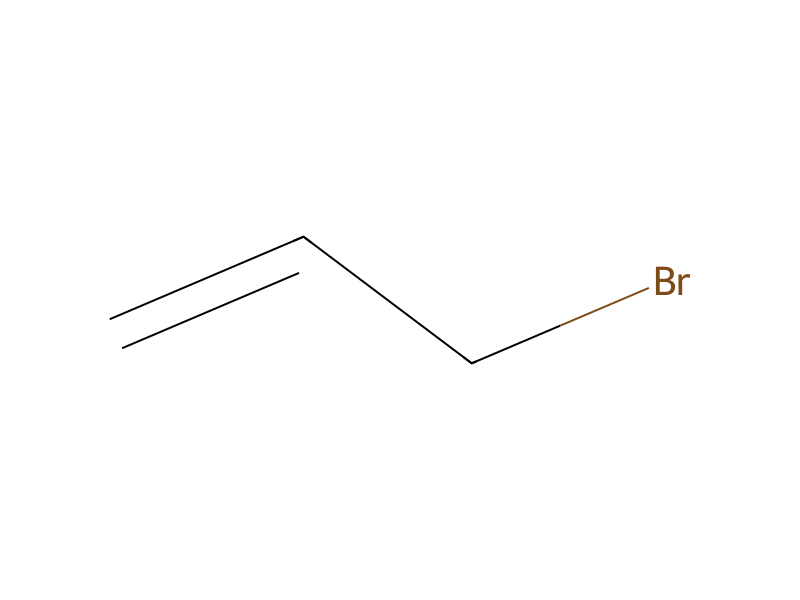
Allyl bromide → HCID 86743382, compound
Reaction equation

[OH:1][N:2]=[CH:3][C:4]1[CH:9]=[CH:8][C:7]([N:10]2[C:14](=[O:15])[CH:13]([C:16]([O:18][CH3:19])=[O:17])[NH:12][C:11]2=[O:20])=[CH:6][CH:5]=1.[H-].[Na+].[H][H].[CH2:25](Br)[CH:26]=[CH2:27]>C(OCC)C.O>[CH2:27]([O:1][N:2]=[CH:3][C:4]1[CH:5]=[CH:6][C:7]([N:10]2[C:14](=[O:15])[CH:13]([C:16]([O:18][CH3:19])=[O:17])[NH:12][C:11]2=[O:20])=[CH:8][CH:9]=1)[CH:26]=[CH2:25]Participants
7






Procedure
A solution of 0.01 mol of 3-[4-(hydroxyiminomethyl)phenyl]-5-methoxycarbonylhydantoin in diethyl ether is treated with 0.01 mol of sodium hydride. After hydrogen evolutionstops, 0.011 mol of allyl bromide is added. The reaction mixture is stirredfor 2 hours. The reaction mixture is then poured into cold water, the layers are separated, and the aqueous layer is extracted with diethyl ether. The combined ether solutions are dried over MgSO4 and filtered, and the solvent is removed by rotary evaporator to yield 3-[4-(allyloxyiminomethyl)phenyl]-5-methoxycarbonylhydantoin.
Workup
- customthe layers are separated
- extractionthe aqueous layer is extracted with diethyl ether
- dry with materialThe combined ether solutions are dried over MgSO4
- filtrationfiltered
- customthe solvent is removed by rotary evaporator
Sources & evidence
- ORD record
- ord-75b53097b7324d6bb93b2c41539b3be7
- Source dataset
- uspto-grants-1989_09
- Patent number
- US04868061
Reaction notes
Loading…