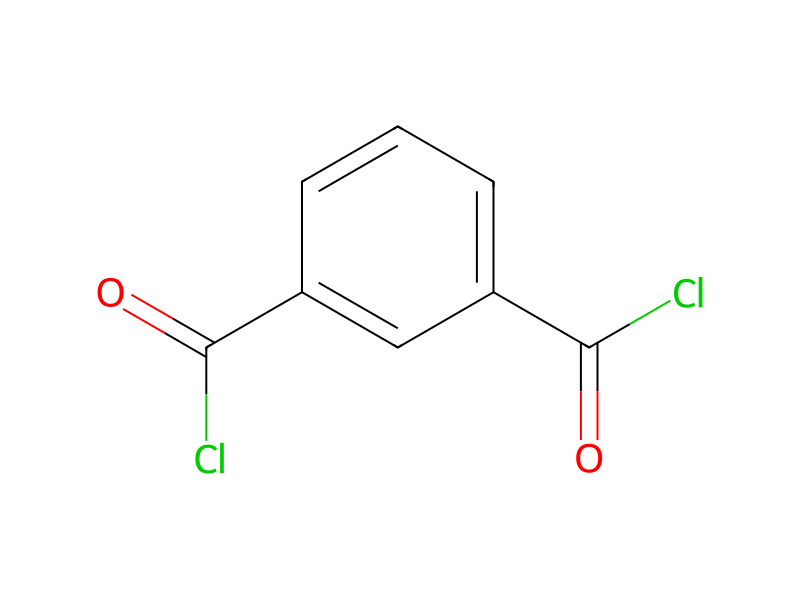
Isophthaloyl chloride → HCID 3090014, compound
Reaction equation

[O:1]([C:8]1[CH:14]=[CH:13][C:11]([NH2:12])=[CH:10][CH:9]=1)[C:2]1[CH:7]=[CH:6][CH:5]=[CH:4][CH:3]=1.[C:15](Cl)(=[O:25])[C:16]1[CH:24]=[CH:23][CH:22]=[C:18]([C:19](Cl)=[O:20])[CH:17]=1.C(Cl)(=O)[C:28]1[CH:36]=[CH:35][C:31](C(Cl)=O)=[CH:30][CH:29]=1>>[O:1]([C:8]1[CH:9]=[CH:10][C:11]([NH:12][C:15](=[O:25])[C:16]2[CH:24]=[CH:23][CH:22]=[C:18]([C:19]([NH:12][C:11]3[CH:13]=[CH:14][C:8]([O:1][C:28]4[CH:29]=[CH:30][CH:31]=[CH:35][CH:36]=4)=[CH:9][CH:10]=3)=[O:20])[CH:17]=2)=[CH:13][CH:14]=1)[C:2]1[CH:3]=[CH:4][CH:5]=[CH:6][CH:7]=1Participants
4


Procedure
N,N'-Bis-(4-phenoxyphenyl)isophthalamide was prepared by the reaction of p-phenoxyaniline with isophthaloyl chloride. This amide (10.5117 g, 0.0210moles) was polymerized with terephthaloyl chloride (4.3243 g, 0.0213 moles)by the procedure of Example 27. The cream colored fibrous polymer which wasobtained had the repeat unit ##STR37##
Sources & evidence
- ORD record
- ord-371ceb5522894f06a1e02ec58e068a7a
- Source dataset
- uspto-grants-1989_09
- Patent number
- US04868271
Reaction notes
Loading…