Potassium Cyanide → HCID 54088817, compound
Reaction equation

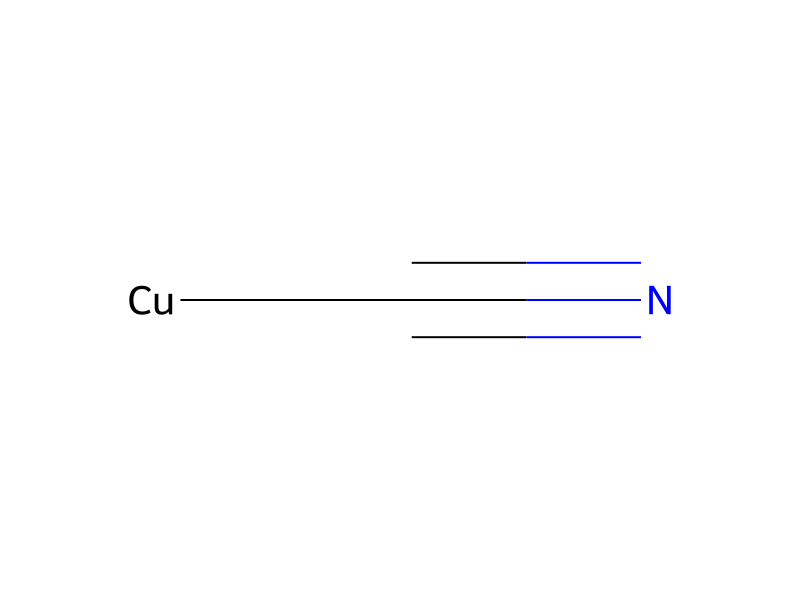
Cl[C:2]1[C:3]2[CH:4]=[CH:5][CH:6]=[CH:7][C:8]=2[N:9]=[C:10]2[C:15]=1[CH:14]=[C:13]1[CH:16]=[CH:17][CH:18]=[CH:19][C:12]1=[CH:11]2.[C-]#N.[K+].[Cu][C:24]#[N:25]>CO>[C:24]([C:2]1[C:3]2[CH:4]=[CH:5][CH:6]=[CH:7][C:8]=2[N:9]=[C:10]2[C:15]=1[CH:14]=[C:13]1[CH:16]=[CH:17][CH:18]=[CH:19][C:12]1=[CH:11]2)#[N:25]Participants
5
Reactant 3


Product 1

Reagents, catalysts & solvents 1

Conditions
- Temperature
- 160 °C
Procedure
A mixture of 12-chloro-benz[b]acridine (2.3 g, 8.68 mmol), potassium cyanide (620 mg, 9.55 mmol) and copper(I) cyanide (391 mg, 4.43 mmol) in anhydrous methanol (16 ml) was bubbled with nitrogen for 1 minute and then kept in a sealed tube. The mixture was heated at 160° C. with stirring for 4.5 hours and cooled. The red-brown mixture was evaporated and the residue was flash-chromatographed (W.C. still et al: J. Org. Chem., 43, 2923, (1978)) on a silica column (Baker silica gel, Cat# 7024-1) packed with hexane and eluted with 10% ethyl acetate-hexane, yielding red 12-cyano-benz[b]acridine (1.54 g, 70%). Rf 0.7 (silica gel, hexane/ethyl acetate 2:1). MS (FAB, Thioglycerol Matrix): m/z 255 (M+1).
Workup
- customwas bubbled with nitrogen for 1 minute
- customkept in a sealed tube
- temperaturecooled
- customThe red-brown mixture was evaporated
- customthe residue was flash-chromatographed (W.C
- washeluted with 10% ethyl acetate-hexane
Sources & evidence
- ORD record
- ord-c4ec26861dae424a8bf8654b0bd57d78
- Source dataset
- uspto-grants-1995_03
- Patent number
- US05395752
Reaction notes
Loading…