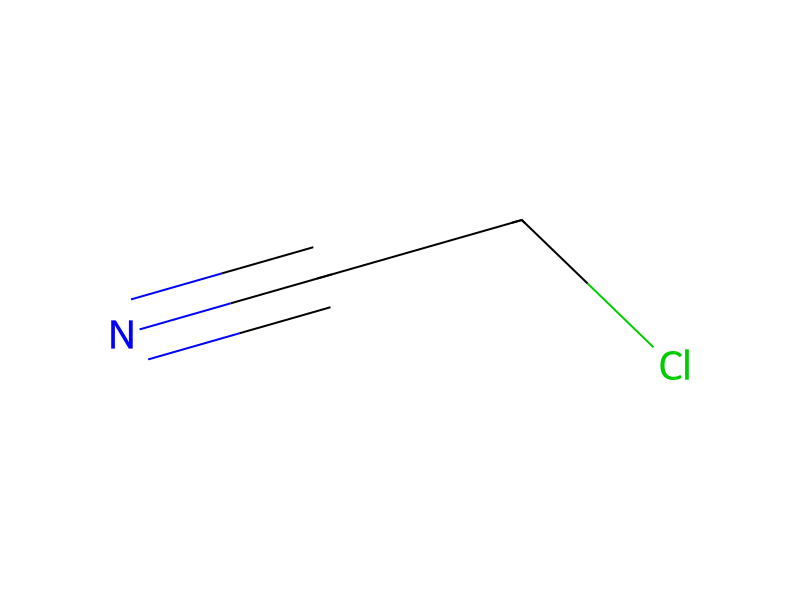
Chloroacetonitrile → HCID 20086616, compound
Reaction equation

[Cl:1][C:2]1[C:7]([Cl:8])=[CH:6][CH:5]=[CH:4][C:3]=1[N:9]1[CH2:14][CH2:13][NH:12][CH2:11][CH2:10]1.Cl[CH2:16][C:17]#[N:18].C(=O)([O-])[O-].[K+].[K+]>C(#N)C>[Cl:1][C:2]1[C:7]([Cl:8])=[CH:6][CH:5]=[CH:4][C:3]=1[N:9]1[CH2:14][CH2:13][N:12]([CH2:16][C:17]#[N:18])[CH2:11][CH2:10]1Participants
5
Reactant 3


Product 1

Reagents, catalysts & solvents 1

Procedure
2,3-Dichlorophenyl piperazine (5.0 g, 0.0216 mol), chloroacetonitrile (1.37 mL, 0.0216 mol), and potassium carbonate (K2CO3) (14.95 g, 0.108 mol) are combined in acetonitrile and heated to reflux for 18 hours. The reaction mixture is concentrated in vacuo and the resulting residue is partitioned between water (H2O) and dichloromethane. The organic layer is dried (sodium sulfate) and concentrated to give 5.45 g of the title compound as a yellow solid; mp 89°-92° C.
Workup
- temperatureheated
- temperatureto reflux for 18 hours
- concentrationThe reaction mixture is concentrated in vacuo
- customthe resulting residue is partitioned between water (H2O) and dichloromethane
- dry with materialThe organic layer is dried (sodium sulfate)
- concentrationconcentrated
Sources & evidence
- ORD record
- ord-a063b33ac7c94443a3e22d79122ec36f
- Source dataset
- uspto-grants-1995_03
- Patent number
- US05395835
Reaction notes
Loading…