Picolyl chloride → 1-(Pyridin-2-ylmethyl)-5-isopropyl-6-(3,5-dimethylphenyl)thio-2,4-pyrimidinedione
Reaction equation

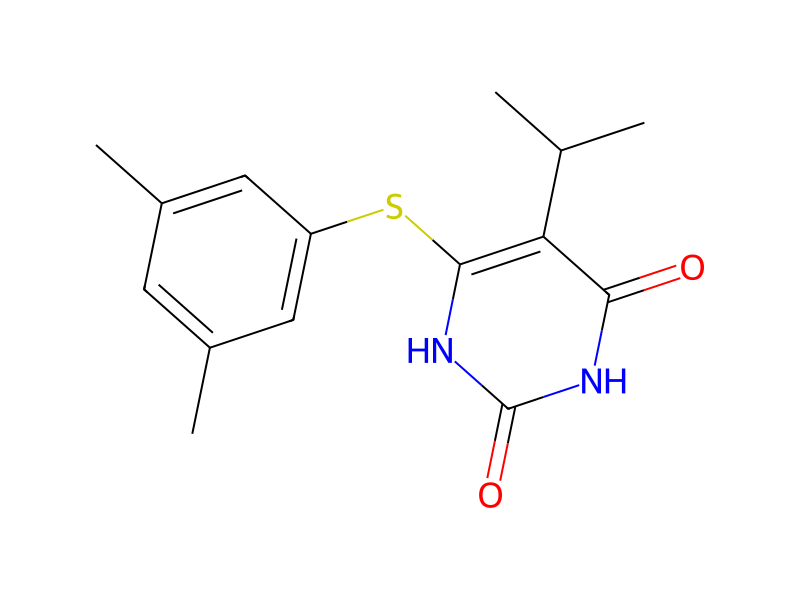
[CH:1]([C:4]1[C:5](=[O:20])[NH:6][C:7](=[O:19])[NH:8][C:9]=1[S:10][C:11]1[CH:16]=[C:15]([CH3:17])[CH:14]=[C:13]([CH3:18])[CH:12]=1)([CH3:3])[CH3:2].[N:21]1[CH:26]=[CH:25][CH:24]=[CH:23][C:22]=1[CH2:27]Cl>>[N:21]1[CH:26]=[CH:25][CH:24]=[CH:23][C:22]=1[CH2:27][N:8]1[C:9]([S:10][C:11]2[CH:12]=[C:13]([CH3:18])[CH:14]=[C:15]([CH3:17])[CH:16]=2)=[C:4]([CH:1]([CH3:3])[CH3:2])[C:5](=[O:20])[NH:6][C:7]1=[O:19]Participants
3


Procedure
5-Isopropyl-6-(3,5-dimethylphenyl)thio-2,4-pyrimidinedione and 2-picolyl chloride were reacted by the same way with the example 1 to obtain the titled compound (112 mg, yield: 29.4%).
Sources & evidence
- ORD record
- ord-10625dc6889c4e66b0ab790304115ecb
- Source dataset
- uspto-grants-2006_01
- Patent number
- US06987114B1
Reaction notes
Loading…