Tributyl borate → 3-Phenyl-2-thiophenecarboxaldehyde
Reaction equation

[CH:1]([C:3]1[S:4][CH:5]=[CH:6][C:7]=1B(O)O)=[O:2].Br[C:12]1[CH:16]=[CH:15]S[C:13]=1[CH:17]1OCCO1.[CH2:22]([Li])CCC.B(OCCCC)(OCCCC)OCCCC>BrC1C=CC=CC=1.C(=O)([O-])[O-].[Na+].[Na+].C(O)C>[C:13]1([C:7]2[CH:6]=[CH:5][S:4][C:3]=2[CH:1]=[O:2])[CH:12]=[CH:16][CH:15]=[CH:22][CH:17]=1Participants
Reactant 4



Product 1

Reagents, catalysts & solvents 2

Procedure
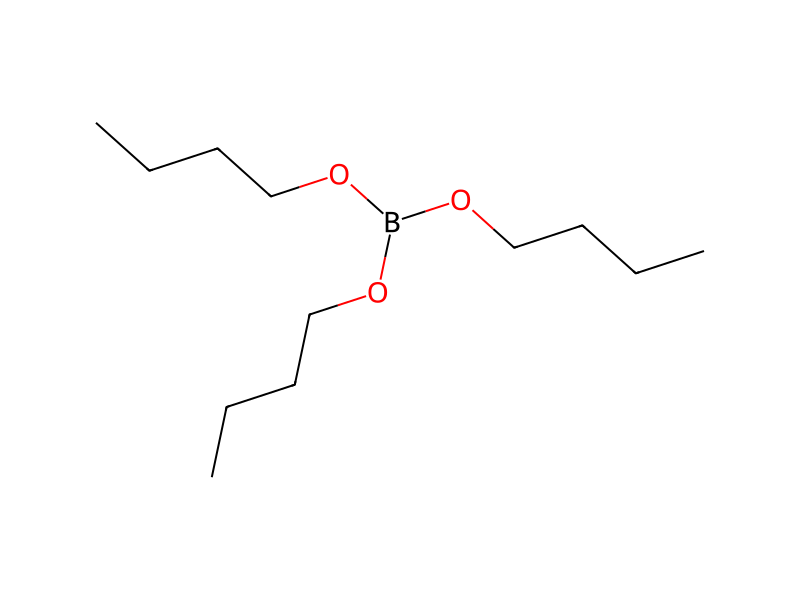
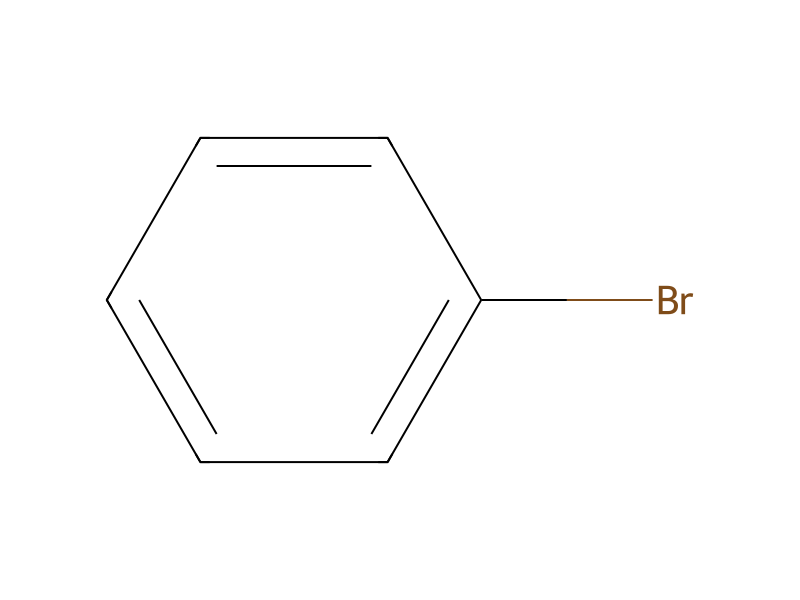
The compounds II are known or can be obtained by known methods. In the case of the compounds wherein Y is sulphur, for example, the compounds of formula II can be obtained in accordance with the following scheme: 3-bromothiophen-2-aldehyde (2) was obtained from commercially available 2,3-dibromothiophen (1) via 3-bromothienyllithium and reaction with N,N-dimethylformamide. The aldehyde 2 was protected by reaction with ethylene glycol to give 2-(3-bromo-2-thienyl)-1,3-dioxolane (3). The latter derivative was converted into 2-formyl-3-thiopheneboronic acid (4) using halogen-metal interconversion between the substrate (3) and butyllithium at −70° C., followed by treatment with tributyl borate and subsequent hydrolysis. The thienylboronic derivative 4 is a very useful intermediate, in fact it can be condensed with various bromo-aromatic compounds. Thus, palladium-catalysed condensation reaction of the derivative 4 with bromobenzene in aqueous sodium carbonate-ethanol mixture as solvent gave 3-phenyl-thiophen-2-carboxaldehyde (5). Oxidation of 5 with Jones' reagent yielded 3-phenyl-thiophen-2-carboxylic acid (6). Chlorination of 6 with thionyl chloride followed by reaction with sodium azide yielded the acyl azide intermediate which on thermolysis in boiling o-dichlorobenzene gave the derivative thieno[2,3-c]isoquinolin-5(4H)-one (7).
Workup
- customat −70° C.
Sources & evidence
- ORD record
- ord-7c9eee60a7e24539b65eb66947f75e08
- Source dataset
- uspto-grants-2006_01
- Patent number
- US06989388B2
Reaction notes
Loading…