Terephthalic Acid → bis(hydroxybutyl) terephthalate
Reaction equation

[C:1]([OH:12])(=[O:11])[C:2]1[CH:10]=[CH:9][C:5]([C:6]([OH:8])=[O:7])=[CH:4][CH:3]=1.[CH2:13]([OH:18])[CH2:14][CH2:15][CH2:16]O>C([O-])(=O)C.[Li+]>[OH:7][CH2:6][CH2:5][CH2:4][CH2:3][O:7][C:6](=[O:8])[C:5]1[CH:9]=[CH:10][C:2]([C:1]([O:12][CH2:16][CH2:15][CH2:14][CH2:13][OH:18])=[O:11])=[CH:3][CH:4]=1Participants
4
Reactant 2

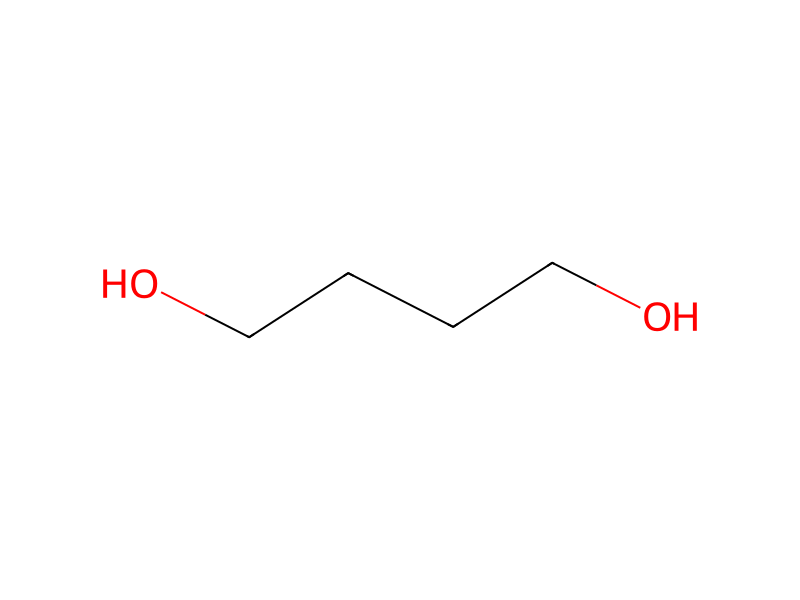
Product 1

Reagents, catalysts & solvents 1

Procedure
An autoclave equipped with a stirrer and distillation outlet was charged with 166 g (1.00 mole) of terephthalic acid, 180 g (2.00 moles) of 1,4-butanediol, and a small amount of lithium acetate as a catalyst. After the autoclave was provided with nitrogen at 3 kg/cm2, the mixture was reacted at 260° C. for 3 hours to obtain BHBT.
Workup
- customAn autoclave equipped with a stirrer
- distillationdistillation outlet
- customAfter the autoclave was provided with nitrogen at 3 kg/cm2
- customthe mixture was reacted at 260° C. for 3 hours
- customto obtain BHBT
Sources & evidence
- ORD record
- ord-f59278fa2be64a63a91cd841b46c5542
- Source dataset
- uspto-grants-1993_03
- Patent number
- US05191057
Reaction notes
Loading…