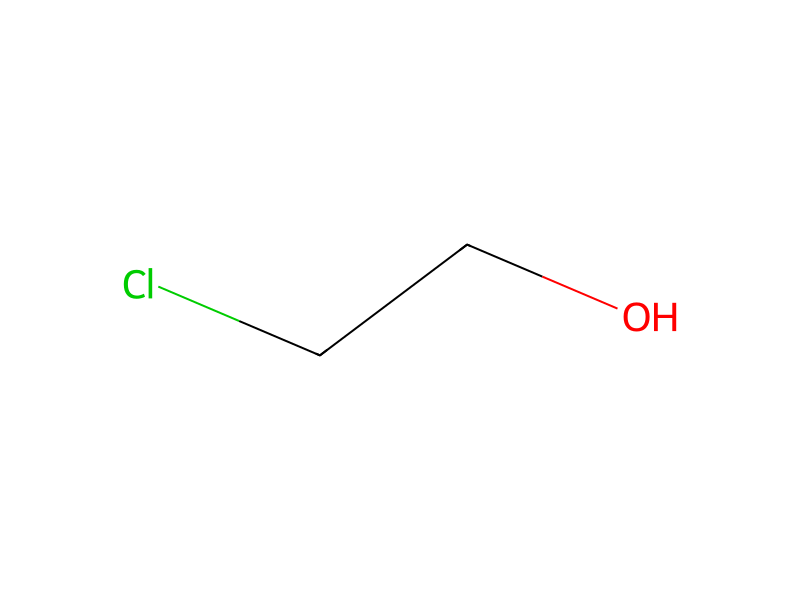
2-Chloroethanol → 2-[4-(1H-imidazol-1-yl)phenoxy]ethanol
Reaction equation

[N:1]1([C:6]2[CH:11]=[CH:10][C:9]([OH:12])=[CH:8][CH:7]=2)[CH:5]=[CH:4][N:3]=[CH:2]1.Cl[CH2:14][CH2:15][OH:16].C(=O)([O-])[O-].[K+].[K+]>C(C(C)=O)C>[N:1]1([C:6]2[CH:11]=[CH:10][C:9]([O:12][CH2:14][CH2:15][OH:16])=[CH:8][CH:7]=2)[CH:5]=[CH:4][N:3]=[CH:2]1Participants
Reactant 3


Product 1

Reagents, catalysts & solvents 1

Procedure
A stirred mixture of 8.0 g (0.050 mole) of 4(1H-imidazol-1-yl)phenol, 13.5 ml (0.20 mole) of 2-chloroethanol and 28 g (0.2 mole) of potassium carbonate in 200 ml of methyl ethyl ketone was heated at reflux, filtered, and concentrated to obtain 5.1 g of 2-[4-(1H-imidazol-1-yl)phenoxy]ethanol (50%). This alcohol (0.25 mole) and 5.2 g (0.030 mole) of sulfamic acid phenyl ester (Example 39) in 100 ml of dioxane was heated at reflux for 20 minutes, concentrated and the residual solid triturated in acetone. The triturant was acidified with an anhydrous solution of hydrogen chloride in isopropyl alcohol and the solid hydrochloride collected by filtration. The product was recrystallized from isopropyl alcohol-isopropyl ether to yield 4.26 g of solid, mp 156°-157° C.
Workup
- temperaturewas heated
- temperatureat reflux
- filtrationfiltered
- concentrationconcentrated
Sources & evidence
- ORD record
- ord-fb8bee77282e44ebaf777983a579c62e
- Source dataset
- uspto-grants-1993_03
- Patent number
- US05194446
Reaction notes
Loading…