Isopropyl iodide → 3-isopropoxynitrobenzene
Reaction equation

[N+:1]([C:4]1[CH:5]=[C:6]([OH:10])[CH:7]=[CH:8][CH:9]=1)([O-:3])=[O:2].[CH:11](I)([CH3:13])[CH3:12].C(=O)([O-])[O-].[K+].[K+]>CC(C)=O>[CH:11]([O:10][C:6]1[CH:5]=[C:4]([N+:1]([O-:3])=[O:2])[CH:9]=[CH:8][CH:7]=1)([CH3:13])[CH3:12]Participants
5
Reactant 3

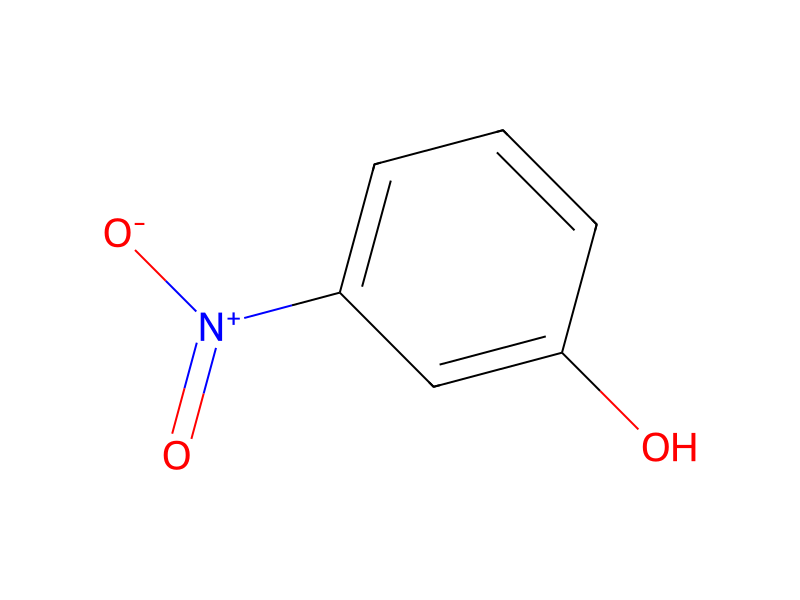

Product 1

Reagents, catalysts & solvents 1

Procedure
3-Nitrophenol (50.0 g, 360 mmol), isopropyl iodide (76.19 g, 450 mmol), and potassium carbonate (60 g) were combined and refluxed under nitrogen overnight in 400 ml of acetone. The reaction mixture was cooled, and the solvent was removed in vacuo . The reaction was combined with about 300 ml of water and thereafter extracted with four 100 ml portions of ethyl acetate. The ethyl acetate extracts were combined and washed twice with 1N sodium hydroxide and brine, dried over anhydrous sodium sulfate, and evaporated to provide 56 g (86%) of 3-isopropoxynitrobenzene as a clear yellow oil.
Workup
- temperatureThe reaction mixture was cooled
- customthe solvent was removed in vacuo
- extractionextracted with four 100 ml portions of ethyl acetate
- washwashed twice with 1N sodium hydroxide and brine
- dry with materialdried over anhydrous sodium sulfate
- customevaporated
Sources & evidence
- ORD record
- ord-51ade90e52c44e5da986c54eb596e5c7
- Source dataset
- uspto-grants-1993_03
- Patent number
- US05196427
Reaction notes
Loading…