Triethylamine → 5-cyclopropyl-8-methoxy-1-(5-methylisoxazole-3-carbonyl)-2,3,5,6-tetrahydrobenzo[b][1,5]diazocin-4(1H)-one
Reaction equation

[CH:1]1([N:4]2[C:11](=[O:12])[CH2:10][CH2:9][NH:8][C:7]3[CH:13]=[CH:14][C:15]([O:17][CH3:18])=[CH:16][C:6]=3[CH2:5]2)[CH2:3][CH2:2]1.C(N(CC)CC)C.[CH3:26][C:27]1[O:31][N:30]=[C:29]([C:32](Cl)=[O:33])[CH:28]=1>ClC(Cl)C>[CH:1]1([N:4]2[C:11](=[O:12])[CH2:10][CH2:9][N:8]([C:32]([C:29]3[CH:28]=[C:27]([CH3:26])[O:31][N:30]=3)=[O:33])[C:7]3[CH:13]=[CH:14][C:15]([O:17][CH3:18])=[CH:16][C:6]=3[CH2:5]2)[CH2:2][CH2:3]1Participants
5
Reactant 3

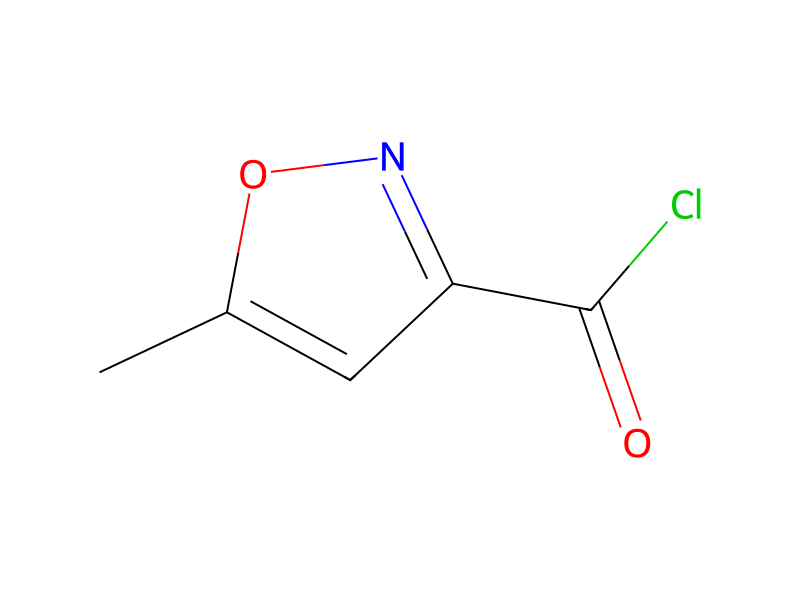

Product 1

Reagents, catalysts & solvents 1

Procedure
To a solution of 5-cyclopropyl-8-methoxy-2,3,5,6-tetrahydrobenzo[b][1,5]diazocin-4(1H)-one (50.0 mg, 0.203 mmol) from Example 1 in dichloroethane (2.0 ml) was added triethylamine (0.057 ml, 0.406 mmol) and 5-methylisoxazole-3-carbonyl chloride (32.5 mg, 0.223 mmol). The reaction mixture was stirred at room temperature overnight and then quenched with saturated aqueous sodium bicarbonate, followed by extraction with dichloromethane. The combined organic phases were dried over sodium sulfate, filtered and concentrated. Preparative thin layer chromatography (ethyl acetate/methanol:98/2) of the crude residue gave the desired compound (53 mg, 74%).
Workup
- customquenched with saturated aqueous sodium bicarbonate
- extractionfollowed by extraction with dichloromethane
- dry with materialThe combined organic phases were dried over sodium sulfate
- filtrationfiltered
- concentrationconcentrated
Sources & evidence
- ORD record
- ord-c7f3c11ad5404a5f9df58fbcba1a309c
- Source dataset
- uspto-grants-2014_07
- Patent number
- US08765728B2
Reaction notes
Loading…