Diisopropylethylamine → N-(6-Bromo-1H-indazol-4-yl)-2-pyridinecarboxamide
Reaction equation

[Br:1][C:2]1[CH:3]=[C:4]([NH2:11])[C:5]2[CH:6]=[N:7][NH:8][C:9]=2[CH:10]=1.Cl.[N:13]1[CH:18]=[CH:17][CH:16]=[CH:15][C:14]=1[C:19](Cl)=[O:20].CCN(C(C)C)C(C)C>C(Cl)Cl>[Br:1][C:2]1[CH:10]=[C:9]2[C:5]([CH:6]=[N:7][NH:8]2)=[C:4]([NH:11][C:19]([C:14]2[CH:15]=[CH:16][CH:17]=[CH:18][N:13]=2)=[O:20])[CH:3]=1Participants
5




Procedure
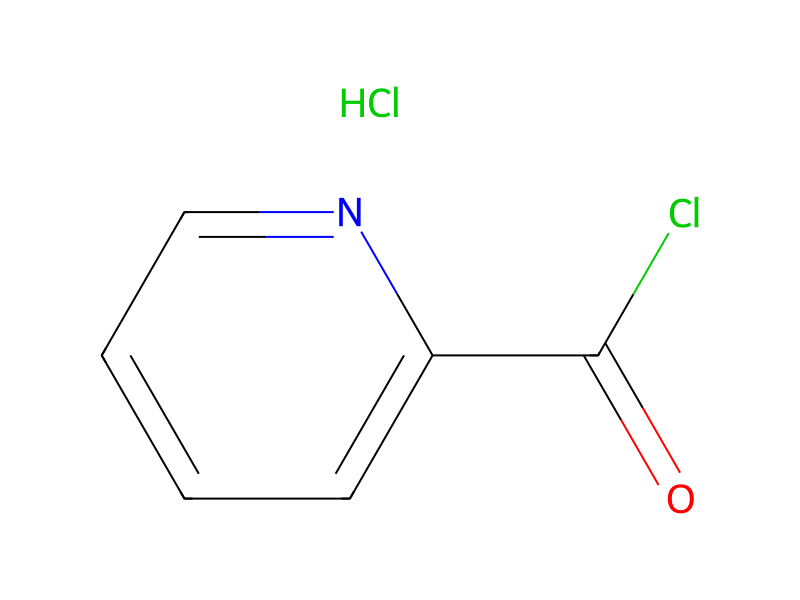
A mixture of 6-bromo-1H-indazol-4-amine (available from Sinova, 100 mg, 0.47 mmol), 2-pyridinecarbonyl chloride hydrochloride (available from Apollo, 100 mg, 0.71 mmol), DIPEA (0.164 ml) in DCM (10 ml) was stirred at room temperature overnight. The reaction mixture was concentrated in vacuo. Purification by Mass Directed Automated Preparative HPLC (Method B) gave after evaporation of solvents the title compound (38 mg) as a white solid. LCMS (Method B) Rt=0.97 mins, MH+=318.
Workup
- concentrationThe reaction mixture was concentrated in vacuo
- customPurification by Mass Directed Automated Preparative HPLC (Method B)
- customgave
- customafter evaporation of solvents the title compound (38 mg) as a white solid
Sources & evidence
- ORD record
- ord-96ef89c4bf0441d4bee38d25658af74c
- Source dataset
- uspto-grants-2014_07
- Patent number
- US08765743B2
Reaction notes
Loading…