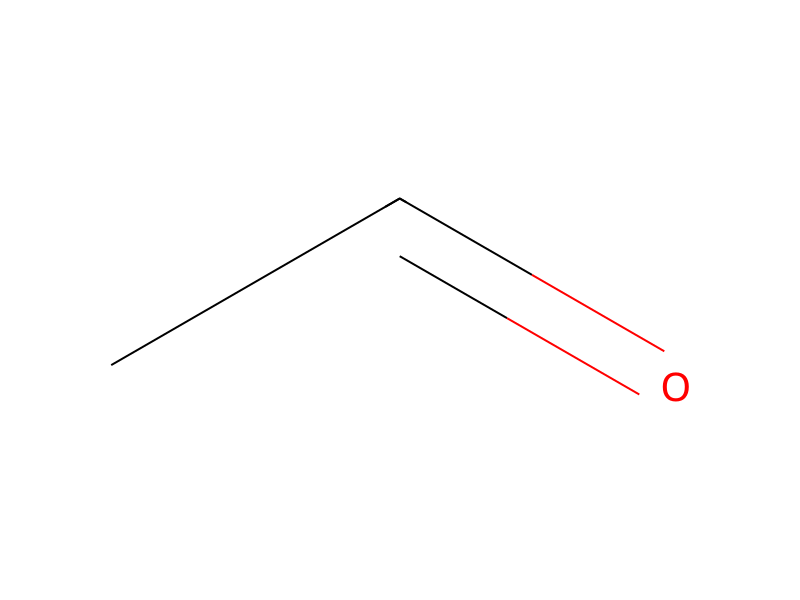
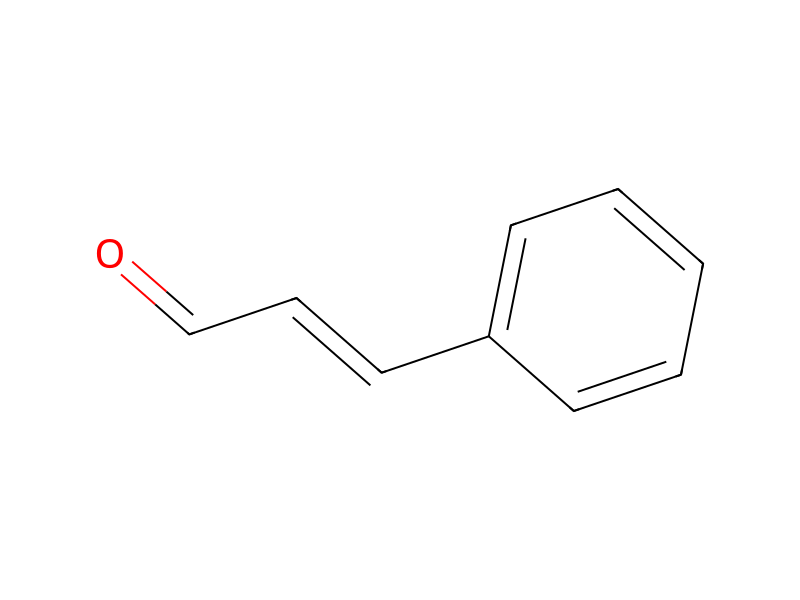
Acetaldehyde → Cinnamaldehyde
Reaction equation

[CH:1](=O)[C:2]1[CH:7]=[CH:6][CH:5]=[CH:4][CH:3]=1.[CH:9](=[O:11])[CH3:10]>>[CH:5]1[CH:6]=[CH:7][C:2](/[CH:1]=[CH:10]/[CH:9]=[O:11])=[CH:3][CH:4]=1Participants
3
Reactant 2

Product 1
Procedure
As shown in Scheme 1, benzaldehyde derivative 1-1 can be reacted with acetaldehyde in the presence of either an acid or a base catalyst to afford cinnamic aldehyde 1-2. Reaction of cinnamic aldehyde 1-2 with an organometallic compound such as a Grignard reagent R8MgX1 [wherein X1 is halo such as Cl or Br], followed by oxidation of the intermediate alcohol to ketone and by reduction of the C═C bond to a C—C single bond under a hydrogenation condition (for example, in the presence of Pd/C catalyst), affords ketone 1-3. Reaction of ketone 1-3 with amine 1-4 under reductive amination condition (such as in the presence of a borohydride reducing reagent) affords compound 1-5.
Sources & evidence
- ORD record
- ord-f21c673475434dc2a24bcc829c169c1c
- Source dataset
- uspto-grants-2014_07
- Patent number
- US08765816B2
Reaction notes
Loading…