Acetone → HCID 66702726, compound
Reaction equation

CC(C)=O.C(=O)([O-])[O-].[K+].[K+].[CH2:11](Br)[CH:12]=[C:13]([CH3:15])[CH3:14].[OH:17][C:18]1[CH:28]=[CH:27][C:21]2[N:22]=[C:23]([C:25]#[N:26])[S:24][C:20]=2[CH:19]=1>CCCCCCC.C(OCC)(=O)C>[CH2:11]([O:17][C:18]1[CH:28]=[CH:27][C:21]2[N:22]=[C:23]([C:25]#[N:26])[S:24][C:20]=2[CH:19]=1)[CH:12]=[C:13]([CH3:15])[CH3:14]Participants




Procedure
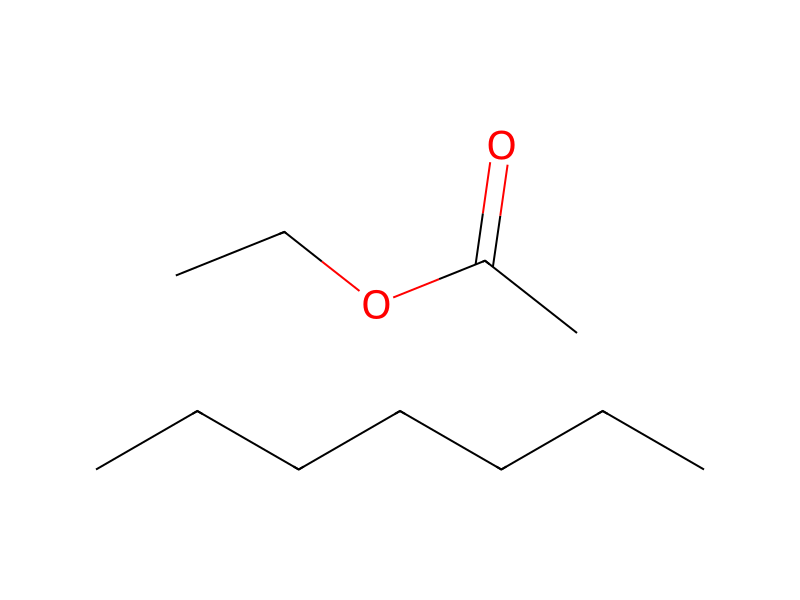
To a dry 25-ml round-bottomed flask containing acetone (5 mL), anhydrous potassium carbonate (1.2 g, 8.4 mmol), and prenyl bromide (839 microliters, 7.3 mmole) was added 6-hydroxy-2-cyanobenzothiazole (1.0 g, 5.6 mmol). The mixture was refluxed under argon with stirring. Reaction progress was monitored by TLC analysis, developing with 2:1 heptane-ethyl acetate. After 28 h, the potassium carbonate was filtered from the cooled reaction mixture. The solution was concentrated in vacuo to yield 1.7 g of solid. The solid was further purified by flash chromatography using 9:1 heptane-ethyl acetate and gradually stepping to 4:1 heptane-ethyl acetate. Appropriate fractions were pooled and evaporated to yield 0.8 g of solid. The structure was confirmed by 1H NMR analysis in DMSO-d6.
Workup
- temperatureThe mixture was refluxed under argon
- customReaction progress
- filtrationthe potassium carbonate was filtered from the cooled reaction mixture
- concentrationThe solution was concentrated in vacuo
Sources & evidence
- ORD record
- ord-f5b2346b0f084417a3283b897f18aad3
- Source dataset
- uspto-grants-2014_07
- Patent number
- US08765969B2
Reaction notes
Loading…