Dimethylformamide → 3-Chloro-2-formylpyridine
Reaction equation

C([Li])CCC.[CH3:6][N:7]([CH2:9][CH2:10][OH:11])C.[Cl:12][C:13]1C=NC=[CH:17][CH:18]=1.CN(C=O)C.[Cl-].[NH4+]>CCCCCC.C1COCC1>[Cl:12][C:13]1[C:9]([CH:10]=[O:11])=[N:7][CH:6]=[CH:17][CH:18]=1Participants
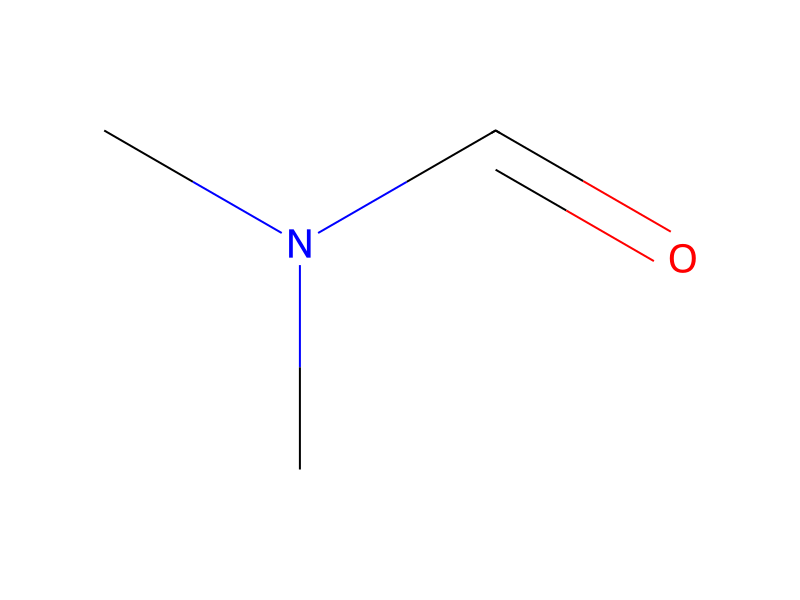


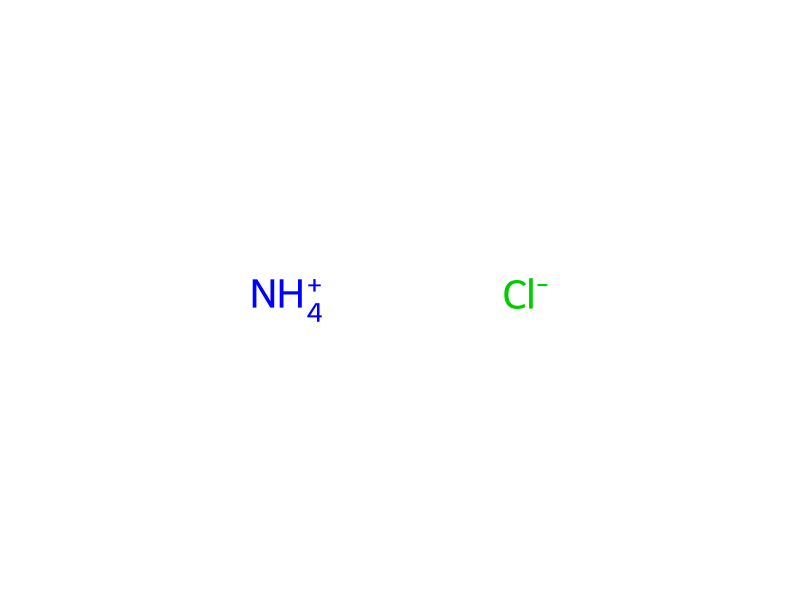
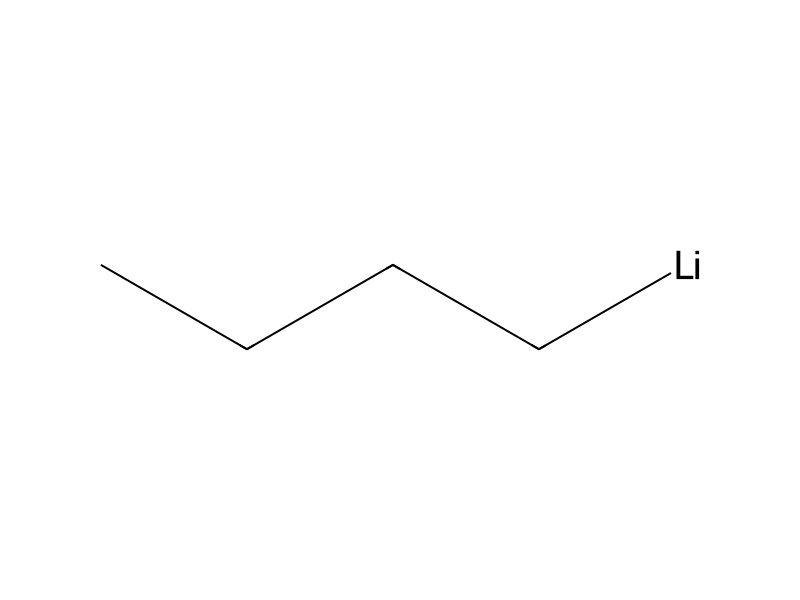

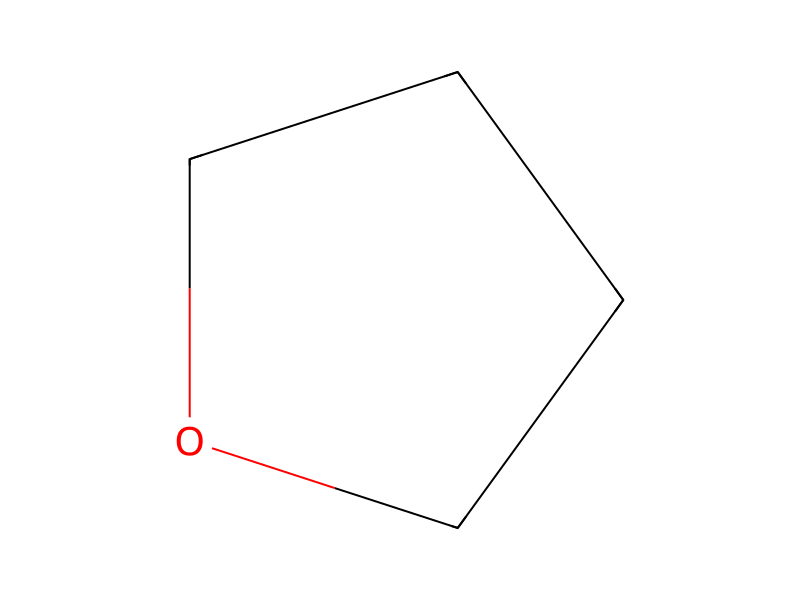
Conditions
- Temperature
- 0 °C
Procedure
A 2.5 M solution of n-butyllithium (96 ml, 240 ml) in n-hexane was added to a solution of N,N dimethylaminoethanol (10.65 g, 120 mmol) in abs. THF (70 ml) at −5° C. under argon within 25 min. The reaction mixture was stirred for 30 min at 0° C. and cooled down to −70° C. At a temperature of −70 to −65° C., a solution of 3-chloropyridine (3.8 ml, 4.5 g, 40 mmol) in abs. THF (60 ml) was added within 10 min and stirred for a further hour at this temperature. Abs. DMF (12.3 ml, 11.7 g, 160 mmol) in THF (100 ml) was then added within 15 min at −65 to −60° C. The dark brown solution was heated within 1 h to 10° C. At a temperature of −20 to −10° C., the reaction mixture was hydrolysed with sat. ammonium chloride solution (120 ml). The mixture was then stirred for 30 min at 0° C. The phases were not separated. The organic solvents were removed under vacuum. The residue was extracted with DCM (120 ml). The phases were separated. The aqueous phase was extracted with DCM (3×120 ml). The organic phases were combined and concentrated without drying. The residue was a brown oil which was further purified by adding water (4×50 ml) and decanting. After the addition of DCM (250 ml) and sodium sulphate, the mixture was dried overnight and then concentrated. The crude product of the 3-chloropyridine-2-carbaldehyde (F) was obtained as a hydrate (brown oil 8.73 g, theoretical yield 6.3 g). Chromatographic purification of the crude product was not possible. The crude product was used without further purification.
Workup
- temperaturecooled down to −70° C
- customAt a temperature of −70 to −65° C.
- stirringstirred for a further hour at this temperature
- temperatureThe dark brown solution was heated within 1 h to 10° C
- customAt a temperature of −20 to −10° C.
- stirringThe mixture was then stirred for 30 min at 0° C
- customThe phases were not separated
- customThe organic solvents were removed under vacuum
- extractionThe residue was extracted with DCM (120 ml)
- customThe phases were separated
- extractionThe aqueous phase was extracted with DCM (3×120 ml)
- concentrationconcentrated
- customwithout drying
- customwas further purified
- additionby adding water (4×50 ml)
- customdecanting
- additionAfter the addition of DCM (250 ml) and sodium sulphate
- customthe mixture was dried overnight
- concentrationconcentrated
Sources & evidence
- ORD record
- ord-2c81f2e4643e45bf8222bc69da35e7a4
- Source dataset
- uspto-grants-2014_07
- Patent number
- US08772307B2
Reaction notes
Loading…