Bromine → 4-Benzyloxy-5-bromo-1-methyl-1,3-dihydro-indol-2-one
Reaction equation

[Br-:1].[K+].BrBr.[CH2:5]([O:12][C:13]1[CH:21]=[CH:20][CH:19]=[C:18]2[C:14]=1[CH:15]=[CH:16][N:17]2C)[C:6]1[CH:11]=[CH:10][CH:9]=[CH:8][CH:7]=1.[C:23](=[O:26])(O)[O-].[Na+]>O.ClCCl.[Zn].C(O)(C)(C)C>[CH2:5]([O:12][C:13]1[C:21]([Br:1])=[CH:20][CH:19]=[C:18]2[C:14]=1[CH2:15][C:23](=[O:26])[N:17]2[CH3:16])[C:6]1[CH:11]=[CH:10][CH:9]=[CH:8][CH:7]=1Participants
Reactant 4

Product 1

Reagents, catalysts & solvents 4

Conditions
- Temperature
- 50 °C
Procedure
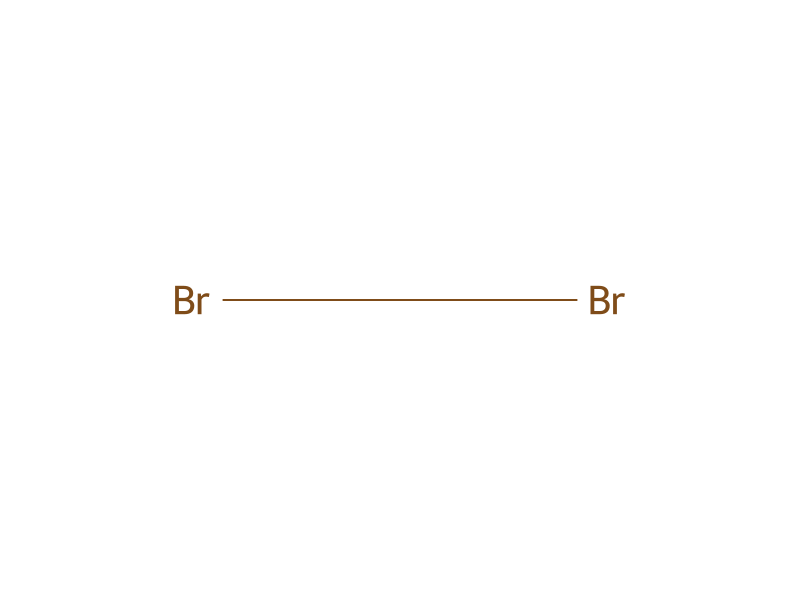
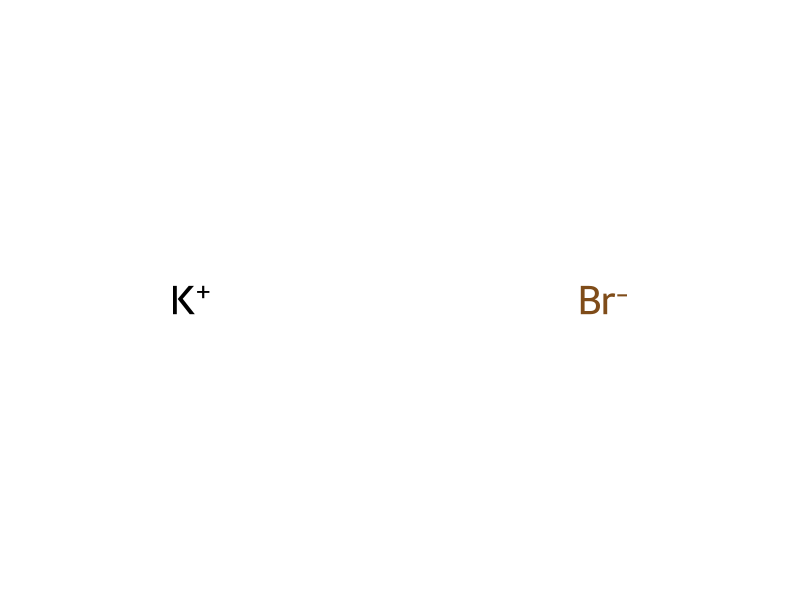
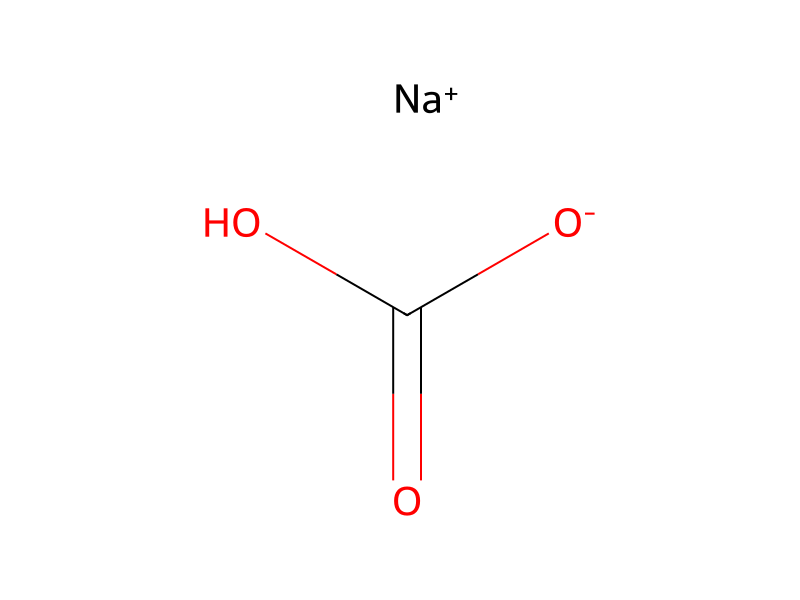
To a solution of potassium bromide (3.08 g, 25.8 mmol) in water (50 mL) was added bromine (0.667, 12.92 mmol). A separate flask containing 4-benzyloxy-1-methyl-1H-indole (1.46 g, 6.15 mmol) was charged with tert-butanol (50 ml). The mixture was heated to 50° C. until homogeneous. Then water (50 mL) was added to the solution. The mixture was cooled to −10° C. and 50 mL of the bromine solution prepared above was added dropwise over 1 hour. During the addition, the temperature was maintained at −10° C. After addition was complete, the reaction was neutralized with saturated aqueous sodium bicarbonate and quenched with saturated aqueous sodium thiosulfate. The reaction mixture was then diluted with dichloromethane and saturated aqueous sodium bicarbonate and the layers were separated. The aqueous layer was extracted two additional times with dichloromethane and the organic layers were combined, dried over anhydrous sodium sulfate, filtered, and concentrated. The resulting residue was dissolved in acetic acid (20 mL) and zinc dust (1.58 g, 24.33 mmol) was added. The reaction was permitted to stir for 30 minutes at room temperature. Then the reaction mixture was then diluted with dichloromethane (100 mL) and filtered. To the filtrate, ice-water was added, followed by solid sodium carbonate until the pH of reaction mixture to was ca. 8. The resulting layers were separated and the aqueous layer was extracted two additional times with dichloromethane. The organic layers were combined, dried over anhydrous sodium sulfate, filtered, and concentrated. The resulting residue was purified by silica gel flash chromatography (ethyl acetate-heptane, 0 to 60%) to afford 4-benzyloxy-5-bromo-1-methyl-1,3-dihydro-indol-2-one. MS: (ES+) m/z 332.0 (M+H)+.
Workup
- temperatureThe mixture was cooled to −10° C.
- additionabove was added dropwise over 1 hour
- additionDuring the addition
- temperaturethe temperature was maintained at −10° C
- additionAfter addition
- customquenched with saturated aqueous sodium thiosulfate
- additionThe reaction mixture was then diluted with dichloromethane and saturated aqueous sodium bicarbonate
- customthe layers were separated
- extractionThe aqueous layer was extracted two additional times with dichloromethane
- dry with materialdried over anhydrous sodium sulfate
- filtrationfiltered
- concentrationconcentrated
- dissolutionThe resulting residue was dissolved in acetic acid (20 mL)
- filtrationfiltered
- additionTo the filtrate, ice-water was added
- customfollowed by solid sodium carbonate until the pH of reaction mixture
- customThe resulting layers were separated
- extractionthe aqueous layer was extracted two additional times with dichloromethane
- dry with materialdried over anhydrous sodium sulfate
- filtrationfiltered
- concentrationconcentrated
- customThe resulting residue was purified by silica gel flash chromatography (ethyl acetate-heptane, 0 to 60%)
Sources & evidence
- ORD record
- ord-ebcf39640a124ed68201e0c5289df31c
- Source dataset
- uspto-grants-2014_07
- Patent number
- US08778972B2
Reaction notes
Loading…