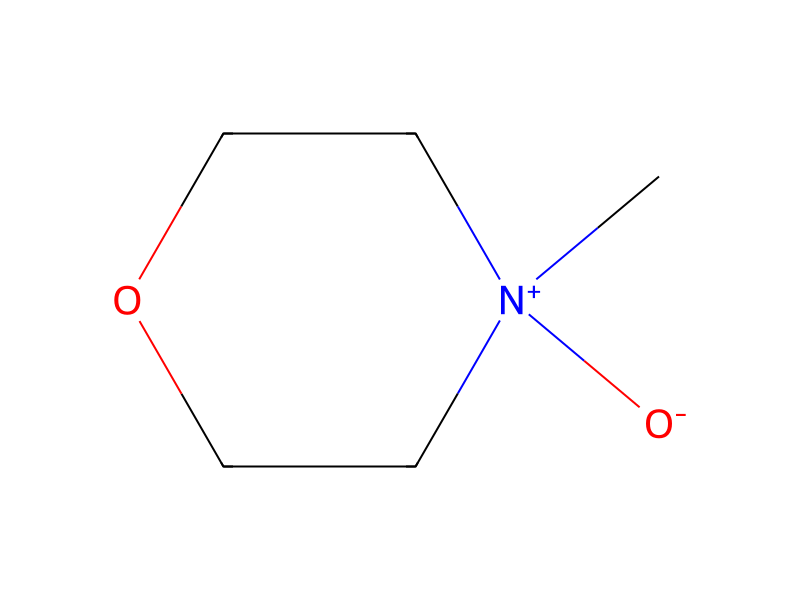
Methyl morpholine oxide → HCID 69205140, compound
Reaction equation

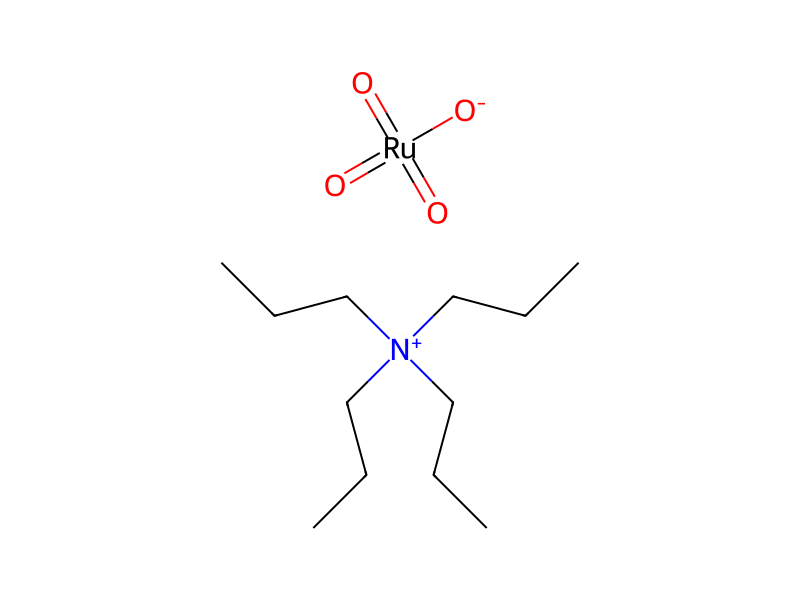
[C:1]([O:4][CH2:5][CH2:6][CH:7]([OH:20])[CH2:8][N:9]1[C:13](=[O:14])[C:12]2=[CH:15][CH:16]=[CH:17][CH:18]=[C:11]2[C:10]1=[O:19])(=[O:3])[CH3:2].C[N+]1([O-])CCOCC1>C(Cl)Cl.[Ru]([O-])(=O)(=O)=O.C([N+](CCC)(CCC)CCC)CC>[C:1]([O:4][CH2:5][CH2:6][C:7](=[O:20])[CH2:8][N:9]1[C:10](=[O:19])[C:11]2=[CH:18][CH:17]=[CH:16][CH:15]=[C:12]2[C:13]1=[O:14])(=[O:3])[CH3:2]Participants
5
Reactant 2

Product 1

Reagents, catalysts & solvents 2

Procedure
A solution of N-(4-acetoxy-2-hydroxybutyl)phthalimide (10.2 g, 36.8 mmol) in CH2Cl2 (185 mL) at 0° C. was treated with molecular seives (18.4 g), N-methylmorpholine oxide (6.46 g, 55.2 mmol), and tetrapropylammonium perruthenate (1.29 g, 3.7 mmol). The mixture was allowed to warm to room temperature over 20 minutes and immediately filtered through silica (using 500 g SiO2 in a coarse glass flitted funnel). The silica was washed with excess diethyl ether (2 L) and concentrated under reduced pressure to afford the desired N-(4-acetoxy-2-oxobutyl)phthalimide (9.22 g, 92%).
Workup
- filtrationimmediately filtered through silica (
- washThe silica was washed with excess diethyl ether (2 L)
- concentrationconcentrated under reduced pressure
Sources & evidence
- ORD record
- ord-d344a86d1f084823815af06ebe4b829b
- Source dataset
- uspto-grants-2014_07
- Patent number
- US08778967B2
Reaction notes
Loading…