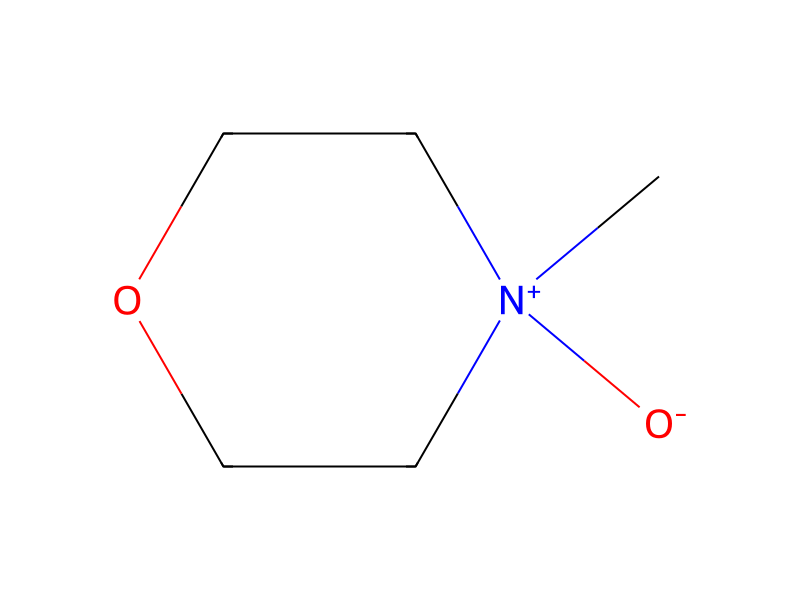
Methyl morpholine oxide → 5-(4-Bromo-phenyl)-3-methyl-isoxazole-4-carbaldehyde
Reaction equation

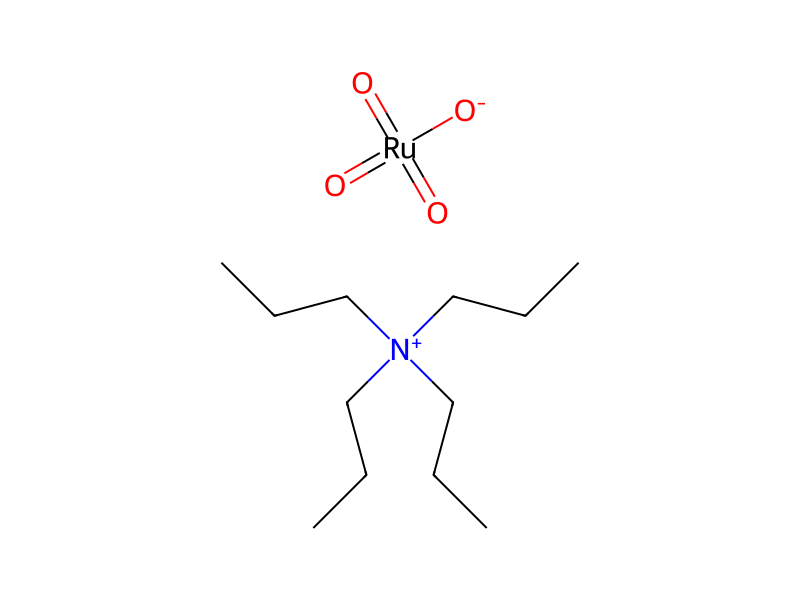
[Br:1][C:2]1[CH:7]=[CH:6][C:5]([C:8]2[O:12][N:11]=[C:10]([CH3:13])[C:9]=2[CH2:14][OH:15])=[CH:4][CH:3]=1.C[N+]1([O-])CCOCC1>C(Cl)Cl.[Ru]([O-])(=O)(=O)=O.C([N+](CCC)(CCC)CCC)CC>[Br:1][C:2]1[CH:3]=[CH:4][C:5]([C:8]2[O:12][N:11]=[C:10]([CH3:13])[C:9]=2[CH:14]=[O:15])=[CH:6][CH:7]=1Participants
5



Procedure
[5-(4-Bromo-phenyl)-3-methyl-isoxazol-4-yl]-methanol (1.2 g, 4.5 mmol) was treated with 4-methylmorpholine N-oxide (0.786 g, 6.7 mmol) and tetrapropylammonium perruthenate (catalytic) in CH2Cl2. The reaction was monitored by analytical LCMS and when complete it was filtered through Celite then submitted to silica gel chromatography to give the title compound.
Workup
- filtrationwas filtered through Celite
Sources & evidence
- ORD record
- ord-6bb49464bf4945c6bb222deef50dc9ee
- Source dataset
- uspto-grants-2014_07
- Patent number
- US08778983B2
Reaction notes
Loading…