HCID 18187614, compound → HCID 66577688, compound
Reaction equation

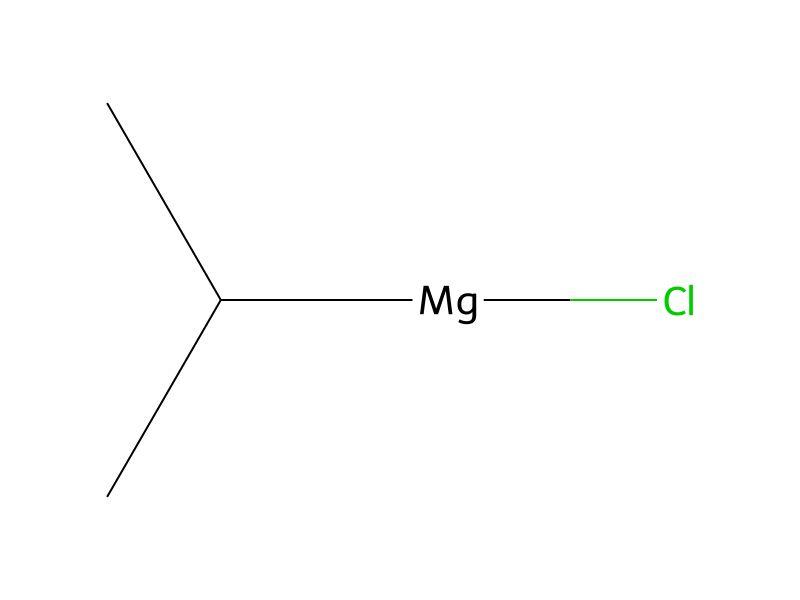
[CH2:1]([C:8]1[CH:9]=[N:10][CH:11]=[C:12](Br)[CH:13]=1)[C:2]1[CH:7]=[CH:6][CH:5]=[CH:4][CH:3]=1.C([Mg]Cl)(C)C.C([Li])CCC.[Br:25][C:26]1[CH:31]=[CH:30][C:29]([C:32]2[O:36][N:35]=[C:34]([CH3:37])[C:33]=2[CH:38]=[O:39])=[CH:28][CH:27]=1>C1COCC1>[CH2:1]([C:8]1[CH:13]=[C:12]([CH:38]([C:33]2[C:34]([CH3:37])=[N:35][O:36][C:32]=2[C:29]2[CH:30]=[CH:31][C:26]([Br:25])=[CH:27][CH:28]=2)[OH:39])[CH:11]=[N:10][CH:9]=1)[C:2]1[CH:7]=[CH:6][CH:5]=[CH:4][CH:3]=1Participants





Conditions
- Temperature
- 0 °C
Procedure
3-Benzyl-5-bromo-pyridine (0.474 g, 1.91 mmol) was dissolved in THF (10 mL) and cooled to 0° C. Isopropylmagnesium chloride (2 M in THF, 0.96 mL, 1.91 mmol) was added dropwise and the reaction was allowed to warm to room temperature and stirred for 1 hour. Analytical LCMS indicated no reaction so an additional portion of isopropylmagnesium chloride (1.91 mmol) was added and the reaction stirred for 1 hour at room temperature. Analytical LCMS still indicated no progress so the reaction was cooled to −78° C. and n-butyllithium (2.5 M in hexanes, 0.764 mL, 1.91 mL) was added. The reaction was allowed to slowly warm to 0° C. then 5-(4-bromo-phenyl)-3-methyl-isoxazole-4-carbaldehyde (0.610 g, 2.29 mmol) was added and the reaction was allowed to warm to room temperature. The reaction was quenched with H2O, submitted to standard aqueous workup and then purified via silica gel chromatography to yield the title compound.
Workup
- temperatureto warm to room temperature
- additionwas added
- stirringthe reaction stirred for 1 hour at room temperature
- temperaturewas cooled to −78° C.
- temperatureto slowly warm to 0° C.
- temperatureto warm to room temperature
- customThe reaction was quenched with H2O
- custompurified via silica gel chromatography
Sources & evidence
- ORD record
- ord-896a1b67814e4ab99fd92a02b8fe2072
- Source dataset
- uspto-grants-2014_07
- Patent number
- US08778983B2
Reaction notes
Loading…