Phenylhydrazine → HCID 58072455, compound
Reaction equation

C[N:2](C)[CH:3]=[CH:4][C:5]([C:7]1[C:12](=[O:13])[CH:11]=[CH:10][N:9]([C:14]2[CH:19]=[CH:18][CH:17]=[C:16]([F:20])[CH:15]=2)[N:8]=1)=O.[C:22]1([NH:28]N)[CH:27]=[CH:26][CH:25]=[CH:24][CH:23]=1>CO>[F:20][C:16]1[CH:15]=[C:14]([N:9]2[CH:10]=[CH:11][C:12](=[O:13])[C:7]([C:5]3[N:28]([C:22]4[CH:27]=[CH:26][CH:25]=[CH:24][CH:23]=4)[N:2]=[CH:3][CH:4]=3)=[N:8]2)[CH:19]=[CH:18][CH:17]=1Participants
4
Reactant 2
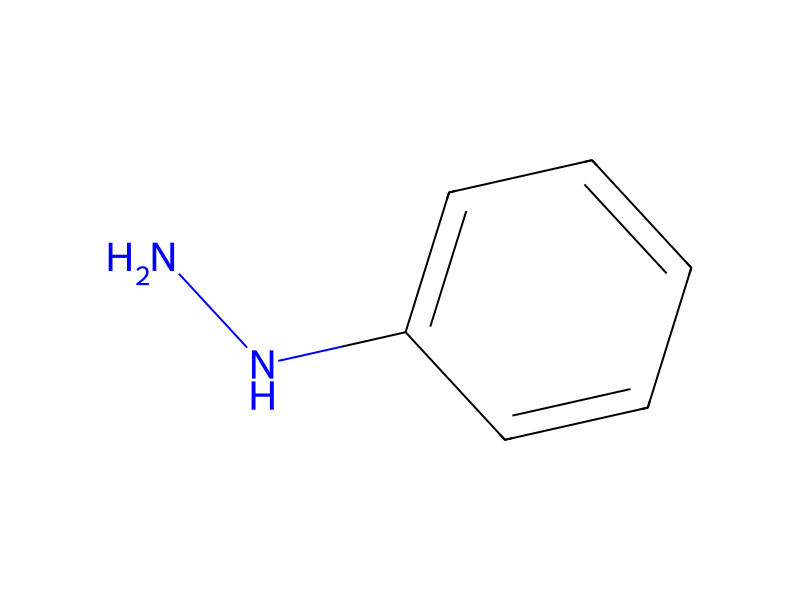

Product 1

Reagents, catalysts & solvents 1

Procedure
To a solution of 3-[3-(dimethylamino)prop-2-enoyl]-1-(3-fluorophenyl)pyridazin-4(1H)-one (crude, 840 mg, 2.93 mmol) in 20 mL of methanol was added phenylhydrazine (474 mg, 4.39 mmol). The mixture was refluxed for 4 h and concentrated. The residue was dissolved in dichloromethane (20 mL), washed with 1N HCl aqueous solution and brine, dried over Na2SO4, and concentrated under reduced pressure. The residue was purified by prep-HPLC to give 1-(3-fluorophenyl)-3-(1-phenyl-1H-pyrazol-5-yl)pyridazin-4(1H)-one (169 mg, 17% for two steps) as a yellow solid.
Workup
- temperatureThe mixture was refluxed for 4 h
- concentrationconcentrated
- dissolutionThe residue was dissolved in dichloromethane (20 mL)
- washwashed with 1N HCl aqueous solution and brine
- dry with materialdried over Na2SO4
- concentrationconcentrated under reduced pressure
- customThe residue was purified by prep-HPLC
Sources & evidence
- ORD record
- ord-91e06375e05444af8e6887b1e1a9718f
- Source dataset
- uspto-grants-2014_07
- Patent number
- US08778944B2
Reaction notes
Loading…