Dichloromethane → 3-(2,3,4,6-tetra-O-acetyl-beta-D-glucopyranosyloxy)-4-[(4-bromo-2-methyl-phenyl)methyl]-5-isopropyl-1H-pyrazole
Reaction equation

[Br:1][C:2]1[CH:7]=[CH:6][C:5]([CH2:8][C:9]2[C:10]([OH:17])=[N:11][NH:12][C:13]=2[CH:14]([CH3:16])[CH3:15])=[C:4]([CH3:18])[CH:3]=1.[C:19]([O:22][C@@H:23]1[C@@H:28]([O:29][C:30](=[O:32])[CH3:31])[C@H:27]([O:33][C:34](=[O:36])[CH3:35])[C@@H:26]([CH2:37][O:38][C:39](=[O:41])[CH3:40])[O:25][C@@H:24]1Br)(=[O:21])[CH3:20].C(=O)([O-])[O-].[K+].[K+].ClCCl>[Cl-].C([N+](CCCC)(CCCC)CCCC)C1C=CC=CC=1.C(OCC)(=O)C.ClCCl.O>[C:19]([O:22][C@@H:23]1[C@@H:28]([O:29][C:30](=[O:32])[CH3:31])[C@H:27]([O:33][C:34](=[O:36])[CH3:35])[C@@H:26]([CH2:37][O:38][C:39](=[O:41])[CH3:40])[O:25][C@H:24]1[O:17][C:10]1[C:9]([CH2:8][C:5]2[CH:6]=[CH:7][C:2]([Br:1])=[CH:3][C:4]=2[CH3:18])=[C:13]([CH:14]([CH3:15])[CH3:16])[NH:12][N:11]=1)(=[O:21])[CH3:20]Participants
Reactant 4




Product 1

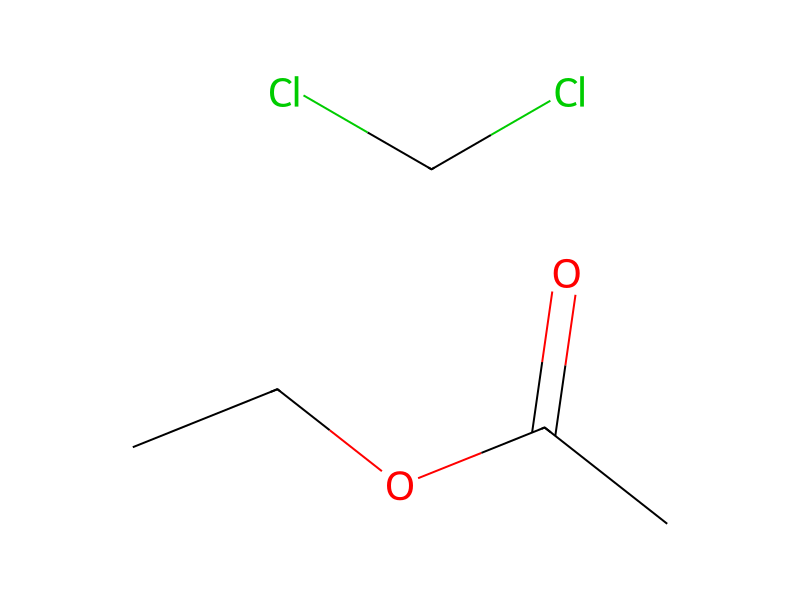
Reagents, catalysts & solvents 3


Conditions
- Temperature
- 50 °C
Procedure
4-[(4-Bromo-2-methyl-phenyl)methyl]-5-isopropyl-1H-pyrazol-3-ol (110 g, 356 mmol), 2,3,4,6-tetra-O-acetyl-alpha-D-glucopyranosyl bromide (204.8 g, 498 mmol), benzyltributylammonium chloride (17.2 g, 53.4 mmol), potassium carbonate (122.9 g, 889 mmol), dichloromethane (1100 mL), and water (330 mL) are combined and the mixture is stirred at 50° C. temperature for 16 hours. Further 2,3,4,6-tetra-O-acetyl-alpha-D-glucopyranosyl bromide (29.26 g, 71.2 mmol) is added and the mixture stirred at 55° C. for 3 hours. The mixture is cooled to ambient temperature and stirred overnight. Further 2,3,4,6-tetra-O-acetyl-alpha-D-glucopyranosyl bromide (29.26 g, 71.15 mmoles) is added and the mixture is heated to reflux for 1.5 hours. The mixture is cooled to ambient temperature and water (2000 mL) is added. The phases are separated and the aqueous is extracted with dichloromethane (500 mL). The combined organic layers are washed with water (2000 mL) and saturated aqueous NaCl solution (2000 mL). The solution is dried over MgSO4 and filtered. The filtrate is concentrated under reduced to provide a solution of approximately 500 mL. This solution is poured onto a silica column and is purified by flash chromatography (5 Kg silica), eluting first with 100% dichloromethane, then with 40% ethyl acetate/dichloromethane, to provide the title compound (175 g, 77% yield). Mass spectrum (m/z): 639/641 (M+1).
Workup
- stirringthe mixture stirred at 55° C. for 3 hours
- temperatureThe mixture is cooled to ambient temperature
- stirringstirred overnight
- temperaturethe mixture is heated
- temperatureto reflux for 1.5 hours
- temperatureThe mixture is cooled to ambient temperature
- customThe phases are separated
- extractionthe aqueous is extracted with dichloromethane (500 mL)
- washThe combined organic layers are washed with water (2000 mL) and saturated aqueous NaCl solution (2000 mL)
- dry with materialThe solution is dried over MgSO4
- filtrationfiltered
- concentrationThe filtrate is concentrated under reduced
- customto provide a solution of approximately 500 mL
- additionThis solution is poured onto a silica column
- customis purified by flash chromatography (5 Kg silica)
- washeluting first with 100% dichloromethane
Sources & evidence
- ORD record
- ord-5c393ff70cab4112ae0e267fab6b0e7f
- Source dataset
- uspto-grants-2014_07
- Patent number
- US08785404B2
Reaction notes
Loading…