4'-Phenoxyacetophenone → 4-Phenoxybenzoic acid
Reaction equation

Cl[O-:2].[Na+].[O:4]([C:11]1[CH:16]=[CH:15][C:14]([C:17](=[O:19])C)=[CH:13][CH:12]=1)[C:5]1[CH:10]=[CH:9][CH:8]=[CH:7][CH:6]=1>CC(C)=O>[O:4]([C:11]1[CH:12]=[CH:13][C:14]([C:17]([OH:19])=[O:2])=[CH:15][CH:16]=1)[C:5]1[CH:6]=[CH:7][CH:8]=[CH:9][CH:10]=1Participants
Reactant 2

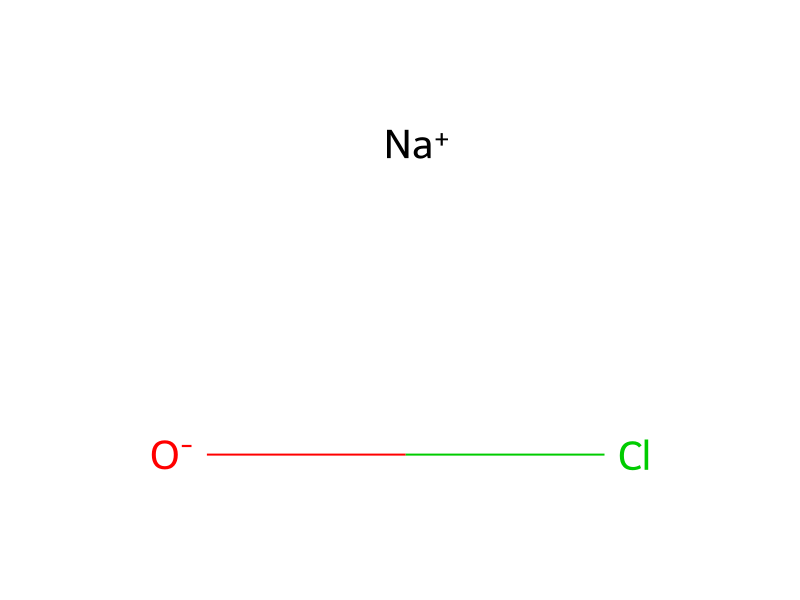
Product 1

Reagents, catalysts & solvents 1

Procedure
In each case a 5.25% sodium hypochlorite solution (85.1 g.: 0.060 mole) was added slowly in portions to a solution of 3.18 g. (0.0150 mole) the p-phenoxyacetophenone sample while heating from 40° to 100° C. The resulting solution was concentrated at 100° C., producing a crystalline precipitate. Acetone was then added to consume excess sodium hypochlorite followed by boiling, acidification with some excess concentrated hydrochloric acid (10 ml of 12N), stirring, filtration, water wash and then drying at 70° C./under vacuum for about 1 hr. The p-phenoxybenzoic acid obtained from the p-phenoxyacetephenone produced in the presence of hydrogen fluoride was white with a melting point of 159°-162° C. In contrast, the p-phenoxybenzoic acid produced in the presence of aluminum trichloride had a yellow (or light beige) discoloration and a strongly depressed melting point of 137°-149° C., indicating presence of considerable impurities.
Workup
- concentrationThe resulting solution was concentrated at 100° C.
- customproducing a crystalline precipitate
- customto consume excess sodium hypochlorite
- filtrationfiltration, water
- washwash
- customdrying at 70° C./under vacuum for about 1 hr
Sources & evidence
- ORD record
- ord-be602aca0616451c826bf37f511eff9c
- Source dataset
- uspto-grants-1984_10
- Patent number
- US04474990
Reaction notes
Loading…