Hydrochloric Acid → HCID 13366425, compound
Reaction equation

[CH3:1][C:2]1[C:7]([CH3:8])=[CH:6][C:5]([CH3:9])=[CH:4][C:3]=1[O:10][C:11]([F:14])([F:13])[F:12].Cl.C=O.CO[CH2:20][Cl:21]>O.C(O)(=O)C>[F:14][C:11]([F:12])([F:13])[O:10][C:3]1[CH:4]=[C:5]([CH3:9])[C:6]([CH2:20][Cl:21])=[C:7]([CH3:8])[C:2]=1[CH3:1]Participants
Reactant 4



Product 1

Reagents, catalysts & solvents 2


Procedure
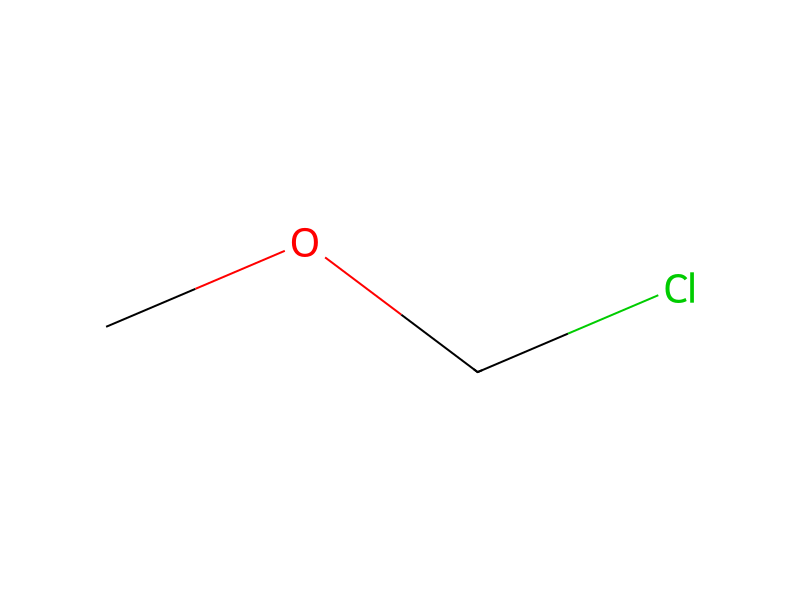
A solution of 31.5 (0.15 mol) of 2,3,5-trimethyl-1-trifluoromethoxybenzene, 315 ml of acetic acid, 31.5 ml of concentrated hydrochloric acid, 31.5 ml of aqueous formaldehyde and 13 g (0.185 mol) of chloromethyl methyl ether was heated to 85° C. for 72 hours. (Small samples were worked up periodically after 48 hours to optimize the ratio of monochloromethyl product:dichloromethyl product:starting material). The solution was then cooled, poured into 1.5 liters of water and extracted with 3×500 ml of hexane. The hexane extracts were washed with 1 liter of water and 500 ml of saturated NaHCO3 solution, dried (MgSO4), filtered, and concentrated to give 30 g of crude (4-trifluoromethoxy 2,3,6-trimethylphenyl)methyl chloride containing some starting material, 2,3,5-trimethyl-1-trifluoromethoxybenzene, which was removed by distillation at 24°-30° C./0.05 mm. The residue (22 g), crude (4-trifluoromethoxy-2,3,6-trimethylphenyl)methyl chloride, was used directly in the next step.
Workup
- customperiodically after 48 hours
- temperatureThe solution was then cooled
- extractionextracted with 3×500 ml of hexane
- washThe hexane extracts were washed with 1 liter of water and 500 ml of saturated NaHCO3 solution
- dry with materialdried (MgSO4)
- filtrationfiltered
- concentrationconcentrated
Sources & evidence
- ORD record
- ord-10845c27a7b743a5a1b12a21b700a769
- Source dataset
- uspto-grants-1984_10
- Patent number
- US04476056
Reaction notes
Loading…