Dichloromethane → 5,8-Isoquinolinedione
Reaction equation

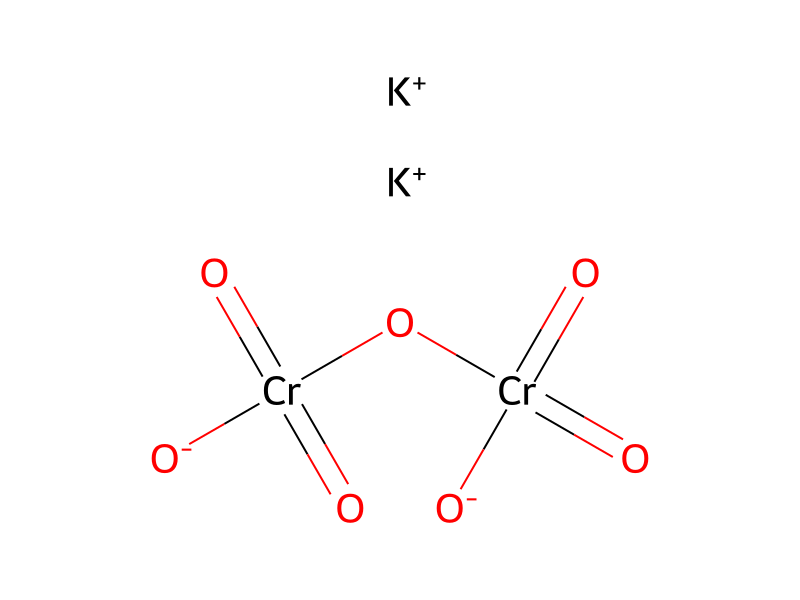
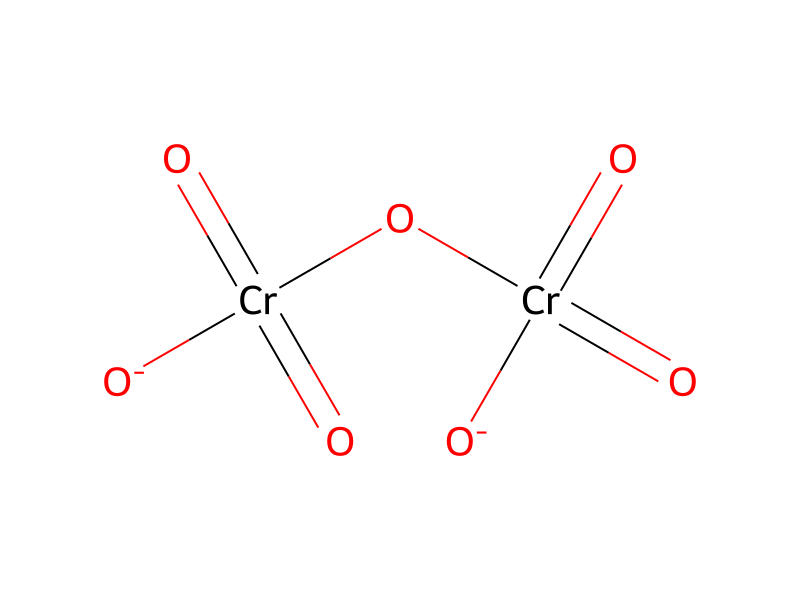
[OH:1][C:2]1[CH:11]=[CH:10][C:9](N)=[C:8]2[C:3]=1[CH:4]=[CH:5][N:6]=[CH:7]2.[Cr](O[Cr]([O-])(=O)=O)([O-])(=O)=[O:14].[K+].[K+].[Cr](O[Cr]([O-])(=O)=O)([O-])(=O)=O.C(Cl)Cl>O.S(=O)(=O)(O)O>[CH:7]1[C:8]2[C:9](=[O:14])[CH:10]=[CH:11][C:2](=[O:1])[C:3]=2[CH:4]=[CH:5][N:6]=1Participants
7
Reactant 4


Product 1

Reagents, catalysts & solvents 2


Procedure
Nineteen grams of 5-hydroxy-8-amino-isoquinoline were dissolved in 450 ml of water and 10 ml of concentrated sulfuric acid. The solution was cooled in an ice bath and then 50 ml of a potassium dichromate solution were added. (The dichromate solution was made by dissolving 50 g of potassium dichromate in 500 ml of water.) Forty ml of concentrated sulfuric acid were added, followed by 190 ml of the potassium dichromate solution, then 20 ml of concentrated sulfuric acid, and finally 400 ml of methylene chloride.
Workup
- temperatureThe solution was cooled in an ice bath
Sources & evidence
- ORD record
- ord-3351e62c0a4a4870a9dc075c5b712179
- Source dataset
- uspto-grants-1984_10
- Patent number
- US04478820
Reaction notes
Loading…