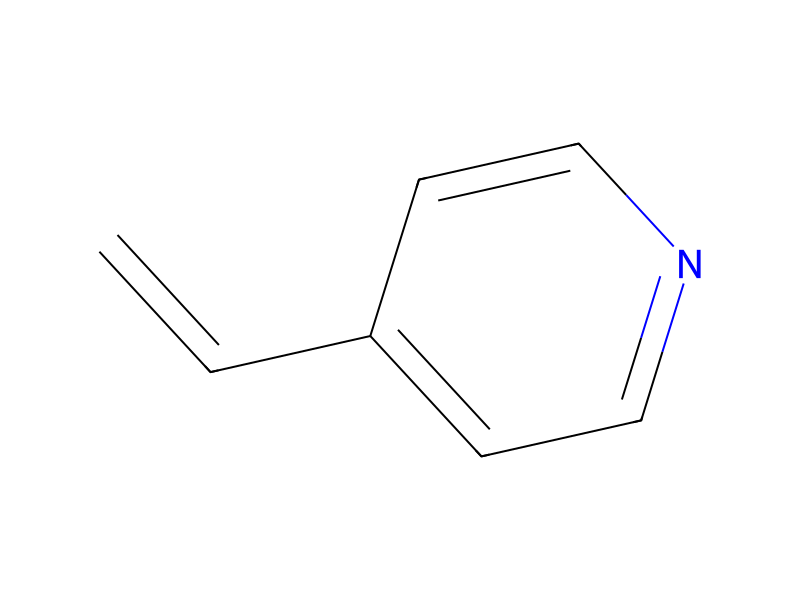
4-Vinylpyridine → HCID 13205993, compound
Reaction equation

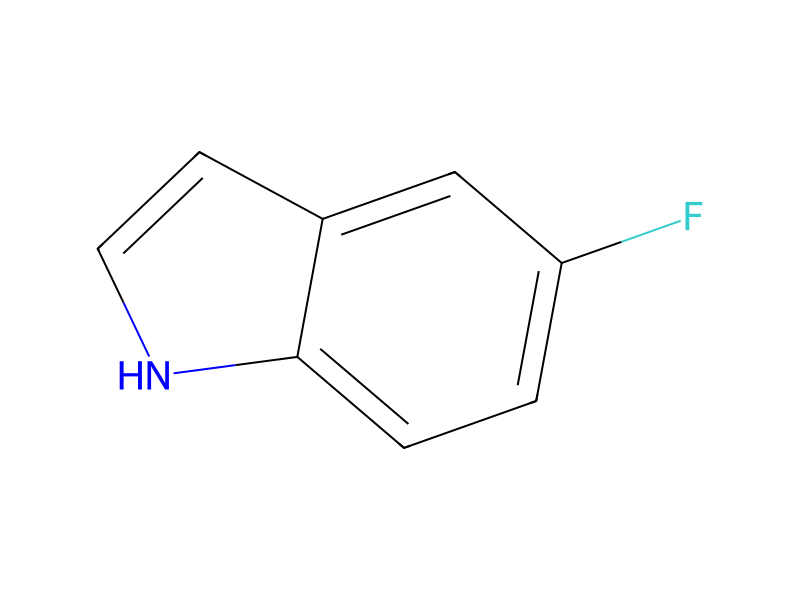
[F:1][C:2]1[CH:3]=[C:4]2[C:8](=[CH:9][CH:10]=1)[NH:7][CH:6]=[CH:5]2.[CH:11]([C:13]1[CH:18]=[CH:17][N:16]=[CH:15][CH:14]=1)=[CH2:12].C(=O)([O-])[O-].[K+].[K+]>C(O)(=O)C>[N:16]1[CH:17]=[CH:18][C:13]([CH2:11][CH2:12][C:5]2[C:4]3[C:8](=[CH:9][CH:10]=[C:2]([F:1])[CH:3]=3)[NH:7][CH:6]=2)=[CH:14][CH:15]=1Participants
5
Reactant 3

Product 1

Reagents, catalysts & solvents 1

Procedure
The starting product was prepared according to the same procedure as that described in the last paragraph of Example 2. 9.5 g of 5-fluoro-indole (U.S. Pat. No. 879,619) and 11 g 4-vinyl-pyridine were refluxed for 6 hours in 50 ml acetic acid. The mixture was then poured onto 300 g of crushed ice and alkalinized with a 20% potassium carbonate solution. A precipitate formed which was squeezed and washed in water several times. After drying under vacuum, 12 g of 3-[2-(4-pyridyl)-ethyl]-5-fluoro-indole were obtained which melted at 128° C.
Workup
- customThe starting product was prepared
- customA precipitate formed which
- washwashed in water several times
- customAfter drying under vacuum
Sources & evidence
- ORD record
- ord-26c8fadfc09743ee9dc459562fc09d83
- Source dataset
- uspto-grants-1984_10
- Patent number
- US04478841
Reaction notes
Loading…