3-Pyridinecarboxaldehyde → HCID 69515835, compound
Reaction equation

Cl.[S:2]1[CH:6]=[CH:5][C:4]([C:7]2[S:15][C:14]3[C:13]([NH:16][NH2:17])=[N:12][CH:11]=[N:10][C:9]=3[CH:8]=2)=[CH:3]1.[N:18]1[CH:23]=[CH:22][CH:21]=[C:20]([CH:24]=O)[CH:19]=1>C(O)C>[S:2]1[CH:6]=[CH:5][C:4]([C:7]2[S:15][C:14]3[C:13]([NH:16][N:17]=[CH:24][C:20]4[CH:19]=[N:18][CH:23]=[CH:22][CH:21]=4)=[N:12][CH:11]=[N:10][C:9]=3[CH:8]=2)=[CH:3]1Participants
4
Reactant 2
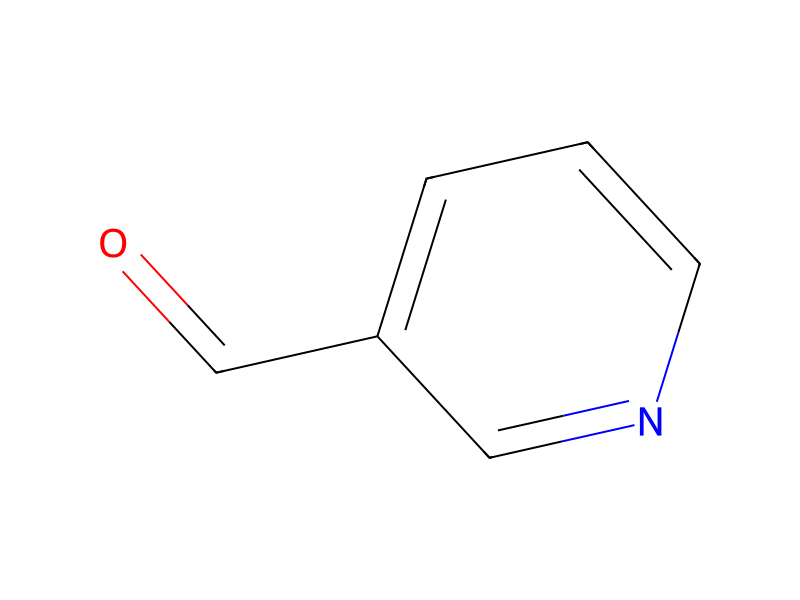

Product 1

Reagents, catalysts & solvents 1

Procedure
A suspension of (6-(3-thienyl)thieno[3,2-d]pyrimidin-4-yl)hydrazine hydrochloride (222, 39 mg, 0.14 mmol) and 3-pyridinecarboxaldehyde(20 mg, 0.19 mmol) in ethanol (2 mL) was heated at reflux for 4 hours. After cooling to room temperature, the solid product was collected by vacuum filtration to yield 3-pyridinecarboxaldehyde(6-(3-thienyl)thieno[3,2-d]pyrimidin-4-yl)hydrazone (40 mg, 87% yield) as a yellow solid.
Workup
- temperaturewas heated
- temperatureat reflux for 4 hours
- filtrationthe solid product was collected by vacuum filtration
Sources & evidence
- ORD record
- ord-1b142981db0f4a1383f57369a0c3fb43
- Source dataset
- uspto-grants-2003_01
- Patent number
- US06503914B1
Reaction notes
Loading…