[(3'S)-1'-[(tert-butoxy)carbonyl]-2-oxo-[1,3'-bipyrrolidin]-3-yl]triphenylphosphanium bromide → HCID 12993648, compound
Reaction equation

[Br-].[C:2]([O:6][C:7]([N:9]1[CH2:13][CH2:12][CH:11]([N:14]2[CH2:18][CH2:17][CH:16]([P+](C3C=CC=CC=3)(C3C=CC=CC=3)C3C=CC=CC=3)[C:15]2=[O:38])[CH2:10]1)=[O:8])([CH3:5])([CH3:4])[CH3:3].C(O[K])(C)(C)C.C([O:58][C:59]([C:61]1[N:62]2[CH:65]([S:66][CH2:67][C:68]=1[CH:69]=O)[CH:64]([NH:71][C:72](=[O:101])[C:73]([C:95]1[N:99]=[C:98]([NH2:100])[S:97][N:96]=1)=[N:74][O:75][C:76]([C:89]1[CH:94]=[CH:93][CH:92]=[CH:91][CH:90]=1)([C:83]1[CH:88]=[CH:87][CH:86]=[CH:85][CH:84]=1)[C:77]1[CH:82]=[CH:81][CH:80]=[CH:79][CH:78]=1)[C:63]2=[O:102])=[O:60])(C1C=CC=CC=1)C1C=CC=CC=1>ClCCl.C1(C)C=CC=CC=1.C1COCC1>[NH2:100][C:98]1[S:97][N:96]=[C:95](/[C:73](=[N:74]/[O:75][C:76]([C:89]2[CH:90]=[CH:91][CH:92]=[CH:93][CH:94]=2)([C:83]2[CH:84]=[CH:85][CH:86]=[CH:87][CH:88]=2)[C:77]2[CH:82]=[CH:81][CH:80]=[CH:79][CH:78]=2)/[C:72]([NH:71][C@@H:64]2[C:63](=[O:102])[N:62]3[C@@H:65]2[S:66][CH2:67][C:68](/[CH:69]=[C:16]2/[C:15](=[O:38])[N:14]([C@@H:11]4[CH2:12][CH2:13][N:9]([C:7]([O:6][C:2]([CH3:3])([CH3:4])[CH3:5])=[O:8])[CH2:10]4)[CH2:18][CH2:17]/2)=[C:61]3[C:59]([OH:60])=[O:58])=[O:101])[N:99]=1Participants
Reactant 3
 HCID 10167480[(3'S)-1'-[(tert-butoxy)carbonyl]-2-oxo-[1,3'-bipyrrolidin]-3-yl]triphenylphosphanium bromide
 HCID 731640087-[2-(5-Amino-[1,2,4]thiadiazol-3-yl)-2-trityloxyimino-acetylamino]-3-formyl-8-oxo-5-thia-1-aza-bicyclo[4.2.0]oct-2-ene-2-carboxylic acid benzhydryl ester
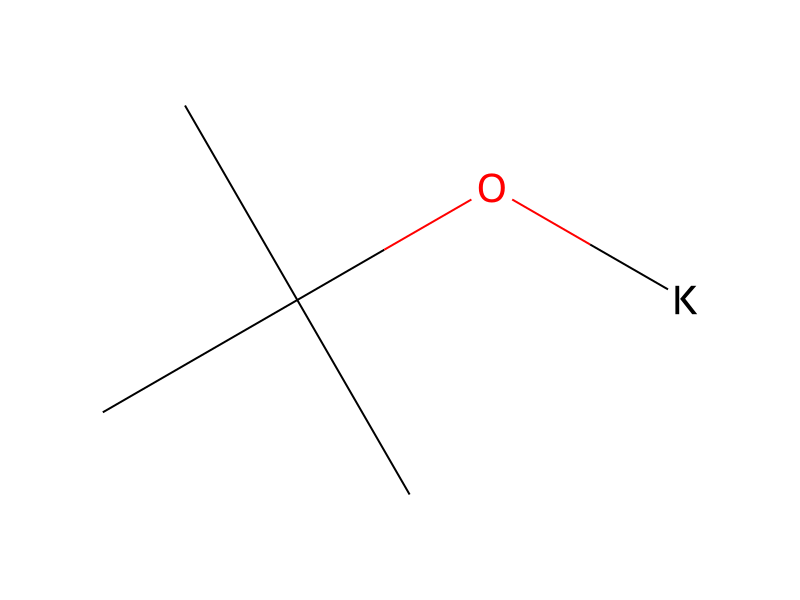 HCID 178418922HCID 178418922, compound
Product 1

Reagents, catalysts & solvents 3



Procedure
4.2 (small scale): To a solution of 2.45 g of (1′-tert.-butoxycarbonyl-2-oxo-[1,3′]-bipyrrolidinyl-3-(R,S)-yl)-triphenyl-phosphonium bromide (preparation according EP 1 067 131 A1) in 6 ml of dichloromethane and 15 ml of toluene was added at −78° C. a solution of 432 mg of t-C4H9OK in 6 ml of THF over 10 min and stirring was continued at −78° C. for 10 min. The solution was treated at −78° C. with a solution of 3.50 g 7-[2-(5-amino-[1,2,4]thiadiazol-3-yl)-2-trityloxyimino-acetylamino]-3-formyl-8-oxo-5-thia-1-aza-bicyclo[4.2.0]oct-2-ene-2-carboxylic acid benzhydryl ester in 6 ml of THF over 15 min and stirring was continued at −78° C. for 6 h and at −50° C. for 1 h after which time HPLC showed almost completion of the reaction. The reaction was quenched with a solution of 0.95 g of citric acid in 9 ml of water followed by addition of 12 ml of ethyl acetate, the organic layer was washed with NaHCO3 and brine, dried over MgSO4, filtered and the filtrate was evaporated. The residue was chromatographed on silica with ethyl acetate/hexane 10:1 to give 1.82 g of the title compound as a foam. IR (Nujol): 3450 m (NH2, NH), 1779 s, 1724 s, 1678 s, 1653 s (C═O). 1H-NMR (d6-DMSO): 9.93 (d, J=8.8, 1H, NH); 8.13 (s, br., 2H, NH2); 7.6-7.3 (m, 26H, H—ar., HC—C(3)); 6.96 (s, 1H, CH(Ph)2); 6.15 (dd, J=8.8 and 4.8, 1H, H—C(7)); 5.33 (d, J=4.8, 1H, H—C(6)); 4.59 (m, 1H, CH—N)); 3.91, 3.85 (d each, J=18 each, 2H, CH2—S(5)); 3,5-3,3 and 2.9 and 2.7 and 2.0 (m each, 6H and 1H and 1H and 2H, 5×CH2); 1.41 (s, 9H, (CH3)3C). MS (CI): 1044/100 (M+H+).
Workup
- stirringstirring
- waitwas continued at −78° C. for 6 h and at −50° C. for 1 h
- customcompletion of the reaction
- customThe reaction was quenched with a solution of 0.95 g of citric acid in 9 ml of water
- additionfollowed by addition of 12 ml of ethyl acetate
- washthe organic layer was washed with NaHCO3 and brine
- dry with materialdried over MgSO4
- filtrationfiltered
- customthe filtrate was evaporated
- customThe residue was chromatographed on silica with ethyl acetate/hexane 10:1
Sources & evidence
- ORD record
- ord-16c8e63495e74157824eab25b13423d9
- Source dataset
- uspto-grants-2003_01
- Patent number
- US06504025B2
Reaction notes
Loading…