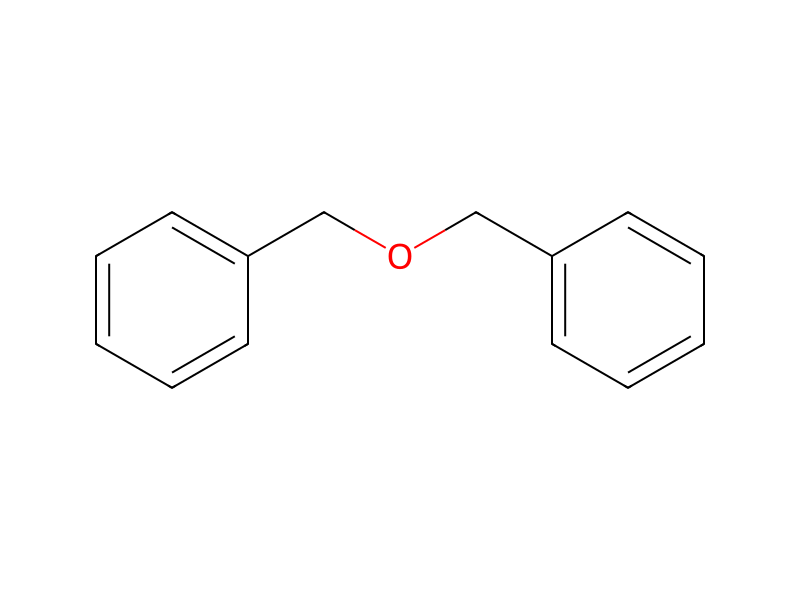
4-Benzyloxybenzyl chloride → Dibenzyl ether
Reaction equation

[CH2:1]([O:8][C:9]1[CH:16]=[CH:15][C:12](CCl)=[CH:11][CH:10]=1)[C:2]1[CH:7]=[CH:6][CH:5]=[CH:4][CH:3]=1.[CH3:17]C(N=P(N1CCCC1)(N1CCCC1)N1CCCC1)(C)C>O1CCCC1>[CH2:9]([O:8][CH2:1][C:2]1[CH:3]=[CH:4][CH:5]=[CH:6][CH:7]=1)[C:16]1[CH:15]=[CH:12][CH:11]=[CH:10][CH:17]=1Participants
4
Reactant 2


Product 1
Reagents, catalysts & solvents 1

Procedure
The general coupling method used for compound 63a was applied using 4-benzyloxybenzyl chloride and BTPP in tetrahydrofuran to give the product benzyl ether. The benzyl ether (600 mg, 1.05 mmol) and 10% palladium hydroxide on carbon (160 mg) in 2:1 methanol/tetrahydrofuran (50 mL / 25 mL) was agitated under hydrogen at 55 psi for 48 hours. The reaction mixture was filtered through a pad of Celite and then subjected to column chromatography (2:1 EtOAc/CH2Cl2) to give compound 64 as a white solid (262 mg, 52% yield).
Sources & evidence
- ORD record
- ord-9b27acc7ee084376ac2f8887814e059b
- Source dataset
- uspto-grants-2003_01
- Patent number
- US06506738B1
Reaction notes
Loading…