Dicyclohexylcarbodiimide → 4-Hydroxy-6-methyl-3-(4,4,4-trifluorobutanoyl)-2H-pyran-2-one
Reaction equation

[OH:1][C:2]1[CH:7]=[C:6]([CH3:8])[O:5][C:4](=[O:9])[CH:3]=1.[F:10][C:11]([F:18])([F:17])[CH2:12][CH2:13][C:14](O)=[O:15].C1(N=C=NC2CCCCC2)CCCCC1>C1(C)C=CC=CC=1.CN(C)C1C=CN=CC=1>[OH:1][C:2]1[CH:7]=[C:6]([CH3:8])[O:5][C:4](=[O:9])[C:3]=1[C:14](=[O:15])[CH2:13][CH2:12][C:11]([F:18])([F:17])[F:10]Participants
Reactant 3

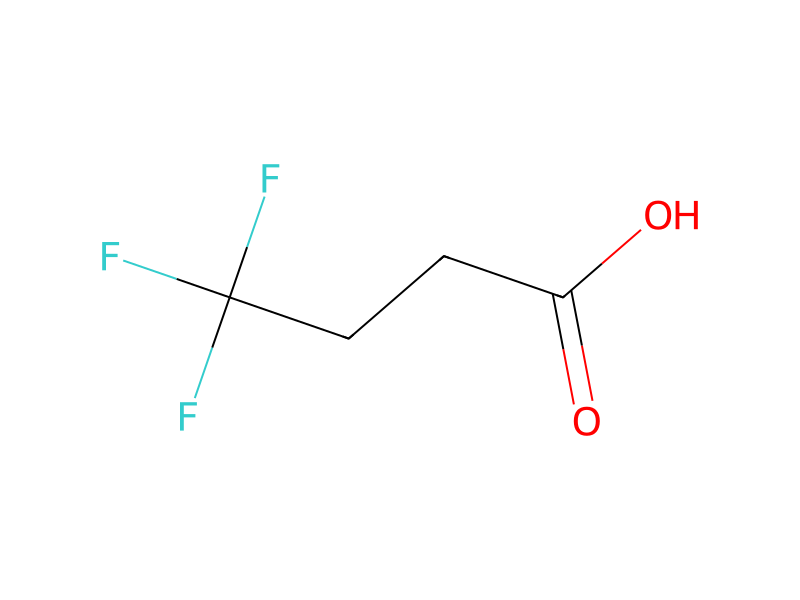

Product 1

Reagents, catalysts & solvents 2


Procedure
In 240 ml of toluene, 14.1 g of 4-hydroxy-6-methyl-2-pyrone was suspended, and 1.94 g of 4-dimethylaminopyridine, 16.6 g of 4, 4,4-trifluorobutyric acid and 21.9 g of dicyclohexylcarbodiimide were added thereto. The reaction mixture was stirred for 1 hour at room temperature and further stirred for 20 hours at 70° C. After cooling to room temperature, it was subjected to filtration. The filtrate was washed with 1% hydrochloric acid twice and saturated brine once in this order. The organic layer was dried over anhydrous sodium sulfate and concentrated under reduced pressure. The residue was subjected to silica gel chromatography to give 5.38 g of 4-hydroxy-6-methyl-3-(4,4,4-trifluorobutyryl)-2-pyrone (hereinafter, referred to as the present compound (A)) mp 104° C.
Workup
- stirringfurther stirred for 20 hours at 70° C
- temperatureAfter cooling to room temperature
- filtrationit was subjected to filtration
- washThe filtrate was washed with 1% hydrochloric acid twice
- dry with materialThe organic layer was dried over anhydrous sodium sulfate
- concentrationconcentrated under reduced pressure
Sources & evidence
- ORD record
- ord-fcb584300244445cbf02bb50efa3b8ac
- Source dataset
- uspto-grants-2003_01
- Patent number
- US06509299B2
Reaction notes
Loading…