Malononitrile → 2-[(3-Bromophenyl)methylene]propanedinitrile
Reaction equation

[Br:1][C:2]1[CH:3]=[C:4]([CH:7]=[CH:8][CH:9]=1)[CH:5]=O.[C:10](#[N:14])[CH2:11][C:12]#[N:13].N1CCCCC1>O1CCOCC1>[Br:1][C:2]1[CH:3]=[C:4]([CH:5]=[C:11]([C:10]#[N:14])[C:12]#[N:13])[CH:7]=[CH:8][CH:9]=1Participants
5
Reactant 3


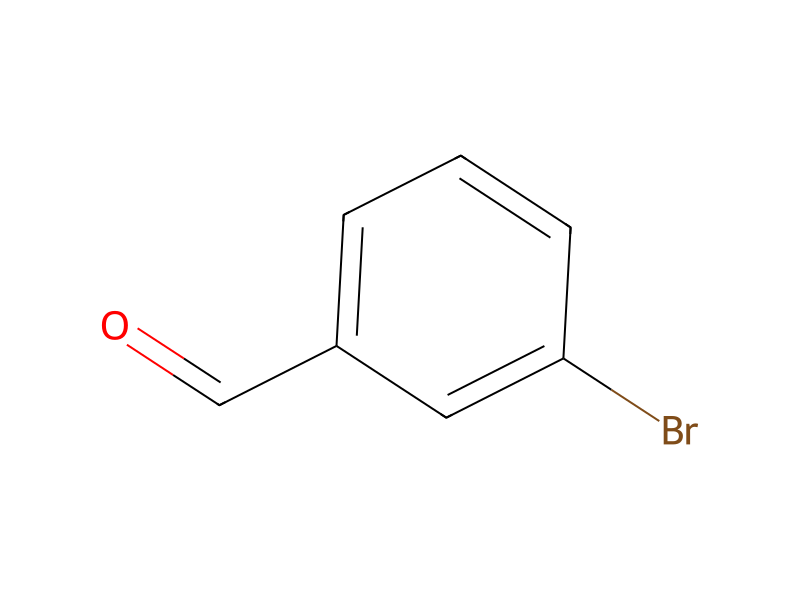
Product 1

Reagents, catalysts & solvents 1

Procedure
In this situation the aldehyde, such as 3-bromobenzaldehyde as a representative example, is reacted with malononitrile in the presence of catalytic piperidine in a solvent such as dioxane to afford the 2-[(3-bromophenyl)methylene]malononitrile. Epoxide formation proceeds readily with commercial bleach at a pH of 5 to 6. Treatment with hydrobromic acid in methanol then affords the required methyl 2-bromo-2-(3-bromophenyl)acetate. Similarly prepared was methyl 2-bromo-2-(3-cyanophenyl)acetate
Sources & evidence
- ORD record
- ord-c2c95f95d13f4051abfa6fb92f4071b8
- Source dataset
- uspto-grants-2003_01
- Patent number
- US06509335B1
Reaction notes
Loading…