Anthranilic Acid → 3-Bromo-1-methylnaphthalene
Reaction equation

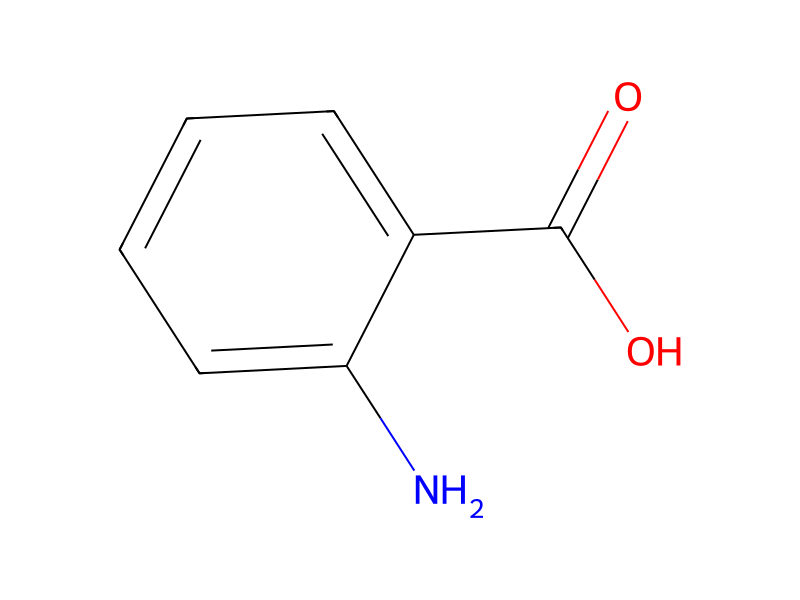
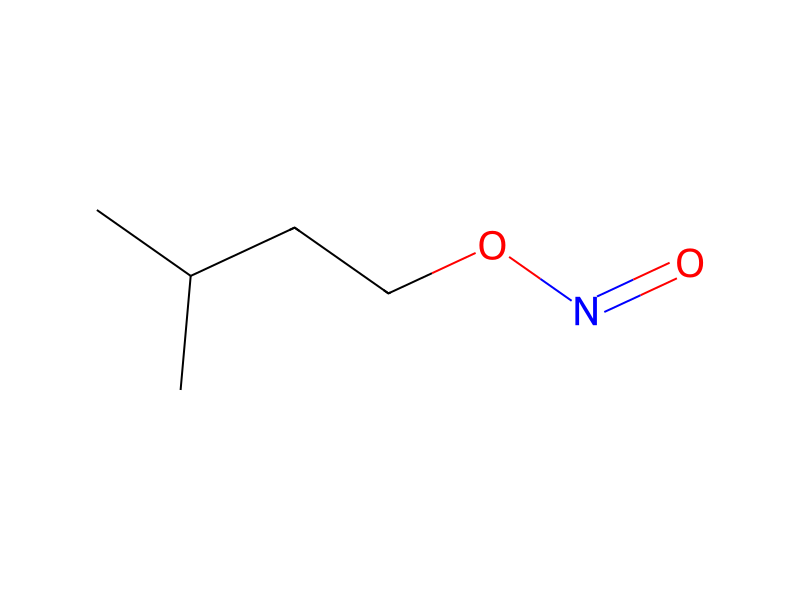
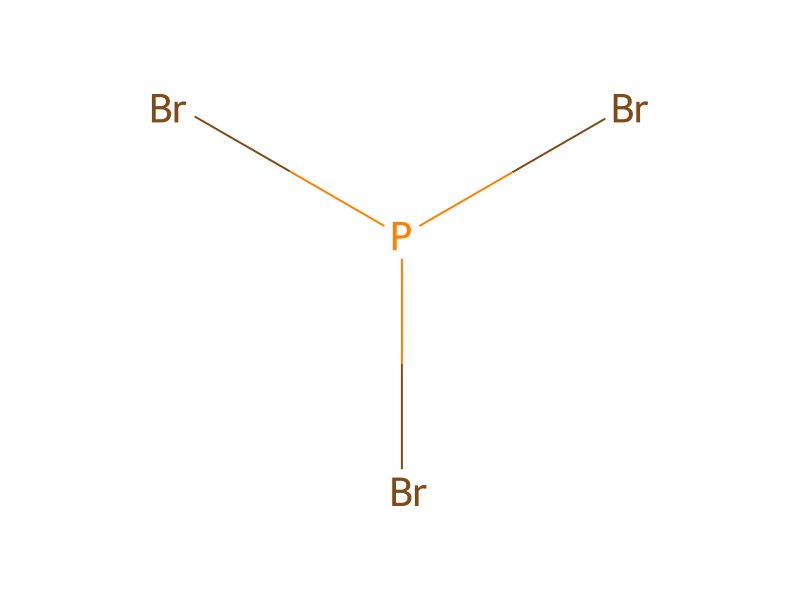
[Br:1][C:2]1[CH:7]=[C:6]([CH3:8])O[C:4](=O)[CH:3]=1.O[C:11]1[CH:16]=[C:15](C)O[C:13](=O)[CH:12]=1.P(Br)(Br)Br.FC(F)(F)C(O)=O.C(ON=O)CC(C)C.C(O)(=O)C1C(=CC=CC=1)N>COCCOC.CCCCCC.C(OC(=O)C)C>[Br:1][C:2]1[CH:7]=[C:6]([CH3:8])[C:13]2[C:4]([CH:3]=1)=[CH:15][CH:16]=[CH:11][CH:12]=2Participants
Reactant 6



Product 1

Reagents, catalysts & solvents 2


Procedure
A 250 ml three-neck round bottomed flask was equipped with a reflux condenser and two addition funnels. 430 mg(2.2 mmol) of 4-bromo-6-methyl-2-pyrone prepared according to the procedure described in a literature(see: M. Cervera, Tetrahedron, 46, 7885, 1990) from 4-hydroxy-6-methyl-2-pyrone and phosphorus tribromide was dissolved in 100 ml of ethyleneglycol dimethylether(DME), which was then introduced into the flask. Catalytic amount of trifluoroacetic acid was added and the resulting mixture was heated under reflux. While refluxing, isoamylnitrite(0.48 ml, 3.4 mmol) and anthranilic acid (470 mg, 3.4 mmol) in DME which were contained in the funnels, respectively, were added dropwise simultaneously. After confirming that the starting materials were completely reacted, addition was stopped and the reaction solution was cooled. The solvent was removed under reduced pressure and the remaining materials were diluted with 250 ml of dichloromethane. The resulting solution was sequentially washed with 5% aqueous hydrochloric acid solution, 5% aqueous sodium hydroxide solution and water, and then dried over anhydrous magnesium sulfate. The solvent was removed and the residue was subjected to column chromatography(eluent: n-Hexane/ethylacetate=20/1, v/v) to give 340 mg(Yield 68%) of the title compound.
Workup
- customA 250 ml three-neck round bottomed flask was equipped with a reflux condenser
- additiontwo addition funnels
- additionwhich was then introduced into the flask
- temperaturethe resulting mixture was heated
- temperatureunder reflux
- temperatureWhile refluxing
- additionrespectively, were added dropwise simultaneously
- customwere completely reacted
- additionaddition
- temperaturethe reaction solution was cooled
- customThe solvent was removed under reduced pressure
- additionthe remaining materials were diluted with 250 ml of dichloromethane
- washThe resulting solution was sequentially washed with 5% aqueous hydrochloric acid solution, 5% aqueous sodium hydroxide solution and water
- dry with materialdried over anhydrous magnesium sulfate
- customThe solvent was removed
Sources & evidence
- ORD record
- ord-94c85b1d7bd943798d58ecacfb67ee0e
- Source dataset
- uspto-grants-2003_01
- Patent number
- US06511978B1
Reaction notes
Loading…